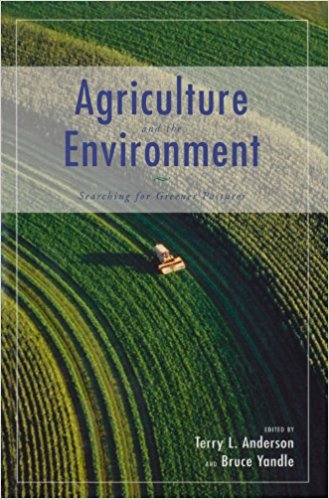
 U.S. agriculture is the envy of the world. Although output from U.S. farms is high, there is a growing gap between what is being produced and what could be produced, partly because innovation and production are constrained by a growing maze of environmental regulations. The chapters, authored by leading experts in their fields, focus on the major environmental constraints that limit U.S. food production without necessarily improving environmental quality. Each paper documents a specific issue, discusses the regulatory response, and offers ideas for reform.
Agriculture and the Environment
Written By
-
 Terry Anderson
Terry L. Anderson is the former president and executive director of PERC, and the John and Jean De Nault Senior Fellow at the Hoover Institution, Stanford University.
-
 Bruce Yandle
- Senior Fellow Emeritus


Date
Topics
Related Content
-

When Suing Pays Better Than Saving Land
PERC testifies before Congress on the perverse incentives driving environmental litigation
-

New Research Outlines Strategies to Protect Maine’s Last Mature Forests
Study finds market-based conservation approaches can safeguard rare old-growth forests while respecting private landownership
-

Conserving the Last Mature Forests in Maine
Pathways to protect the state’s remaining late-successional and old-growth forests