 It is the time of year for the seasonal debate over the family Christmas tree: live or artificial? A live tree means removing a tree from the forest, or tree plantation, as it may be. A fake tree is usually an import from a foreign factory.
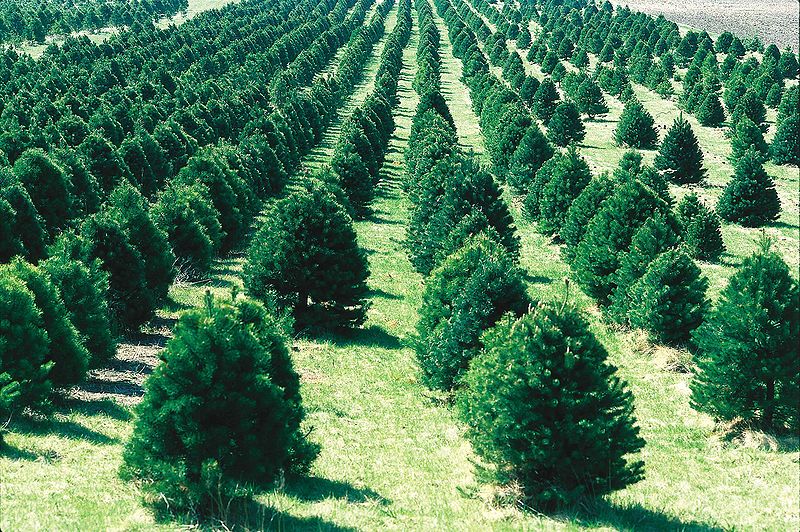
About 30 million live Christmas trees are sold in the US every year. That is a lot of trees. But do not fear! Our Christmas tree harvesting activities result in growing more trees, not less. Two or three seedlings are planted for nearly every single Christmas tree cut. Christmas tree plantations cover 350,000 acres of land in the US and are growing about 350 million trees. As long as people continue to demand a fresh tree at Christmas, farmers will continue to provide them.
While it is still popular in some regions, such as here in Montana, to head to the local National Forest to cut a tree, the majority of Christmas trees are grown on tree farms. Regardless, Forest Service permits to harvest a tree are issued to help manage the forest under agency guidelines.
At seasons end, real trees can be recycled and used for making everything from mulch to medicines, or to enhance wildlife habitat and prevent erosion. They can be cut into firewood and burned for home heat or as the centerpiece for your next weenie roast. They are even used as biomass to create energy.
Alternatively, you can buy a fake tree that is probably made in China. Artificial trees are not biodegradable, nor are they a good fuel source.
If Christmas is your holiday and you desire a tree, buy your Christmas tree with pride knowing that by purchasing a tree you are helping to plant several more.
Originally posted at Environmental Trends.