DOWNLOAD THE FULL REPORT
Land trusts and one of their important tools, conservation easements, are major forces in today’s environmental movement. Conservation easements are partial interests in land that prohibit intense development. They have helped conserve millions of acres of valuable open space, wildlife habitat, river corridors, and wetlands.
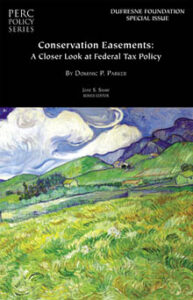
One factor motivating conservation easements has been federal tax policy, which allows landowners who donate easements to obtain tax benefits. This policy has led to criticism of some trusts for their use of conservation easements. In this essay’ “Conservation Easements: A closer Look at Federal Tax Policy,” Dominic P. Parker examines the impact of tax policy on the use of easements and recommends some changes in current policy to better serve the American public.
PERC, the Property and Environment Research Center, is a nonprofit institute dedicated to improving environmental quality through property rights and markets. This paper is part of the PERC Policy Series, which addresses timely topics involving markets and environmental issues. It is also part of the Dufresne Foundation series of essays, which seek to reconcile environmental and economic pressures, especially in the western United States.
Download the full report, including endnotes and references.