
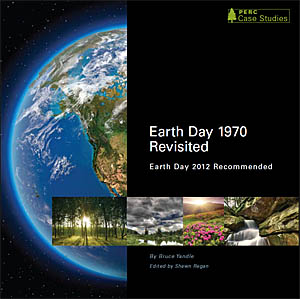
As we approach Earth Day 2012, I offer a sobering proposition: The blueprints of our major air and water pollution control statutes were flawed at birth. Designed for a smokestack economy that no longer exists, the statutes focus on inputs, not outcomes. They are based on technology standards that limit flexibility, discourage innovation, and are costly to adapt. While significant environmental improvements have been made, the United States is now losing ground.
This PERC Case Study spotlights the legislative flaw that entered our organic air and water statutes and now limits progress toward environmental protection. Command-and-control technology standards were set in place rather than the more flexible market based approach of performance standards.
Even EPA data tells us that we are losing ground in our efforts to reduce pollution. Instead of shopping for the lowest cost source of emission reductions--using international markets--we are stuck with standards designed for a smokestack economy.
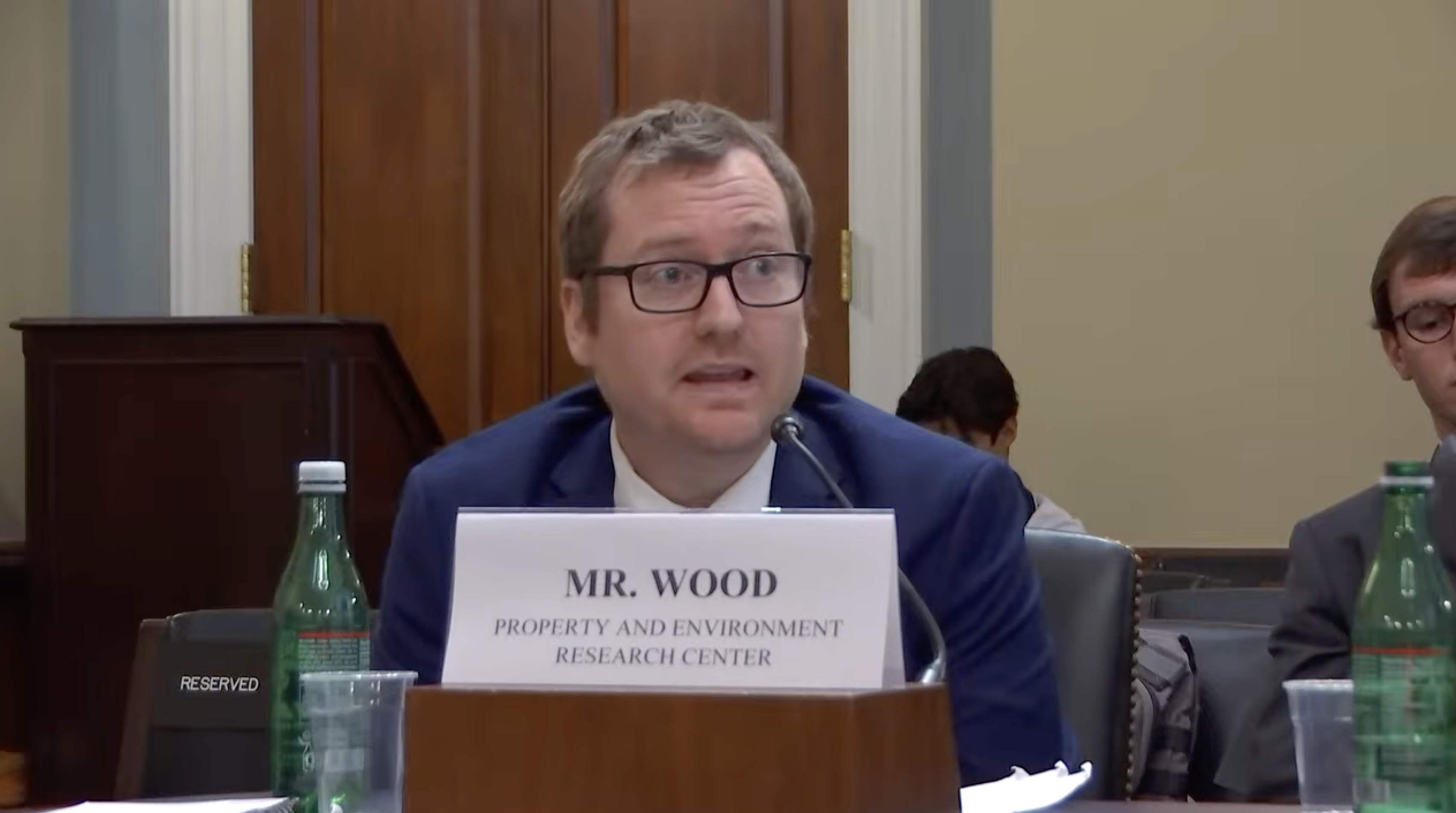
AUTHOR: Bruce Yandle is a PERC Senior Fellow Emeritus. He may be reached at yandle@bellsouth.net.


Founded 30 years ago in Bozeman, Montana, PERC—the Property and Environment Research Center—is the nation’s oldest and largest institute dedicated to improving environmental quality through property rights and markets.
PERC’s publications, each designed to resonate with specific groups, move ideas generated at PERC to broader audiences.
Research is at the heart of PERC's work, with a focus on the question: What is the link between economic growth and environmental quality?
The goal of PERC’s programs is to fully realize the vision of establishing “PERC University,” where scholars, students, policy makers, and others convene to expand the applications of free market environmentalism.
PERC's fellowships share a common goal of exposing new scholars, students, journalists, and policy makers to free market environmentalism, as well as enable scholars already familiar with FME to explore new applications.
PERC continues to publish and present a broad range of research and discussion through podcasts, videos, and other multimedia channels.