
|
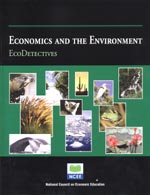
Economics and the Environment:
The EcoDetectives lessons differ in form and content from the materials found in many environmental education programs. They call for investigation into 15 EcoMysteries–environmental problems or conditions that seem to be puzzling. For each EcoMystery, the investigation that follows is informed by one or more of six principles of EcoDetection. These principles are derived in turn from basic concepts of economics. The mysteries are provocatively formulated, and the instructional activities that accompany them will challenge students continually to think in new ways. This curriculum was developed by the National Council on Economic Education (NCEE) with support and assistance from PERC. It is available from NCEE online or call |
EcoDetectives
Date
Topics
Related Content
-

When Suing Pays Better Than Saving Land
PERC testifies before Congress on the perverse incentives driving environmental litigation
-

New Research Outlines Strategies to Protect Maine’s Last Mature Forests
Study finds market-based conservation approaches can safeguard rare old-growth forests while respecting private landownership
-

Conserving the Last Mature Forests in Maine
Pathways to protect the state’s remaining late-successional and old-growth forests