
The Endangered Species Act is not working and reforms are needed. Only eight out of the more than 1,400 listed species have recovered since the act was passed in 1973. This is not a success story by any measure.
The far-reaching powers vested in federal agents to control landowners' use of their property have not worked to protect endangered species and may have had the opposite effect. Some owners manage their land to keep listed species out for fear that their rights may be restricted. The act ignores the important positive role that private landowners and institutions have historically played in protecting rare fauna and flora.
A few changes could go a long way toward making endangered species and their habitats assets, rather than liabilities. The most fundamental is to eliminate the penalties for altering habitat. Without fear of penalties, more private property owners would be willing to help protect the plants and animals on their land. If property rights are restricted, landowners should be compensated. Furthermore, rewards could be paid to landowners who host endangered species.
However, the nation's capacity to devote resources to preserving biodiversity is finite. "Setting priorities for preservation goals is both rational and scientifically defensible," says Richard Stroup, PERC senior associate. Narrowly focusing on saving an individual species may not be the best use of limited government funds. It may be better to follow the example of the Nature Conservancy and protect several species in a broader region.
A clear indication that some balance must be restored to the Endangered Species Act came in a 1997 Supreme Court ruling. The decision allows private property owners who have suffered economic losses because of environmental laws to challenge those laws.
Any reform of the Endangered Species Act should restore landowners' rights, create positive incentives to protect species and establish priorities to guide federal action in preserving biodiversity.
For more information see "The Endangered Species Act: Making Innocent Species the Enemy," PERC Policy Series PS-3, by Richard L. Stroup, PERC senior associate.

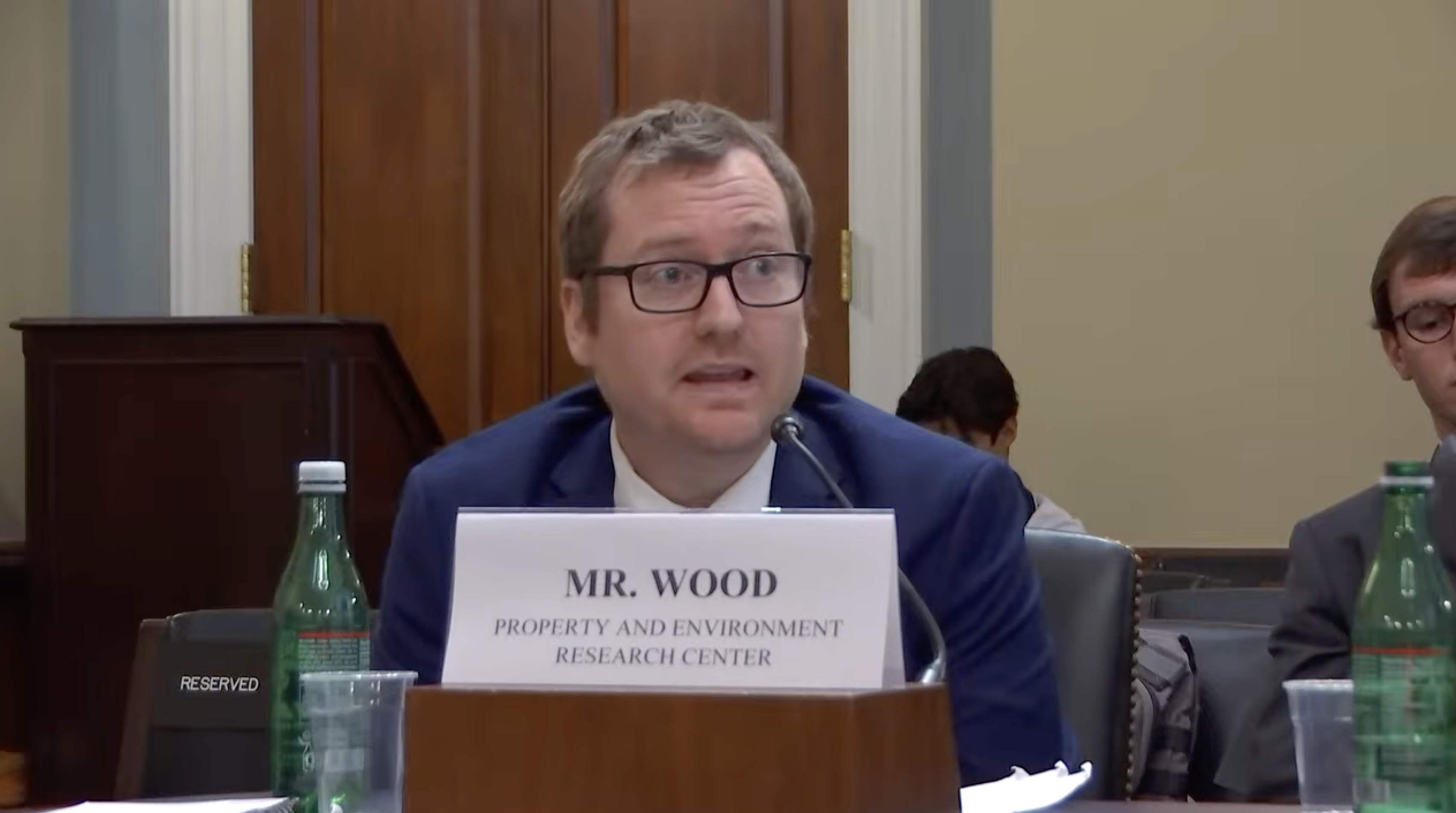
Founded 30 years ago in Bozeman, Montana, PERC—the Property and Environment Research Center—is the nation’s oldest and largest institute dedicated to improving environmental quality through property rights and markets.
PERC’s publications, each designed to resonate with specific groups, move ideas generated at PERC to broader audiences.
Research is at the heart of PERC's work, with a focus on the question: What is the link between economic growth and environmental quality?
The goal of PERC’s programs is to fully realize the vision of establishing “PERC University,” where scholars, students, policy makers, and others convene to expand the applications of free market environmentalism.
PERC's fellowships share a common goal of exposing new scholars, students, journalists, and policy makers to free market environmentalism, as well as enable scholars already familiar with FME to explore new applications.
PERC continues to publish and present a broad range of research and discussion through podcasts, videos, and other multimedia channels.