
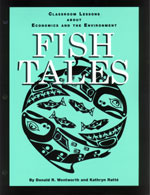
 Why are fisheries throughout the Pacific Northwest in decline? The “Fish Tales” curriculum uses economic reasoning to help students solve the mysteries surrounding these tragic reductions in fish populations. Four principles of economics guide the students: choice, incentives, property rights, and voluntary trade. Students use these principles to explain how human behavior underlies such varied puzzles as the overfishing of salmon, the success of aquaculture, and the strange case of lobsters and oysters.
Fish Tales is available on our Web site in PDF.