 In the contemporary West, pressures to more effectively reallocate water to meet growing urban and environmental demands are increasing as environmental awareness grows and climate change threatens existing water supplies.
The legacy of Owens Valley raises concerns about how reallocation can occur. Although it took place over seventy years ago, the water transfer from Owens Valley to Los Angeles still plays an important role in perceptions of how water markets work. The memory of Owens Valley transfer is one of theft and environmental destruction at the hands of Los Angeles. In reassessing the infamous transfer, one could say that there was no “theft.” Owens Valley landowners fared well in their land and water sales, earning more than if they had stayed in agriculture. In another sense, however, “theft” did occur. The water was not literally stolen, but there was a sharp imbalance in gains from the trade—with most of the benefits going to Los Angeles. Owens Valley, then, demonstrates the importance of distributional issues in water trades when the stakes are large.
Los Angeles water rights in the Owens Valley and Mono Basin have again been a front-page issue since 1970. New environmental and recreational values and air pollution concerns have ushered in demands to curtail the shipment of water from source regions for urban use.
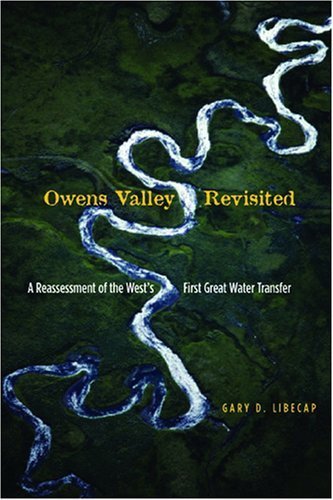
Owen’s Valley Revisited: A Reassesment of the West’s First Great Water Transfer carefully explores how these sagas were addressed, considering the costs involved, and alternative approaches that might have resulted in more rapid and less contentious remedies. This analysis offers insights to guide the ongoing conversation about water politics and the future thereof.
Libecap conducted research on this book in 2004 while a Julian Simon Fellow at PERC.