
Terry L. Anderson, Editor
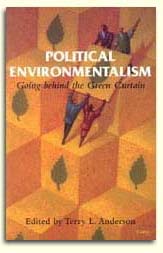 Political Environmentalism documents a range of examples of how politics and environmentalism mix to produce strange bedfellows and equally strange results. The books details how environmental special interests have provided the high moral ground for economic special interests who stand to gain from legislation that hampers competition. Terry Anderson and his contributors boldly confront a group of specific environmental laws, asking whether they were motivated by environmental concerns, whether they achieve their goals, whether they are cost-effective, and–most important–whether they generate perverse results.
Hoover Institution Press
Stanford University
Stanford CA 94305
800-935-2882
May 2000; 336 pp.