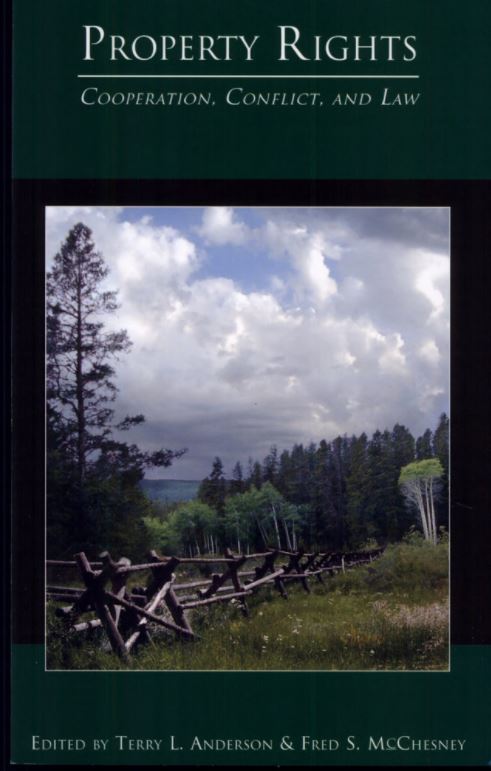
 The institution of property is as old as mankind, and property rights are today deemed vital to a prosperous economic system. Much has been written in the last decade on the economics of the legal institutions protecting such rights. This unprecedented book provides an excellent introduction to the subject.
Terry Anderson and Fred McChesney have gathered twelve leading thinkers to explore how property rights arise, and how they bolster economic development. As the subtitle indicates, the book also examines how controversies over valuable property rights are resolved: by agreement, by violence, or by law.
This book is an introduction to the economics and law of property rights. It is divided into six parts, each featuring an introduction by the editors that integrates prior chapters and material in coming chapters. The book provides a fresh comprehensive overview accessible to anyone with a basic knowledge of economics.