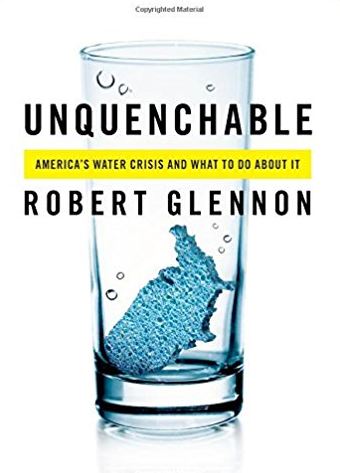
 Robert Glennon captures the irony—and tragedy—of America’s water crisis in a book that is both frightening and wickedly comical. From manufactured snow for tourists in Atlanta to trillions of gallons of water flushed down the toilet each year, Unquenchable reveals the heady extravagances and everyday inefficiencies that are sucking the nation dry.
The looming catastrophe remains hidden as government diverts supplies from one area to another to keep water flowing from the tap. But sooner rather than later, the shell game has to end. And when it does, shortages will threaten not only the environment, but every aspect of American life: we face shuttered power plants and jobless workers, decimated fisheries, and contaminated drinking water.
We can’t engineer our way out of the problem, either with traditional fixes or zany schemes to tow icebergs from Alaska. In fact, new demands for water, particularly the enormous supply needed for ethanol and energy production, will only worsen the crisis. America must make hard choices—and Glennon’s answers are fittingly provocative. He proposes market-based solutions that value water as both a commodity and a fundamental human right.
One truth runs throughout Unquenchable: Only when we recognize water’s worth will we begin to conserve it.