
Introduction
Old-growth forests provide exceptional ecological and cultural value, store disproportionately large amounts of carbon, and support unique habitat structures and species assemblages not found in younger forests. Consequently, their protection has been a longstanding conservation priority. Yet globally, old-growth forests are rare, fragmented, and in decline. In eastern North America, late-successional and old-growth (LSOG) forests rank among the rarest of habitat types, a legacy of centuries of intensive land use and forest management.
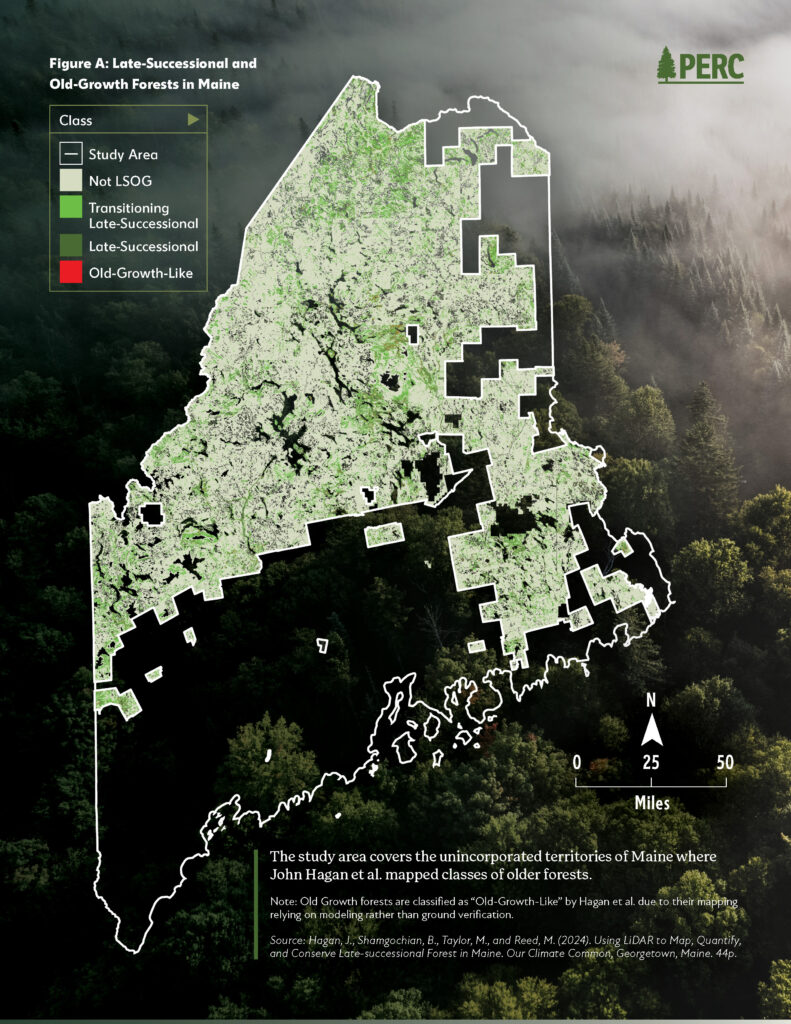
Against this backdrop, ecologist John Hagan and colleagues recently made a remarkable discovery: Using LiDAR-based maps of forest structure, they identified more than 165,000 hectares of late-successional or old-growth forest in northern and western Maine—forests largely unknown to the broader conservation community, though well known to the private timberland firms who own them. The discovery presents both a rare conservation opportunity and an urgent challenge.
Because LSOG forests contain disproportionately high timber volumes, they face an elevated risk of near-term harvest. Often the very characteristics that make them ecologically valuable also make them commercially valuable. Although forests across the region have been aging, gains in northeastern LSOG are nearly offset by losses in actively harvested areas. And even though conservation easements cover roughly 20 percent of Maine’s forestland, commercial timber harvest is permitted on more than half of that land.
The Maine forests identified by Hagan and his colleagues represent a rare chance to meaningfully expand conservation of the state’s mature forests, but only if conservation mechanisms are deployed that match the permanence and specificity required. Unlike the iconic old-growth conservation efforts of the Pacific Northwest, such as the Northwest Forest Plan, Maine’s newly identified old forests occur predominantly on privately owned commercial timberlands. Protecting them will require mechanisms that are both rapid and efficient—and that respect the property rights of landowners.
Conserving Maine’s oldest forests will depend on translating their public conservation value into incentives for the private landowners who steward them.
In 2025, the Maine Legislature recognized this challenge by passing An Act to Enhance the Protection of High-value Natural Resources Statewide, which directs the state to develop comprehensive strategies for LSOG conservation by November 2026. This research is intended to inform that effort.
This research evaluates alternative approaches for conserving Maine’s newly identified old forests, with particular emphasis on forests within private working landscapes. Because effective conservation of these lands will require strategies that extend beyond public land acquisition, we focus on market-based approaches. This focus reflects the underlying economic reality that LSOG conservation must directly address the opportunity costs associated with high-value timber stands.
Importantly, this research does not advocate a single, prescriptive solution. Instead, its objective is to provide a tiered, evidence-based framework for comparing alternative approaches, including fee acquisition, conservation easements, modified forest management, carbon-based finance, and other market-oriented mechanisms. Where possible, the analysis highlights trade-offs among approaches and identifies conditions under which particular strategies may be more or less appropriate. It evaluates the most promising approaches against alternative conservation criteria, and estimates protection costs for individual LSOG patches across the landscape. It closes with recommendations for prioritizing conservation action under conditions of limited resources.
The geographic focus of the study encompasses Maine’s unorganized territories, which contain about 60 percent of the total forest area in the state. We give particular attention to regions where LSOG forests are both ecologically significant and subject to high risk of loss, including areas dominated by private commercial ownership. While some findings may be transferable to other forested regions of the country, the evaluation is grounded explicitly in Maine’s biophysical conditions, land ownership patterns, and policy context.
The intended audiences include conservation practitioners, land trusts, forest landowners, policymakers, and funders seeking to make informed decisions about mature forest protection in Maine. By clarifying the purpose, scope, and decision-relevance of alternative conservation pathways, this work aims to support more strategic, transparent, and effective efforts to retain late-successional and old-growth forest values within a working forest landscape.
Overall, the research shows that protecting even the highest-priority LSOG forests would require on the order of $200 to $300 million, reflecting the high timber value of these stands. The most effective conservation strategy will therefore be a portfolio approach: targeted fee acquisition for the highest-value patches, complemented by ecological reserve easements across larger landscapes, and supported by carbon finance and other emerging funding mechanisms where they can offset a portion of these costs.
Late-Successional and Old-Growth Forests
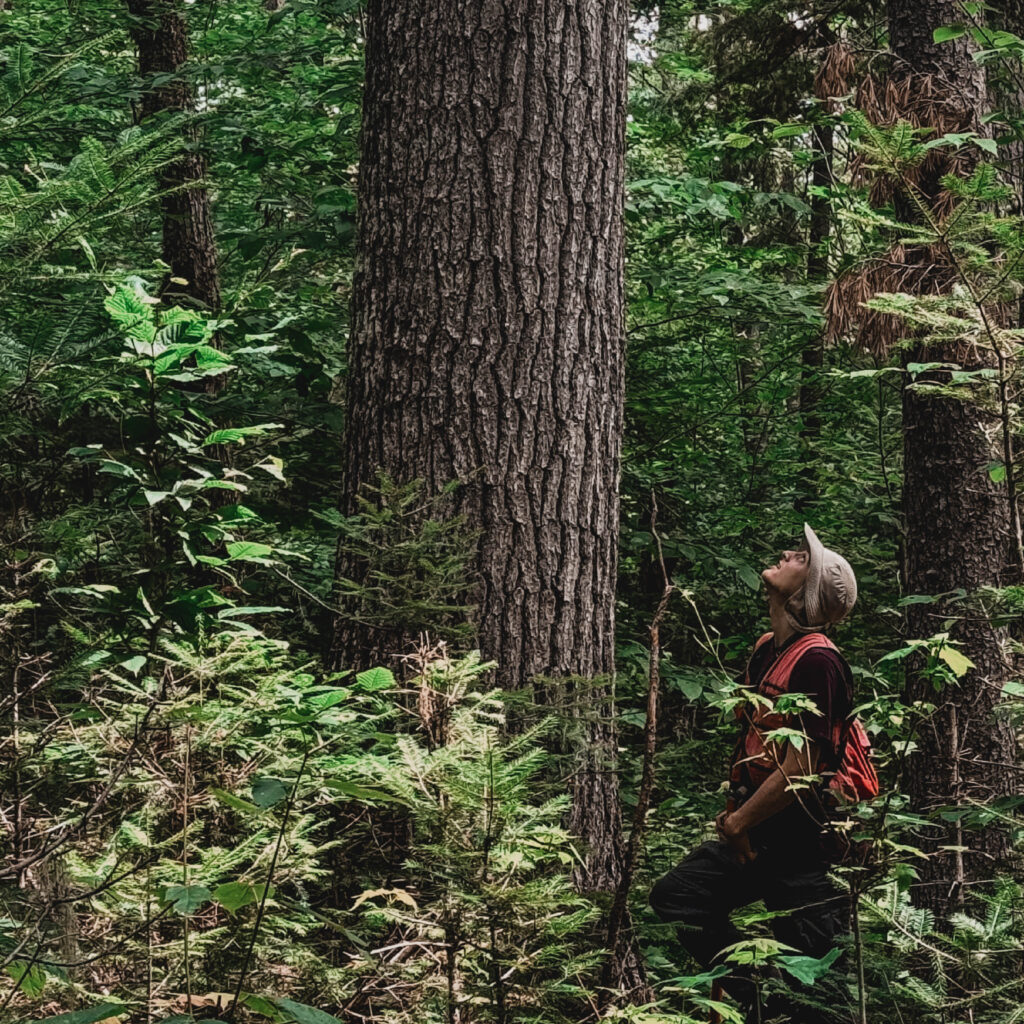
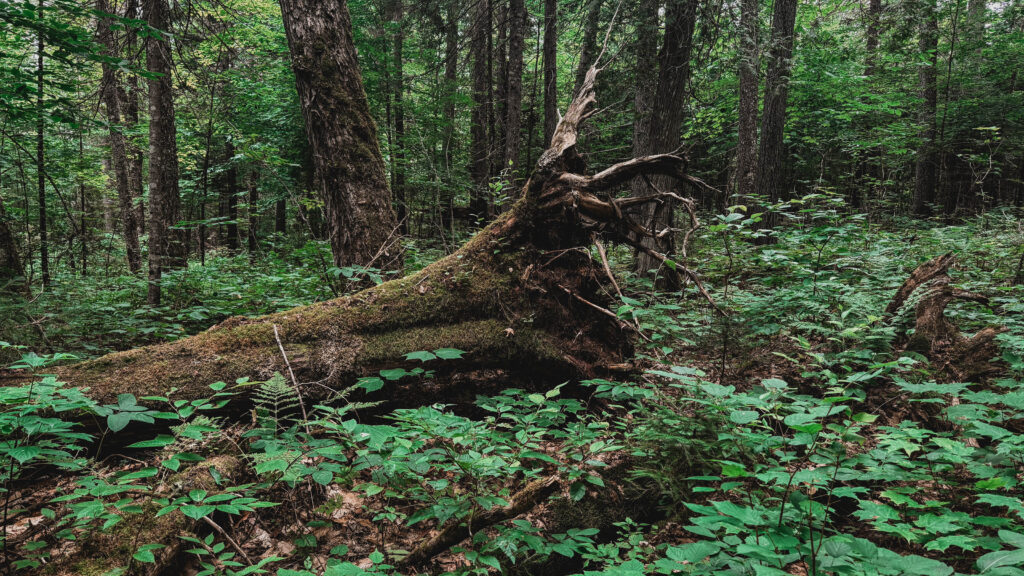
Late-successional and old-growth forests are related but distinct conditions. Old-growth forests are generally defined as forests that have developed over long periods without significant disturbance. Late-successional forests represent a mature stage of forest development and exhibit characteristics such as diverse tree species, multi-layered canopies, and large-diameter trees. Both are structurally complex, including multi-aged stands, layered canopies, presence of old trees, standing dead or dying trees, and abundant coarse woody debris, which together create unique ecological conditions.
Research Highlights
1. Maine’s newly mapped old forests represent a rare and urgent conservation opportunity.
Recent mapping identified more than 165,000 hectares of late-successional and old-growth forest in Maine, much of it previously unrecognized outside the timber sector. Yet roughly 126,000 hectares (76 percent) remain eligible for harvest. Because these forests are both ecologically and commercially valuable, the window for meaningful conservation is time-sensitive.
2. Private ownership creates the conditions for flexible, incentive-driven conservation.
Approximately 95 percent of Maine’s forests are privately owned, largely by commercial timber interests. That reality makes lasting conservation more likely to emerge through voluntary, incentive-driven approaches than through new regulatory mandates. Policies that respect property rights and align with landowner objectives offer the most practical starting point for protecting these LSOG forests. Durable conservation in Maine will depend on working with private landowners, not around them.
3. Conserving mature forests requires aligning economic incentives with ecological value.
These forests provide substantial public benefits, including carbon storage, biodiversity, and ecosystem resilience, but they also generate high private returns through timber. Conservation strategies must therefore compensate landowners for the economic value they forgo by conserving these stands.
4. A portfolio of tools can match diverse landowner and landscape conditions.
No single mechanism can conserve mature forests at scale across Maine’s working landscapes. Different conservation mechanisms have strengths and limitations, particularly in terms of cost, permanence, and landowner participation. Fee acquisition offers the strongest conservation guarantees but is expensive, while easements, carbon finance, and other incentive-based approaches can extend reach broadly. Combining these tools allows conservation efforts to match different ownership types, parcel sizes, and landowner priorities.
5. Strategic prioritization can maximize conservation impact per dollar.
Late-successional and old-growth forests are small and fragmented, but larger, high-value patches offer greater ecological benefits and lower transaction costs. By prioritizing areas based on size, carbon storage, connectivity, and risk of harvest, conservation efforts can focus resources where they will have the greatest impact. Targeting even a small share of the highest-priority forests can deliver outsized conservation gains. For context, the 10 largest LSOG patches (approximately 4,000 hectares) could be acquired for approximately $16 million.
5. Protecting Maine’s old forests is feasible with innovative financing.
Acquiring all privately held late-successional and old-growth forests in Maine would require an estimated $422 million dollars, reflecting their land and timber value. However, these forests store substantial carbon, creating opportunities to generate revenue through carbon markets and other ecosystem service payments. Blending public funding, private capital, and market-based finance can make large-scale conservation achievable.
Maine’s Forest Landscape
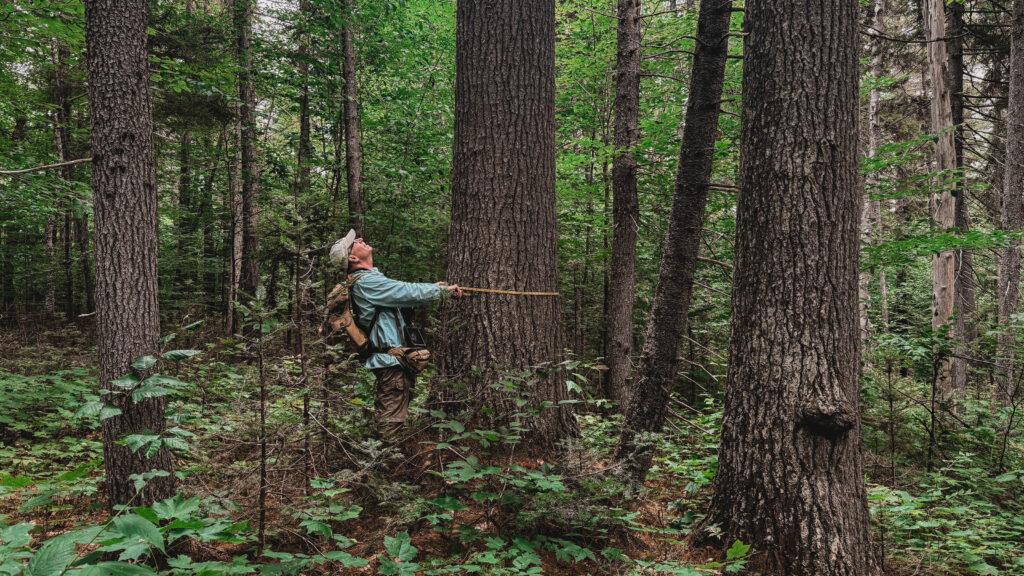
Maine’s forests occupy a distinctive position within the regional context of forest conservation. The state is nearly 90 percent forested, including vast unorganized territories characterized by sparse settlement and few formal townships. Approximately 95 percent of the state’s forestland is privately held. Ownership of this land has shifted dramatically in recent decades. Between 1990 and 2005, more than 10 million hectares of vertically integrated commercial timberland moved from traditional forest products companies to investment-oriented owners, principally Timber Investment Management Organizations (TIMOs) and Real Estate Investment Trusts (REITs). These ownership transitions have had tangible consequences for harvest activity. Private landowners, and TIMOs and REITs in particular, account for the highest rates of harvesting in the state. About 5 percent of private forestland is subject to partial harvest annually, with typical harvest intensities removing 25 to 70 percent of standing biomass depending on owner class and management objectives. LSOG forests are among the highest-volume stands and face systematically higher harvest pressure than the surrounding forest matrix. This reinforces a central challenge for conservation: Protecting LSOG forests requires overcoming precisely the economic signals that make these stands most attractive to harvest.
Over the same period of 1990 to 2005, conservation-designated lands expanded dramatically, from approximately 5 percent of the state in the 1980s to more than 20 percent today. Importantly, however, more than 85 percent of these conservation lands remain working forests open to regular harvesting. This coexistence of conservation status and active management distinguishes Maine from many other heavily forested regions and strongly shapes both ecological outcomes and economic contributions. While permanent forest loss has historically been relatively low, approximately 2,000 hectares per year continue to be converted to other land uses.
Maine’s forest policy framework reflects long-standing efforts to balance timber production, environmental protection, and landowner flexibility across this largely private landscape. State legislative and regulatory efforts have reduced the size of individual harvest openings, but total harvest volume has remained relatively constant as annual harvested areas have spread across larger footprints. In recent decades, third-party certification has provided an alternative to regulation that emphasizes demonstrated sustainability outcomes. Together, these policies illustrate Maine’s pragmatic approach to forest stewardship, in which working forests are expected to simultaneously meet economic, ecological, and social objectives.
LSOG conservation in Maine is an economic problem as much as an ecological one.
Forests are also central to Maine’s economy and climate strategy. The forest products industry contributes more than $8 billion annually, representing approximately 4 percent of the state’s gross domestic product. At the same time, Maine’s forests sequestered nearly 15 million metric tons of CO₂ equivalent annually between 2017 and 2021, with an additional 1.6 million metric tons stored in harvested wood products. Combined, forests and wood products sequester the equivalent of more than 90 percent of Maine’s annual greenhouse gas emissions, reinforcing the forests’ dual role as both economic engine and climate mitigation asset.
Eastern LSOG ecosystems are highly varied and dynamic in their structure, composition, and landscape pattern, reflecting the diverse disturbance regimes and ecological processes that have shaped northeastern forests. Mature forests also serve critical ecological functions that distinguish them from younger, second-growth stands. For example, old-growth forests contain significantly more down and standing dead wood compared to managed forests, providing essential habitat structure for numerous organisms. Regionally, LSOG forests support different relative abundances of tree species compared to second-growth forests, contributing to landscape-level biodiversity.
Empirical evidence underscores both the ecological value and vulnerability of Maine’s remaining old forests. They have substantially higher basal area, carbon stocks, and densities of large live and dead trees relative to other forest conditions, and carbon density is estimated to be up to 2.5 times the regional mean. This is consistent with broader studies showing that the largest 1 percent of trees globally store half of the above-ground forest carbon, and that LSOG forests can potentially keep sequestering carbon for centuries. Despite forests aging across much of the region, increases in large-tree density have been largely offset by harvesting activity.
Conservation on Privately Owned Timberlands
Unlike regions dominated by federal or state ownership, conservation on Maine’s private lands must account for property rights, economic constraints, and the diverse objectives of landowners ranging from industrial timber companies to family forest owners. Indeed, LSOG conservation in Maine is an economic challenge as much as an ecological one. Voluntary protection is therefore unlikely to occur at scale without external financial support, whether through private markets, philanthropy, or public policy, and in all cases requires substantial economic incentives to balance timber production with old forest protection.
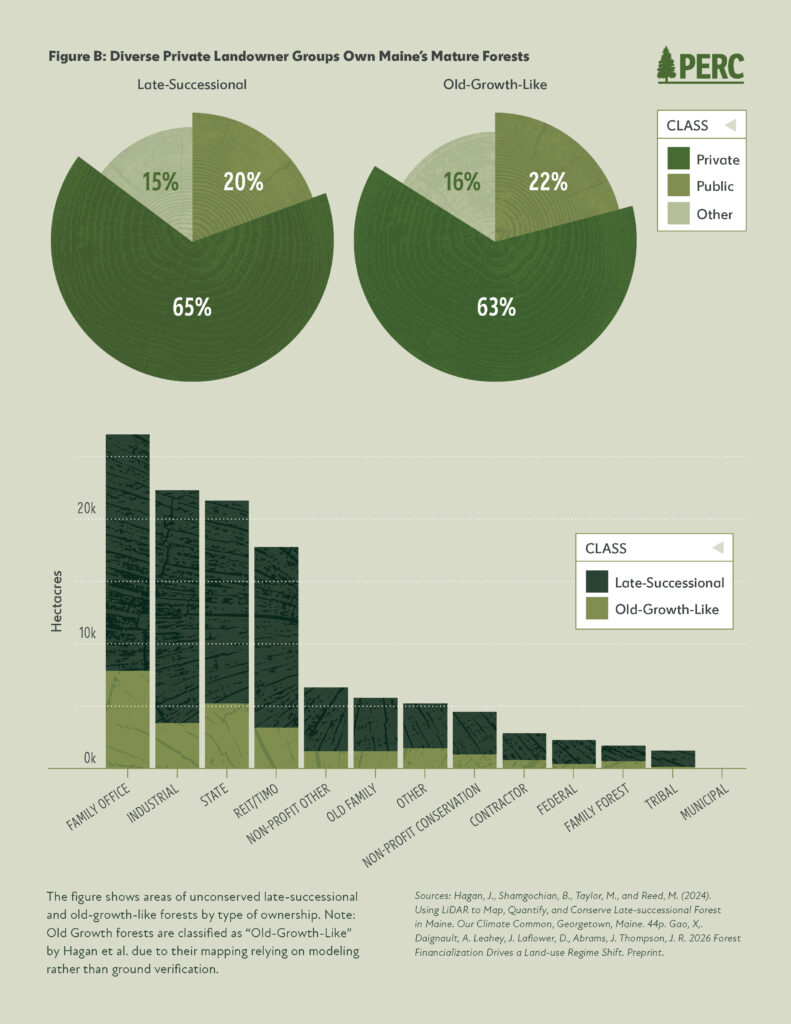
Roughly two-thirds of unprotected LSOG forests are on private land, mostly owned by commercial timber firms of various types. That means that the stands that provide the greatest carbon storage, structural complexity, and biodiversity value are also those that generate the highest returns for the firms who own them. For example, eight of the 10 largest LSOG patches are owned by investment firms (i.e., REIT/TIMO) and family offices. On the contrary, eight of the 10 most carbon-dense LSOG patches are owned by non-industrial family forest owners. When ranking LSOG patches using a multi-criteria approach that integrates patch size, carbon density, local connectedness, and harvest threat, the research identifies widely varied owner types clustered at the top; tribal lands, investment lands, non-profit conservation land, and family offices all rank in the top 10.
Given the diverse objectives of the landowners, and the multiple conservation criteria to consider, no single policy instrument or conservation mechanism will apply across the state.
Practical Recommendations for Forest Conservation
Our research identified roughly 126,000 hectares of late-stage and old-growth forests that remain unprotected and vulnerable to harvest on predominantly private lands. It also revealed that no single mechanism offers a complete solution, as each presents distinct trade-offs that make it more or less suitable for different contexts and conservation objectives. Synthesizing our findings allows us to develop practical recommendations for LSOG protection. We begin with three primary mechanisms: 1) fee-simple acquisition, 2) ecological reserve easements, and 3) carbon offset markets. Beyond these primary mechanisms, we assess the strategic role of 4) harvest deferrals, as temporary bridge protection while permanent solutions are arranged, 5) forest certification, as an existing but insufficient voluntary measure, and 6) regulatory policy approaches that can create serious implementation challenges, including perverse incentives and property rights conflicts.
1. Fee-Simple Acquisition
From a pure conservation perspective, fee-simple purchase offers unparalleled advantages: absolute permanence, complete management control, immediate protection, and elimination of virtually all future harvest risk. However, the fundamental constraint is cost. An estimated $422 million would be required to acquire all unprotected LSOG forests, making fee purchase alone an unrealistic strategy. This cost constraint necessitates complementary approaches that can extend protection more affordably while maintaining conservation effectiveness.
2. Ecological Reserve Easements
Maine’s conservation record illustrates both the promise and the limitation of this approach for LSOG forests. Conservation easements account for more than half of all conserved land in the state, yet less than one-quarter of those easements prohibit timber harvest. Land-use restrictions imposed by conservation easements are flexible and negotiated between the landowner and easement holder. Ecological reserve easements are a distinct class of easement that prohibit commercial timber harvesting and other extractive uses in perpetuity. These easements would provide permanent LSOG protection while allowing land to remain in private ownership. Additionally, term ecological reserve easements could enable temporary protection while additional resources and mechanisms for a permanent solution are being investigated.
3. Carbon Offset Markets
Such programs compensate landowners for providing ecological services that generate societal benefits but lack conventional markets. Maine’s LSOG forest carbon markets could provide substantial revenue to offset protection costs while delivering climate mitigation co-benefits, particularly for parcels that are assessed to be at high risk of harvest and thus considered additional. However, protocol constraints, transaction costs, market volatility, and implementation barriers can prevent carbon markets from serving as the primary protection mechanism, particularly given the relatively small and widely distributed patches of LSOG forest across the state. Integrated strategically with fee acquisition and easements, carbon markets can meaningfully reduce net conservation costs.
4. Harvest Deferrals
This targeted approach is exemplified by the strategy currently employed by New England Forestry Foundation (NEFF), which focuses on purchasing temporary harvest deferrals rather than acquiring land outright. Under this model, the foundation compensates landowners for postponing harvest of stands explicitly scheduled for cutting in existing management plans, typically paying a negotiated portion of the estimated stumpage value for a five- to 15-year deferral. Once the deferral period expires, landowners are again free to harvest unless additional conservation measures are secured.
5. Forest Certification
Maine has some of the highest rates of forest certification in the United States. Approximately three million hectares, or roughly half of total forest cover, is certified under Forest Stewardship Council (FSC), Sustainable Forestry Initiative (SFI), or both. While certification systems include provisions relevant to LSOG protection, evidence strongly suggests that certification alone is insufficient to ensure comprehensive conservation of such forests in Maine.
6. Regulatory Policy
In passing An Act to Enhance the Protection of High-value Natural Resources Statewide in 2025, the Maine Legislature signaled growing public and political recognition that protection of mature forests is a social priority. This legislation directs the Maine Forest Service to produce a comprehensive report outlining statewide strategies for LSOG conservation and requires biennial reporting beginning in 2031. The bill stops short of imposing direct regulatory protections. Given property rights implications, perverse incentive risks, and distributional impacts of regulation, conservation strategies should prioritize voluntary mechanisms that achieve protection through compensation and cooperation rather than mandates.

An Integrated Strategy
Strategies to conserve mature forests in Maine must confront the alignment between ecological value and economic incentive. Integrating the above mechanisms into a tiered portfolio strategy matches each tool to the contexts where its comparative advantages are strongest, offering a realistic pathway to comprehensive LSOG protection within financial and political constraints.
Based on cost realities and complementary mechanism capabilities, we recommend a tiered strategy that deploys fee acquisition strategically while leveraging ecological reserve easements and carbon markets to extend protection:
Tier 1
Identify late-successional and old-growth forest patches on public and conservation organization-owned lands. Approximately 32,000 hectares of LSOG are owned by conservation organizations and land trusts but lack ecological reserve easement protections, relying instead on administrative safeguards. Additionally, approximately 25,000 hectares of unprotected LSOG occur on state and federal public lands. Our Tier 1 strategy suggests that: 1) public agencies formalize LSOG protection through reserve designations and legal protections that preclude timber harvest, and 2) conservation organizations strengthen their fee-owned LSOG through ecological reserve easements, ensuring durable legal permanence.
Tier 2
Protect large LSOG patches (greater than 200 hectares) through fee acquisition and ecological reserve easements tailored to conservation objectives and landscape context. For patches with the greatest ecological resilience, highest carbon density, and strategic locations adjacent to existing protected areas, prioritize fee acquisition—ideally embedded within larger projects that include a matrix of transitioning late-successional and/or other high-quality secondary forests. Where possible, particularly on the most carbon-dense lands that would otherwise be harvested, use the sale of carbon offset credits to help finance the purchase of these sites. New private conservation ownership and ecological reserve easements should prioritize sites with the maximum conservation value determined on the ground. Creative price revealing mechanisms such as reverse auctions should be used to maximize efficient deployment of limited conservation funds.
Tier 3
Incentivize voluntary protections for small dispersed LSOG patches that are embedded within timberland owner properties. Many LSOG patches are small and geographically isolated, making them impractical for acquisition by external conservation organizations. In fact, approximately 75 percent of the mapped LSOG area is in patches smaller than 50 hectares. Encourage voluntary protection of small patches by timberland owners: 1) through continued compliance with their existing forest certification standards, and 2) in recognition of Maine’s historical social contract for sustainable forestry.
Tier 4
Employ complementary and temporary mechanisms, including harvest deferrals, for patches facing imminent threat and to incentivize markets for low-grade wood to take pressure away from LSOG forests. These approaches would provide bridge protection and reduce the harvest threat while permanent conservation solutions could be developed.
Tier 5
Use near-real-time remote sensing and public protection databases to monitor all LSOG forests and communicate their status. Doing so on a publicly available website would show where, when, and by whom LSOG is protected as well as where, when, and by whom it is lost to timber harvest.
This integrated approach could protect the substantial majority of unprotected late-successional and old-growth forest while managing total investment to levels more realistic than the $422 million required for fee acquisition alone. The strategy recognizes that different protection mechanisms have comparative advantages for different types of properties and conservation objectives, and that efficient resource allocation requires matching mechanisms to circumstances rather than relying exclusively on any single approach.
Conserving Maine’s oldest forests will depend on translating their public conservation value into incentives for the private landowners who steward them. In a landscape defined by private ownership and working forests, conservation must compete economically with timber harvest. An integrated strategy grounded in voluntary participation, clear property rights, and well-designed market mechanisms offers a path to do so. By combining targeted acquisition, durable easements, and incentive-based mechanisms that compensate landowners for the public benefits their forests provide, it is possible to secure meaningful protection at scale.
This research was made possible through the generous support of the Emily J. Knobloch Foundation.
For the full research, see: Jonathan R. Thompson, Adam Daigneault, Joshua Plisinski, India Moon, and Julia Norton, “Pathways for Protecting Maine’s Remaining Late Successional and Old-Growth Forests,“ Property and Environment Research Center, 2026.