
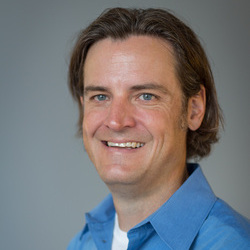
Kurt Schnier is an Associate Professor in the Department of Economics, Andrew Young School of Policy Studies at Georgia State University. Schnier received a B.S. in management sciences from the University of California at San Diego, an M.A. in environmental studies from the University of Pennsylvania, and his Ph.D. in economics from the University of Arizona.
His research is primarily focused on facilitating the development of efficient marine resource policy and determining how fishermen respond to current and prospective fisheries management regimes. More specifically, his research has focused on the development and utilization of dynamic discrete choice models to evaluate fisheries policy, utilizing property rights to manage essential fish habitat, the role of spatial externalities in resource management, estimation of capacity in fisheries, investigating heterogeneous preferences, and risk-taking behavior in natural resource extraction industries. In addition to \his research in marine resource management, he has been actively involved in research on charitable auctions and the provision of public goods.
At the time of his 2007 Lone Mountain Fellowship, Kurt was Assistant Professor in the Department of Environmental and Natural Resource Economics at the University of Rhode Island. Since his fellowship, Kurt has been actively involved in other PERC programs such as speaking at the PERC-Liberty Fund colloquium for undergraduate students. In conjunction with the 2009 colloquium, Kurt extended his stay to three weeks to spend time in residence continuing work on his fisheries research and presenting two papers on the subject. He will co-direct PERC's property rights workshop on "Innovations in Fisheries Management" in the fall of 2010 with Chris Costello, a 2008 Lone Mountain Fellow.

Founded 30 years ago in Bozeman, Montana, PERC—the Property and Environment Research Center—is the nation’s oldest and largest institute dedicated to improving environmental quality through property rights and markets.
PERC’s publications, each designed to resonate with specific groups, move ideas generated at PERC to broader audiences.
Research is at the heart of PERC's work, with a focus on the question: What is the link between economic growth and environmental quality?
The goal of PERC’s programs is to fully realize the vision of establishing “PERC University,” where scholars, students, policy makers, and others convene to expand the applications of free market environmentalism.
PERC's fellowships share a common goal of exposing new scholars, students, journalists, and policy makers to free market environmentalism, as well as enable scholars already familiar with FME to explore new applications.
PERC continues to publish and present a broad range of research and discussion through podcasts, videos, and other multimedia channels.