
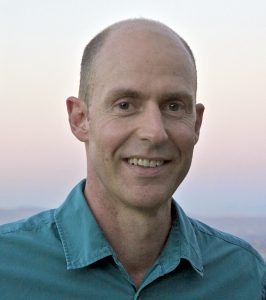
Michael `t Sas-Rolfes
PERC Research Fellow Michael ’t Sas-Rolfes is a sustainability economist, with unique experience and understanding of the role of markets for biodiversity conservation. He is currently a research associate at the University of Oxford in the Oxford Martin School. He was also a 2023 PERC Lone Mountain fellow.
For the past 25 years, he has been actively involved in various private conservation initiatives, starting as a financial manager of a private game reserve in South Africa. Mike conducted pioneering research into the role of private markets for wildlife conservation in Southern Africa and worked with Francis Vorhies in setting up Eco Plus, an innovative consultancy on business, economics, and the environment. His consulting experience includes work on issues as varied as energy policy, environmental impact assessments, trans-frontier conservation areas, wildlife trade policy, and institutional reform in protected area management.
His first degree was in Commerce at the University of the Witwatersrand in South Africa, followed by postgraduate degrees in Environmental Resource Economics at University College London and Biodiversity, Conservation and Management at Oxford.
As part of his current interdisciplinary doctoral research, Michael is investigating methods for gaining a predictive understanding of wildlife trade dynamics, specifically using scenario analysis and participatory modeling to try and resolve questions about appropriate policies toward trade in endangered species.
He has written extensively on various conservation issues, especially relating to trade in endangered species, and has been involved with teaching and supervision of students. Mike has also worked and published with several think tanks, including the Free Market Foundation (South Africa), the Institute of Economic Affairs Environment Unit (UK), and the International Policy Network (UK).