
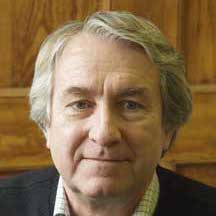
In the rush to protect the environment at any cost, individual rights have been violated and ignored. Richard L. Stroup advocates restoring people's rights against both polluters and against false claims of damage as the best way to ensure environmental protection. Both measures would increase the effectiveness and the marketability of further environmental programs.
A false perception of crisis produces non-prioritized, wasteful, often unjust requirements and counterproductive responses like the Superfund program. And such programs often fail, despite their great cost, to achieve their goals. They give environmental programs a bad name.
An example is the Endangered Species Act. Despite its enormous powers only a few species among the hundreds listed have been successfully removed from the endangered category, and often habitat has been destroyed by landowner reactions to the ESA. Why? Landowners who allow an endangered species to be found on their land are threatened with the loss of land use and other severe penalties, giving them an incentive to manage their land to discourage the listed species.
Stroup, who has written extensively on the reform of the Endangered Species Act, recommends eliminating the penalties and restrictions now imposed unfairly on some landowners to provide a good for the public. Needless habitat reduction would cease, low-cost habitat could often be utilized and even volunteered, as was common before the ESA instituted severe penalties. In the unusual case when only one tract of land can provide for survival, negotiation for its service, or even taking the land using eminent domain powers could solve the problem.
The nation's capacity to devote resources to any environmental program is finite. Stroup advocates a principled approach that would utilize market forces by protecting individual rights and putting governmental procurement of services back on budget.
He is currently an adjunct professor at North Carolina State University in Raleigh, NC. Previously, Stroup was a professor of economics at Montana State University and the head of the Department of Agricultural Economics and Economics.
He is a widely published author and speaker on economics, including natural resources and environmental issues. He is the author of a recent primer on economics, Eco-Nomics: What Everyone Should Know About Economics and the Environment, which received the 2004 Sir Anthony Fisher Memorial Award.
Stroup also is recognized for introducing the public choice school of economics in a leading economics principles textbook, which he co-authored with James D. Gwartney. Economics: Private and Public Choice is now in its tenth edition, which now includes Russell Sobel and David McPherson as co-authors also.
In the late 1970s, Stroup was one of the originators of the New Resource Economics, the academic approach that is popularly known as free market environmentalism.
A native of Washington state, Stroup received his Ph.D. in economics from the University of Washington in 1970. During the Reagan administration, Stroup served as the director of the Office of Policy Analysis at the Department of Interior.
He lives in Raleigh, NC, with his wife Jane Shaw.
Stroup has been researching the role of economic institutions in promoting both economic development and environmental quality. Most recently, he has studied the "curse of natural resources," the claim that mineral wealth and other natural resources discourage economic growth.

Founded 30 years ago in Bozeman, Montana, PERC—the Property and Environment Research Center—is the nation’s oldest and largest institute dedicated to improving environmental quality through property rights and markets.
PERC’s publications, each designed to resonate with specific groups, move ideas generated at PERC to broader audiences.
Research is at the heart of PERC's work, with a focus on the question: What is the link between economic growth and environmental quality?
The goal of PERC’s programs is to fully realize the vision of establishing “PERC University,” where scholars, students, policy makers, and others convene to expand the applications of free market environmentalism.
PERC's fellowships share a common goal of exposing new scholars, students, journalists, and policy makers to free market environmentalism, as well as enable scholars already familiar with FME to explore new applications.
PERC continues to publish and present a broad range of research and discussion through podcasts, videos, and other multimedia channels.