
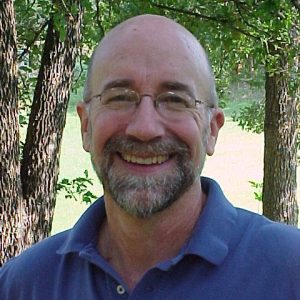
An economist and lawyer, Roger Meiners defends the superiority of the common law--legal traditions developed through the courts--over federal regulation. In his view, the success of markets is intertwined with the common laws strong protection for property rights. Common law protects the environment by allowing individuals to take action against trespass and nuisance affecting the enjoyment of their properties. It empowers individuals and decentralizes decisions. In contrast, centralized regulations concentrate power and tend to apply a one-size-fits-all solution to a multitude of problems.
He and PERC Fellow Andrew Morriss have written several papers on the mining industry, including articles published in Environmental Law and Administrative Law Review.
He received his law degree from the University of Miami and his Ph.D. in economics from Virginia Tech, where he was strongly influenced by public choice economists James Buchanan, Gordon Tullock, and Richard Wagner. He is currently Goolsby Distinguished Professor of Economics and Law at the University of Texas at Arlington and is Chairman of the Department of Economics. He was previously on the faculty at Clemson University, Emory University, and Texas A&M University. He also served as the director of the Federal Trade Commission office in Atlanta.
Roger lives with his wife Cary, a high school administrator, in Fort Worth, Texas. He has four children in various stages of higher education.
Meiners and PERC Senior Fellow Andrew Morriss are examining legal constraints on the mining industry and the economic justifications for demands that the industry be subjected to even tighter regulatory controls. They find that the Mining Law of 1872 is, contrary to its many critics, sensible legislation that creates good incentives.

Founded 30 years ago in Bozeman, Montana, PERC—the Property and Environment Research Center—is the nation’s oldest and largest institute dedicated to improving environmental quality through property rights and markets.
PERC’s publications, each designed to resonate with specific groups, move ideas generated at PERC to broader audiences.
Research is at the heart of PERC's work, with a focus on the question: What is the link between economic growth and environmental quality?
The goal of PERC’s programs is to fully realize the vision of establishing “PERC University,” where scholars, students, policy makers, and others convene to expand the applications of free market environmentalism.
PERC's fellowships share a common goal of exposing new scholars, students, journalists, and policy makers to free market environmentalism, as well as enable scholars already familiar with FME to explore new applications.
PERC continues to publish and present a broad range of research and discussion through podcasts, videos, and other multimedia channels.