| More Books by PERC Authors and Editors: |
 Beyond Politics: Markets, Welfare, and the Failure of Bureaucracy, by William C. Mitchell and Randy T. Simmons, Boulder, CO: Westview Press, 1994. Beyond Politics: Markets, Welfare, and the Failure of Bureaucracy, by William C. Mitchell and Randy T. Simmons, Boulder, CO: Westview Press, 1994.
|
| What Everyone Should Know About Economics and Prosperity, James D.Gwartney and Richard L. Stroup Bozeman, MT.: PERC,1993.
|
| The Birth of a Transfer Society, by Terry L. Anderson and Peter J. Hill. Lanham MD: University Press of America, 1989.
|
| Bureaucracy vs. Environment: The Environmental Costs of Bureaucratic Governance, John Baden and Richard L. Stroup, contributing editors. Ann Arbor MI: University of Michigan Press, 1981.
|
| Continental Water Marketing, edited by Terry L. Anderson. San Francisco: Pacific Research Institute, 1994.
|
| , 8th ed., by James Gwartney and Richard L. Stroup. San Diego: Harcourt Brace & Company, 1997.
|
| Gridlock in Government: How to Break the Stagnation of America, by Roger E. Meiners and Roger LeRoy Miller. Fort Wayne IN: State Policy Network, 1992.
|
| Growth and Welfare in the the American Past: A New Economic History, by Douglass C. North, Terry L. Anderson and Peter J. Hill. Englewood Cliffs NJ: Prentice Hall,1983.
|
| NAFTA and the Environment, by Terry L. Anderson. San Francisco: Pacific Research Institute for Public Policy, 1993. (Available from PERC.)
|
| Undoing Drugs: Beyond Legalization, by Daniel K. Benjamin and Roger Leroy Miller. New York: Basic Books, 1993. (Available from PERC.)
|
| Natural Resources: Bureaucratic Myths and Environmental Management, by Richard L. Stroup and John A. Baden. Cambridge MA: Ballinger Press, 1983.
|
| Water Crisis: Ending the Policy Drought, by Terry L. Anderson. Washington, D.C.: Cato Institute and Johns Hopkins University Press, 1983.
|
| Water Rights: Scarce Resource Allocation, Bureaucracy, and the Environment, edited by Terry L. Anderson. San Francisco: Pacific Institute for Public Policy Research, 1983.
|
| The Yellowstone Primer: Land and Resource Management in the Greater Yellowstone Ecosystem, edited by JohnBaden and Donald R. Leal. San Francisco: Pacific ResearchInstitute for Public Policy, 1990. |
Economics:
Date
Topics
Related Content
-

When Suing Pays Better Than Saving Land
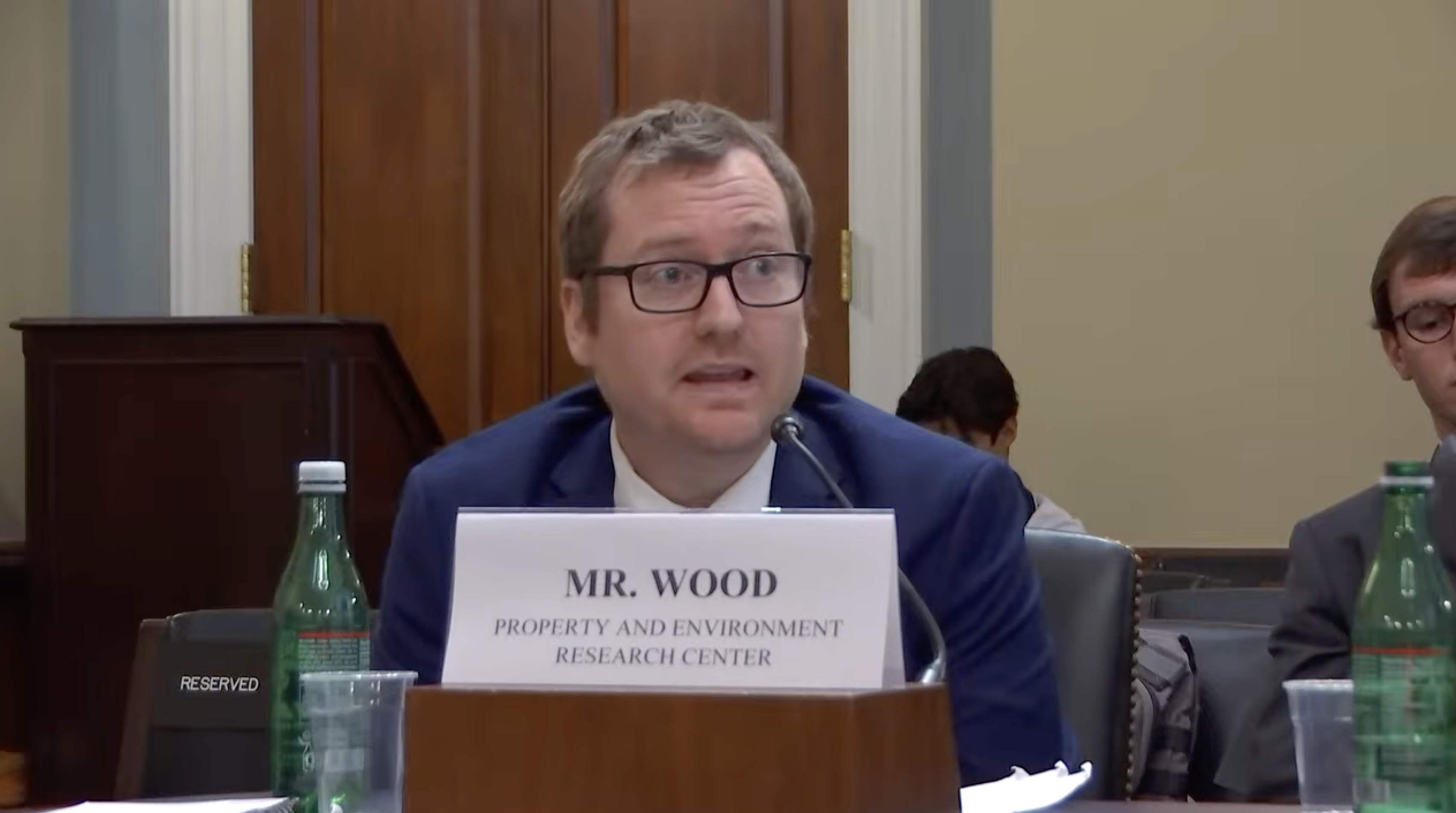
PERC testifies before Congress on the perverse incentives driving environmental litigation
-

New Research Outlines Strategies to Protect Maine’s Last Mature Forests
Study finds market-based conservation approaches can safeguard rare old-growth forests while respecting private landownership
-

Conserving the Last Mature Forests in Maine
Pathways to protect the state’s remaining late-successional and old-growth forests