
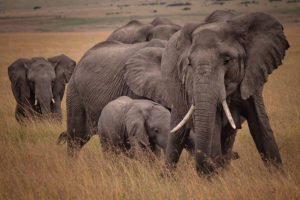
African elephants are not only majestic animals, but also cropraiding nuisances, endangering human lives and livelihoods. Conservation groups have determined that in order to protect elephants it is necessary to protect the people who are sharing the land with them. It is a complex situation that in some areas has been solved by the simple chili pepper, now considered a major tool in elephant conservation.
Elephants do not like their food hot. They find chili peppers downright unpalatable. Farmers have taken advantage of this aversion by planting buffer crops of chili peppers around their core crops of maize, sorghum, and millet. While deterrents such as electrical fencing can be prohibitively expensive, peppers are cost-effective. In the Zambezi Valley, which straddles Zimbabwe and Zambia, the chilies have been used successfully to ward off raiding groups, yet they present no threat of permanent harm to the animals.
The chili peppers are used not only as buffers, but also in spray form to drive away the marauders. Furthermore, the chili peppers have become a viable cash crop for farmers. Currently, the chilies are being used in bottled hot sauces, jams, and relishes.
In recognition of the value of the chili pepper, the Elephant Pepper Development Trust was established to help ensure elephant survival while also protecting the livelihoods of farmers in an area with a growing human population. The trust is supported by the Wildlife Conservation Society as well as other conservation groups. The World Bank awarded the group more than $100,000 to help it develop and promote its Elephant Pepper products. The trust now operates two companies, the African Spices Company and the Chilli Pepper Company. Proceeds from the specialty foods produced by the businesses are returned to the trust to help support and expand chili growing projects among African farmers.
The trust is also working to enlarge its distribution with particular focus on marketing its hot sauces in the United States. For more information, visit www.elephantpepper.org.
 Environmental News Network