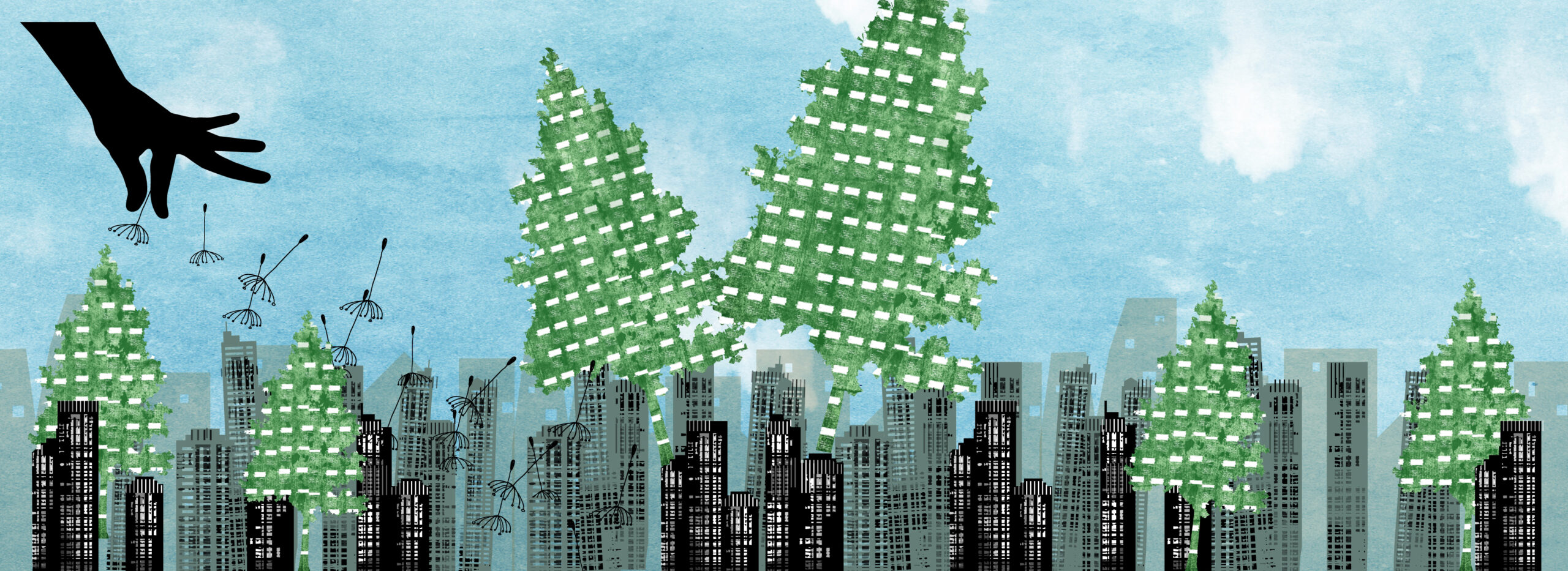
 When the elevator stops on the top floor of some of the world’s newest downtown skyscrapers, the occupants may be in for a surprise. Before them may be a field of waving native grasses and a stunning display of wildflowers. Birds chirp, and butterflies go about their business without even noticing they are in midtown and not some pastoral location far from the traffic and concrete of a major metropolis.
One of the latest trends in building is the green roof. Although the idea has been around for many years, it is rapidly gaining in popularity. And exactly what is a green roof? Basically it is various forms of green and growing plants often set out across the roof top in trays that contain lightweight aggregate soils anywhere from 3 to 6 inches deep. Don’t think about the deep, rich, and heavy soil of an Illinois farm, but something a little more modern.
The advantages of such a roof compared to the typical asphalt variety are many. It significantly reduces the roof ’s temperature during summer months, which leads to a similar reduction in air conditioning and the energy bills that accompany that cool comfort. It also lasts longer than a conventional roof, needing replacement on average every 40 years as compared to every 10 to 20 years.
It loves water. When a deluge passes over the city and storm drains are overwhelmed, sometimes emitting raw sewage as a result, the green roof soaks up all that extra water and even filters it before sending what it doesn’t use down the drains. In China, green roofs are popular because the storm water is stored and treated, creating a self-sustaining water system for hundreds of apartments, schools, and businesses that often suffer water shortages. The Chinese also see the benefits of green roofs in easing fuel shortages and reducing greenhouse gases.
While this certainly appears to be a rosy picture, the fact is that green roofs cost more. Some estimates have pegged the cost of green roofs at $10 to $15 per square foot compared to $3 to $9 for a conventional roof. Despite these initial costs, green roofs produce energy savings, last longer, and add to property values. Last year, green roof space in the United States grew by 70 percent.
While some countries are considering making green roofs mandatory for certain buildings, they are totally voluntary in the United States. Steven Peck, however, sees a bright future ahead. As president of Green Roofs for Healthy Cities, a nonprofit industry association, he predicts that green roofs will someday be treated as necessary infrastructure just like sewers and streets.
 Reuters