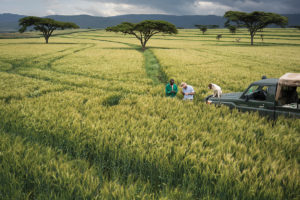
Family farms and ranches have found that entertainment is a cash crop that can keep them in business, even when more traditional fruit and vegetable crops cannot. Small family farms struggling to keep up with rising costs and compete with large commercial operations have turned to corn mazes, petting zoos, and hayrides.
Farmers who began with pick-your-own-apples and tap-your-own-maple-tree have proved to be inventive entrepreneurs. They have expanded their offerings to include strawberry stomps, pie markets, hay bale tunnels, country western bands playing from the beds of old pickups, tricycle courses, and petting corrals with coin-operated food dispensers. Most farms also operate snack bars, souvenir stands, and green markets selling their produce.
City dwellers and suburbanites have flocked to these farms in huge numbers, eager for a taste of rural life and a chance to show the kids a real pig. They shell out $6 for the maze and $10 for the hayride, and sometimes an entrance fee on top of that.
Even schools of agriculture have responded to the trend by adding courses in marketing and entrepreneurship. Admittedly, there are tradeoffs to hosting hordes of people on what was once peaceful pasture land, but for a few months a year most farmers are willing to make the compromise. One New Jersey farmer who has 400,000 paying visitors a year admitted that the proceeds had sent his children to private schools and then to Princeton.
 The New York Times