
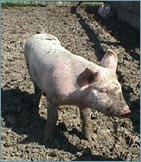
 After years of bitter wrangles over the stench coming from large hog farms, a Tulsa inventor says he has found a cost-effective method to stem the odor of animal waste. Not only does it reduce the odor to a virtual trace, but it also eliminates water pollution and lowers the disease rate for the animals.
John Candler’s treatment system relies on ozone to do the bulk of the dirty work. First, the waste is sterilized in a small holding tank by injecting ozone. The ozone breaks down ammonia and hydrogen sulphide and kills all the bacteria. Next, the solids are separated from the liquid. The solid waste, which is now odorless, is ready for immediate use as a dry soil nutrient, while the sterilized liquid can be recycled to the pig barns as clean flush water.
The system is currently in operation at a farm in Clarks Hill, Indiana, that raises 13,600 pigs in 16 barns on just 3 acres of land. The typical lagoon and sprayfield method of treating pig waste, which has sparked so much controversy, requires far more land. The Candler Waste Elimination System is surprisingly compact as it requires only a small holding tank and the sterilization equipment.
Both the initial investment for the Candler system as well as the operating costs are lower than that of lagoon and sprayfield operations. Another advantage is a cleaner environment for the animals. The hogs do not have to breathe ammonia and hydrogen sulphide, and their barns are cleaner, which means that low-grade antibiotics are not necessary.
These healthier and happier animals reportedly drink more water and plump up faster. And that means the piggies are ready to go to market a week or two early, saving farmers thousands of dollars every year.
 www.greenbiz.com