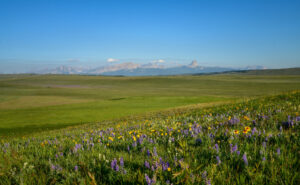
As more and more people move to the country, they are destroying the very thing that they came for wide open spaces. The once vast grasslands of Texas are succumbing to strip malls and ranchettes. In an effort to reverse this trend, Peter Malin is developing 1,000 acres of farmland outside Fort Worth that will preserve two-thirds of the property as prairie vista.
With the help of an architect, a city planner, and a landscape architect, Malin has devised a plan that will maintain 700 acres as grassland and open space. The homes will ring the perimeter, providing each with a long view of the undeveloped land.
Malin claims that homeowners want to enjoy the landscape and sense of space, but do not want to spend their time tending 20-acre yards. And for the most part, maintaining a healthy prairie ecosystem that has been fenced into small chunks with a different owner in charge of each one is close to impossible.
The preserved open space will not necessarily be pristine prairie. In fact, the plan calls for it to be productive in order to pay the property taxes. It will be up to the residents of the Big Sky development to determine the use. It may be leased as grazing land or used to grow hay or perhaps even a crop of sunflowers. To facilitate its management, Malin has left 50-foot corridors of open space between property lines to accommodate harvesting equipment or grazing herds.
While this may sound like another retreat for the rich, Malin says the lots are selling for about $55,000, which is comparable to a typical building lot elsewhere in Tarrant County. And, there are no deed restrictions dictating the minimum size of the homes.
With 28 lots sold in the first phase, Malin’s dream of allowing people to live in wide open spaces without destroying them seems to be well on its way to becoming a reality.
 Chicago Tribune