
PERC has filed an amicus brief urging the U.S. Eleventh Circuit Court to reverse a district court ruling that, if upheld, would upend the Endangered Species Act’s (ESA) cooperative federalism framework and violate the Constitution’s anticommandeering doctrine.
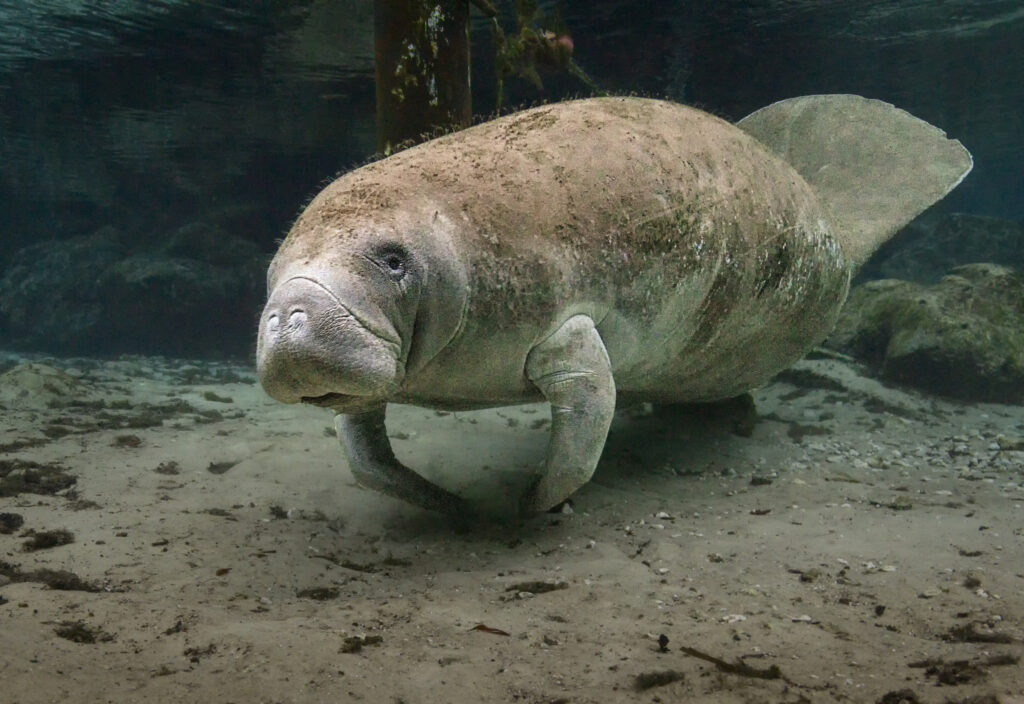
The case involves Florida’s efforts to restore the North Indian River Lagoon, home to the threatened West Indian manatee. To improve water quality, the state has worked with communities and businesses to cut pollution, particularly nitrogen from wastewater and septic systems. These efforts have reduced nitrogen by nearly 150,000 pounds a year—more than half the state’s goal—and helped bring back seagrass, the manatee’s main food source.
Nonetheless, Bear Warriors United sued Florida under the ESA’s “take” prohibition, claiming the state’s wastewater regulations do not go far enough in eliminating the harm to manatees. The district court agreed and ordered Florida to ban all septic systems, roll out additional programs for manatees, and seek federal approval before making any changes.
PERC’s brief argues that this ruling goes too far. It would let activist lawsuits effectively take control of state regulatory programs to achieve federal goals. The Constitution’s anticommandeering doctrine bars the federal government from compelling states to enact, enforce, or promote federal laws or directives. Yet the district court’s order would do just that—compelling Florida to implement a federally mandated framework.
What’s more, the ESA itself was designed to encourage state leadership, not sideline it. Congress created a cooperative model in which states play a central role in protecting species, with Section 6 of the Act promoting partnerships and limiting when federal rules can override state programs. Interpreting the law the way the district court did would discourage proactive conservation and punish states for the federal government’s enforcement shortcomings.
The decision could also stifle creative approaches. Other states have improved water quality through market-based trading, wetland restoration, or oyster and seagrass projects that naturally filter pollution. But under the court’s ruling, Florida would be locked into one rigid path. Worse, it could discourage other states from taking action at all, fearing liability under the ESA.
PERC urges the Eleventh Circuit to reject this interpretation, preserve the ESA’s cooperative framework, and reaffirm constitutional limits on federal control over state decision-making.