A Wild Livelihoods Survey Report
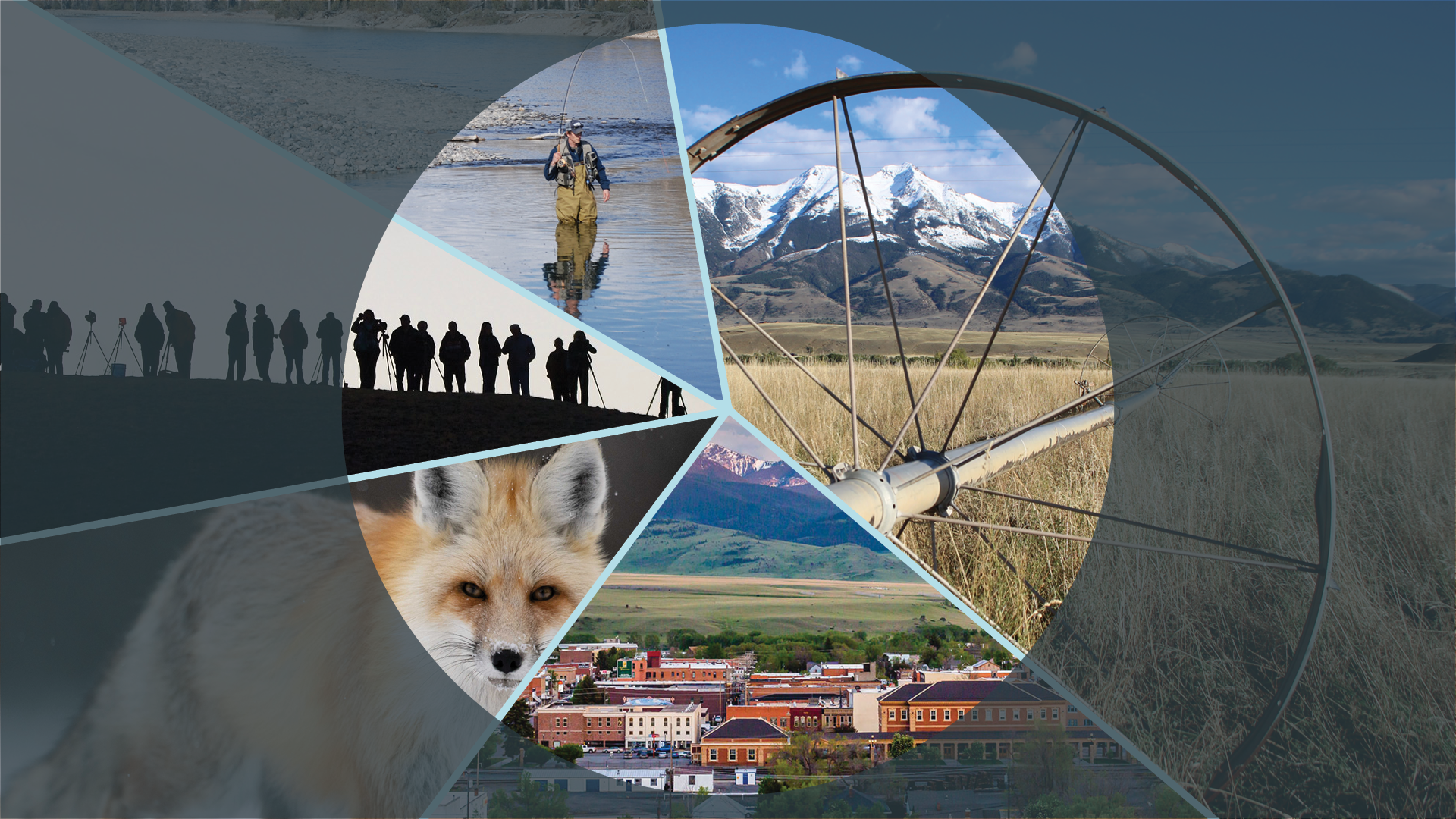
Wild Livelihoods is a coalition of Montana businesses in the Greater Yellowstone whose livelihoods depend upon wild places. We share a common interest in protecting open spaces, clean air and water, rich soil and native plants, and vibrant wildlife populations for all. We are guides, restaurants, lodges, gas stations, retailers, ranchers, and more.
Background
The outdoor recreation economy is a significant and growing contributor to the U.S. economy generating an estimated $1.2 trillion dollars in economic output in 2023.1Outdoor recreation consists of many activities including hunting, fishing, boating, biking, RVing, travel and related apparel and accessories.
Montana ranks third among 50 states in terms of outdoor recreation’s contribution to its economy, contributing 4.6% of state gross domestic product (GDP) and representing some 30,920 jobs and $1.64 billion in wages.2Ibid. An estimated 13.7 million visitors to Montana spent $5 billion in 2024; one-in-15 workers were supported by out-of-state travel; and $308 million in state and local taxes were generated by non-resident visitors.3ITRR. 2025. The Montana Travel Industry-2024 Summary. The majority of supported jobs were in the retail trade; accommodation and food services; and arts, entertainment, and recreation sectors.
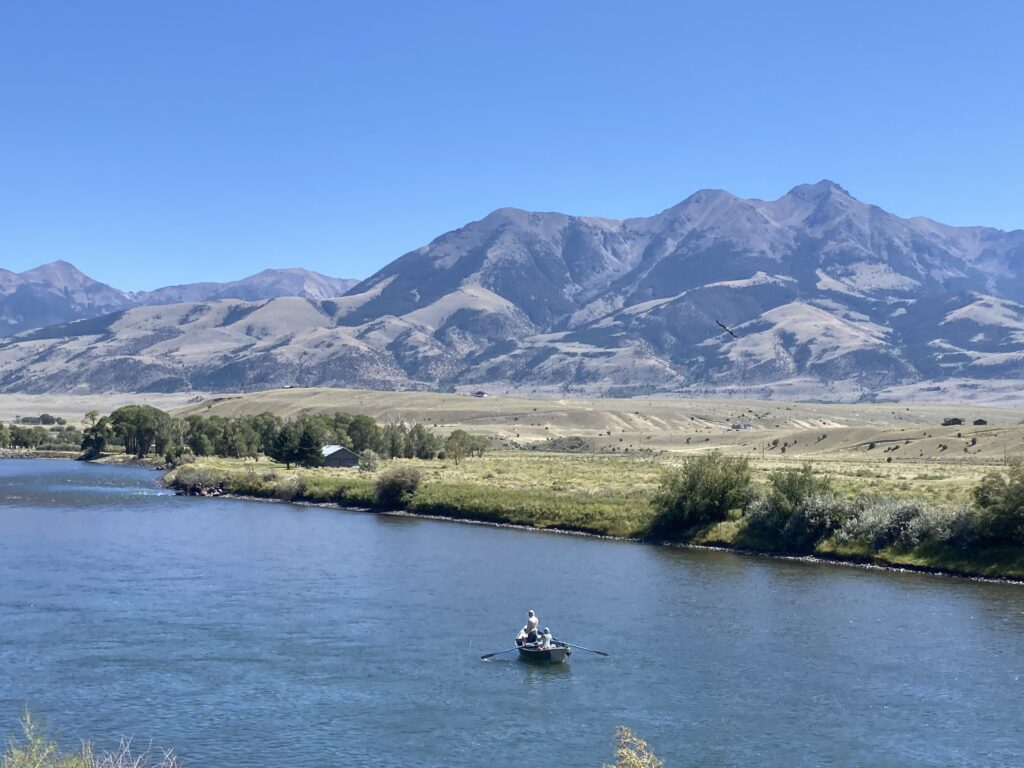
Park County, Montana, garners more than its equal share of Montana’s natural amenities as its scenic qualities, public lands, proximity to Yellowstone National Park, and abundant recreational offerings attract increasing numbers of tourists and new residents, supporting a wide range of businesses and generating substantial economic output, estimated to exceed $500 million annually.4Larry Swanson, Key Trends, Dependencies and Vulnerabilities in Park County, Montana and its area economy (2016): 1-2. (Greater Yellowstone Wildlife-Related Activity Valuation Study, 2022)
As increasing numbers of people discover Park County, its quality of life, and recreational amenities, the benefits also come with liabilities.
In conversations with local businesses and borne out by surveys and the experience of other high-amenity communities, the influx of visitors and new residents (especially part-time and short-term rentals) represents a boon for many businesses, but longer-term residents and business owners experience impacts as well.5For example, a majority of residents surveyed by ITRR in 2024 feel that the benefits of tourism outweigh the negative impacts, while also being in strong agreement that tourism promotion by the state provides an economic benefit to their community. At the same time, however, over 40% of respondents felt that the state was becoming overcrowded because of the number of tourists, while close to half felt that their community was dealing with issues of crowding during the summer season. Carter Bermingham et al, Montana Residents’ Attitudes Towards Tourism-2024, Institute for Tourism and Recreational Research, 5-2025. In particular, they note that the very attributes that draw people to the region (e.g., natural beauty, community, and culture) are in danger of being diminished and lost, adversely impacting both the outdoor recreation/tourism economy as well as the community and surrounding natural resources.
Project Goal
Wild Livelihoods is a coalition of Montana businesses in the northern Greater Yellowstone Region whose livelihoods are linked to the outdoors and wild places. Their mission is to give a voice to these local businesses by connecting business owners and customers who share common values around open spaces, clean water, clean air, and sustainable, biodiverse wildlife populations.
In 2024, Wild Livelihoods, with the assistance of PERC, undertook a survey to poll businesses in the Livingston, Paradise Valley, Gardiner, and Cooke City/Silver Gate areas on their views and concerns as well as gain some socioeconomic background on that business community. The survey and three hosted events seek to identify the issues that “keep us up at night” and direct the development of recommendations—solutions targeted to improve both the natural resources on which the region’s businesses depend and the overall longevity and prosperity of their businesses.
The following report provides a summary of survey results.
Methods
The survey’s target businesses derive at least 20% of their revenues from, or due to, outdoor recreation and tourism in the region. A list of 872 businesses in the Livingston, Paradise Valley, Gardiner, and Cooke City/Silver Gate areas was assembled from a variety of sources, including the Livingston and Gardiner Chambers of Commerce and Wild Livelihoods Coalition membership (Exhibit A). The strategy was to distribute the survey opportunity broadly throughout the full business community while recognizing that the target audience was much narrower.
The survey instrument (Exhibit B) was drafted and circulated among the Wild Livelihoods Coalition leadership and selected businesses for review and revision. To gain the highest possible response rate, the instrument was intentionally brief and concise, requiring no more than 12-15 minutes to complete. The survey was uploaded to a Google Form, beta tested by the team for functionality and user friendliness, and distributed beginning in May 2024.
Distribution of the survey was accomplished through emails to the assembled contact list with a link to the Google Form survey; posting to Coalition and partner websites; and the placement of an ad in the Gardiner newspaper. In addition, members of the study team and volunteers canvassed businesses in Livingston and Gardiner providing postcards with QR codes and paper copies of the survey, with SASE, on request.
Survey participants, using the Google Form platform, were able to leave their survey and return to the autosaved copy. Upon completion they received an email confirming receipt and were able to receive a copy of their responses if requested. All surveys returned by mail were individually posted to the Google Form by Whitney Tilt to ensure a single, comprehensive dataset.
Participation and Sharing
Participation in the survey was entirely voluntary, and respondents could elect to remain anonymous. All responses were treated as confidential as to the individual’s identity and specific responses. Responses were used solely to craft generalized business profiles and capture the attitudes and opinions prevalent within the business community. Where specific responses were provided (Exhibits C and D) or highlighted to illustrate a specific finding, they were presented anonymously, ensuring no direct attribution to any individual or business.
Sharing Results
A summary of survey results was shared with participants in community discussions on May 23 in Livingston; April 3 in Gardiner; and May 28 in Cooke City. Copies of this report are posted to Wild Livelihoods and partner websites as well as sent directly to all respondents via email.
Results
As of January 22, 2025, 104 business owners responded to the survey. The results are tabulated here.
1-2. Name and business
Of the 104 respondents, 89 provided at least their first name; 15 responded “anonymous.”
3. Estimated revenue from tourism
4. Type of business
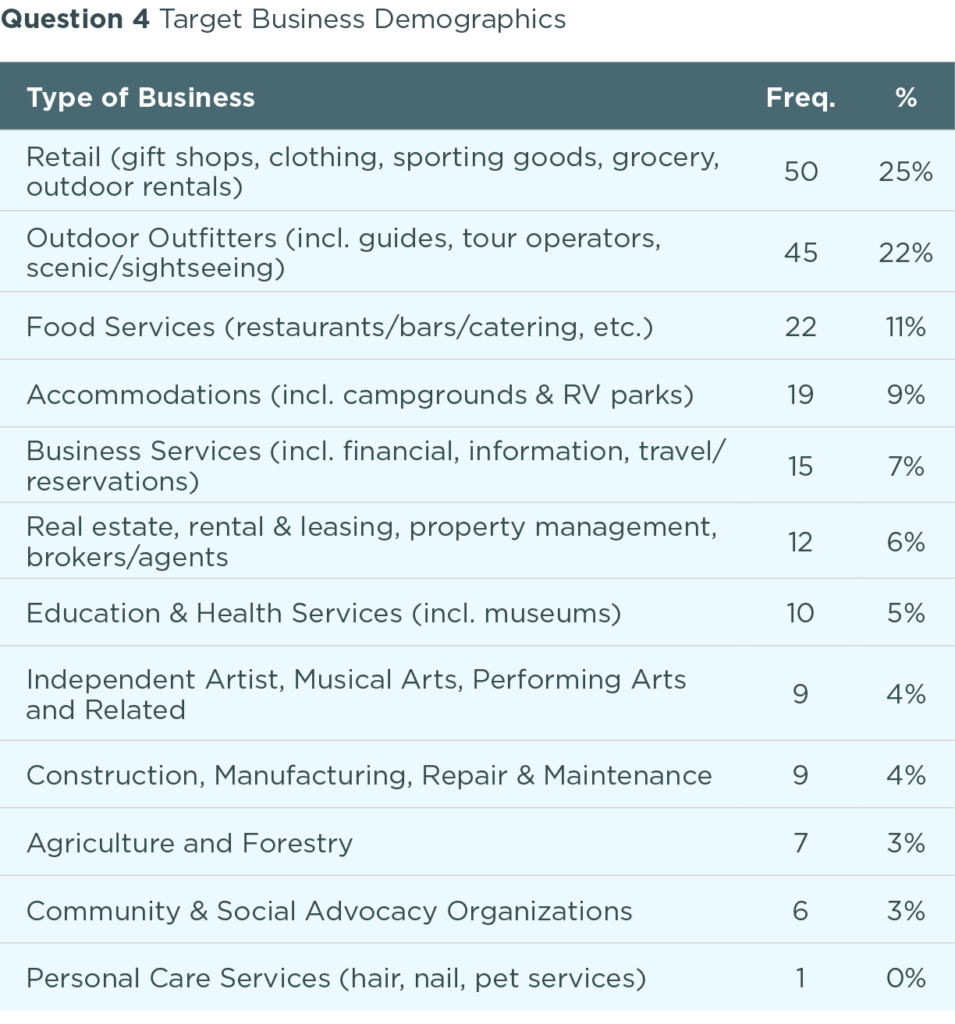
Respondents listed 205 types of businesses from the survey listing of 16 business classifications provided.6Set of 26 business classifications based on U.S. Bureau of Economic Analysis (BEA) North American Industry Classification System (NAIC). See Exhibit B, Survey Question #4. Forty-one businesses listed two or more; 17 listed three or more; 16 listed four or more; and 20 listed five or more. Retail, outdoor outfitting, food services, and accommodations accounted for 67% of the businesses responding.
5. Types of recreational activities your customers seek
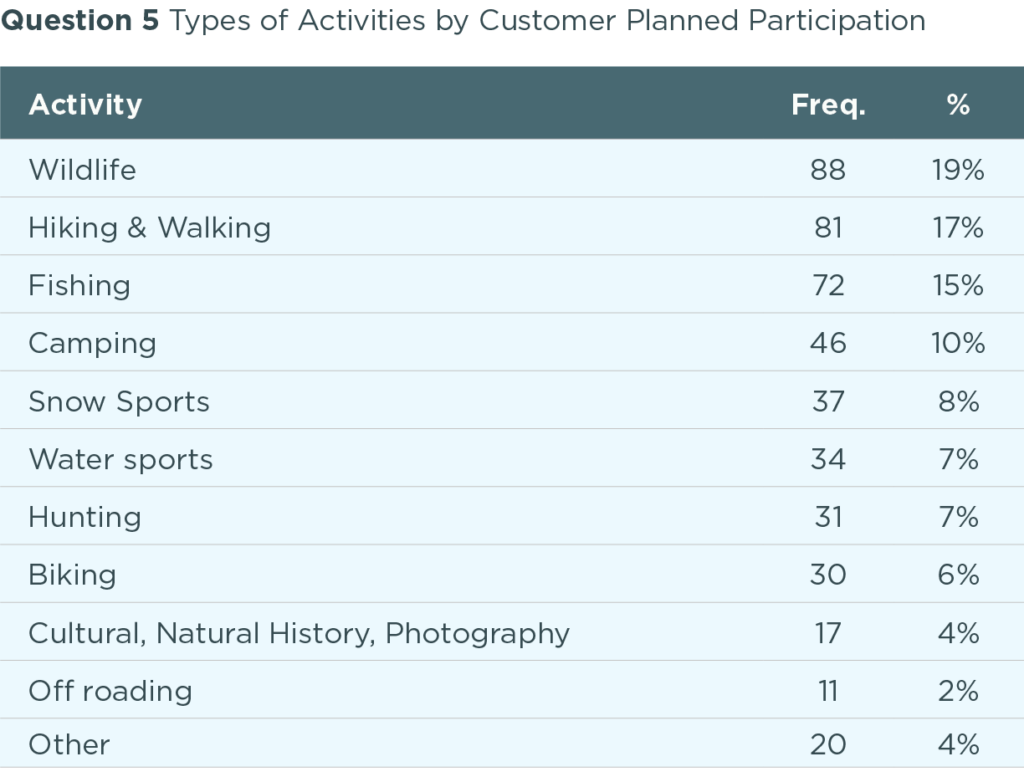
Survey asked respondents to select types of recreational activities their customers planned to participate in, selecting all that applied from a pre-populated list.
6. Do you feel optimistic about the future of your business?
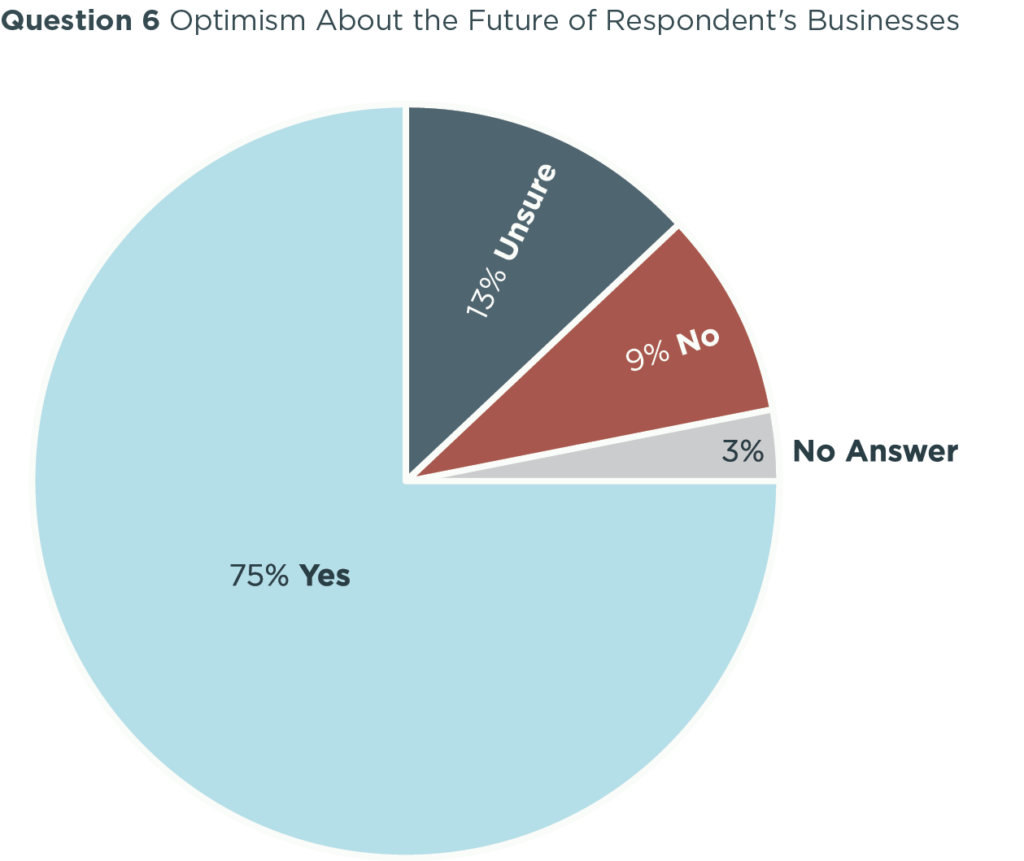
Three out of four business people who participated in the survey responded that they were optimistic about the future of their business. Fourteen of the 104 respondents were unsure, while nine said no.
7. For each of the following, please rank its level of challenge to you as a business.
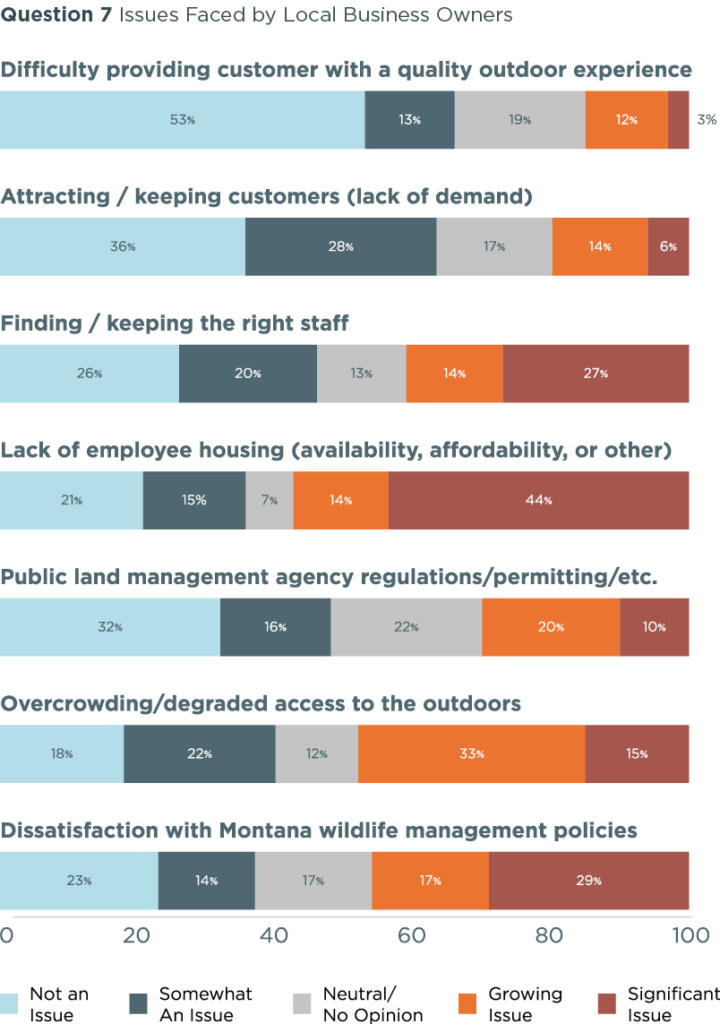
Asked to rank their level of concern for seven business challenges, respondents were generally not concerned with providing customers a quality outdoor experience (53% not an issue/15% significant or growing issue) or attracting or keeping customers (36% not an issue/20% significant or growing issue). Respondents expressed a mixed reaction to finding/keeping the right staff, with 46% indicating no issue while 41% rated it a significant or growing issue.
The lack of employee housing due to cost, lack of availability, etc., was of significant concern to many businesses, with 58% rating housing a significant or growing issue, and 21% indicating no issue.
Three questions addressed the management of natural resources.
- The survey found mixed concerns over public land management agency regulations, permitting, etc., with 30% rating it a significant or growing issue, 38% a somewhat or neutral issue, and 32% finding no issue.
- 71% expressed some level of concern with overcrowding/degraded access to the outdoors: 15% indicated it as a significant issue; 33% as a growing issue; and 23% as somewhat an issue.
- When asked to rank the level of challenge concerning “dissatisfaction with Montana wildlife management policies,” 38% rated it as a significant or growing issue, 38% a somewhat or neutral issue, and 23% finding no issue.
Many of these issues and concerns were recurrent when asked, “What is the one thing you would like to see done to help both your business and the region’s natural resources” (Question 16), and “As it relates to natural resources and your business, what is the one thing that keep you up at night?” (Question 17).
8. Do you feel optimistic about the future of natural resource management in your area?
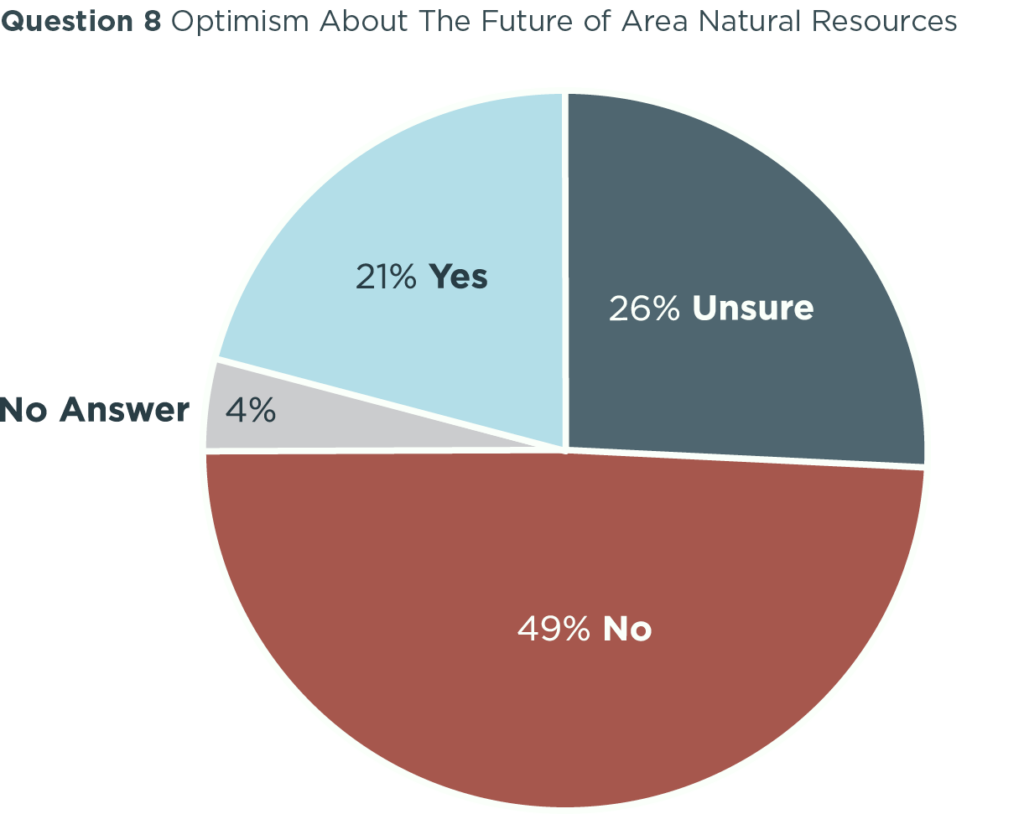
While three out of four participating business owners expressed optimism about the future of their business (Question 6), that optimism did not extend to the future of natural resource management. Fifty-one of the 104 respondents said no, while another 28 indicated they were not sure—fully 75% expressed little or no optimism—a direct opposite of the expression of optimism for their business future.
9. Thinking about the natural resources your business relies on, over the last five years, how would you rate the following?
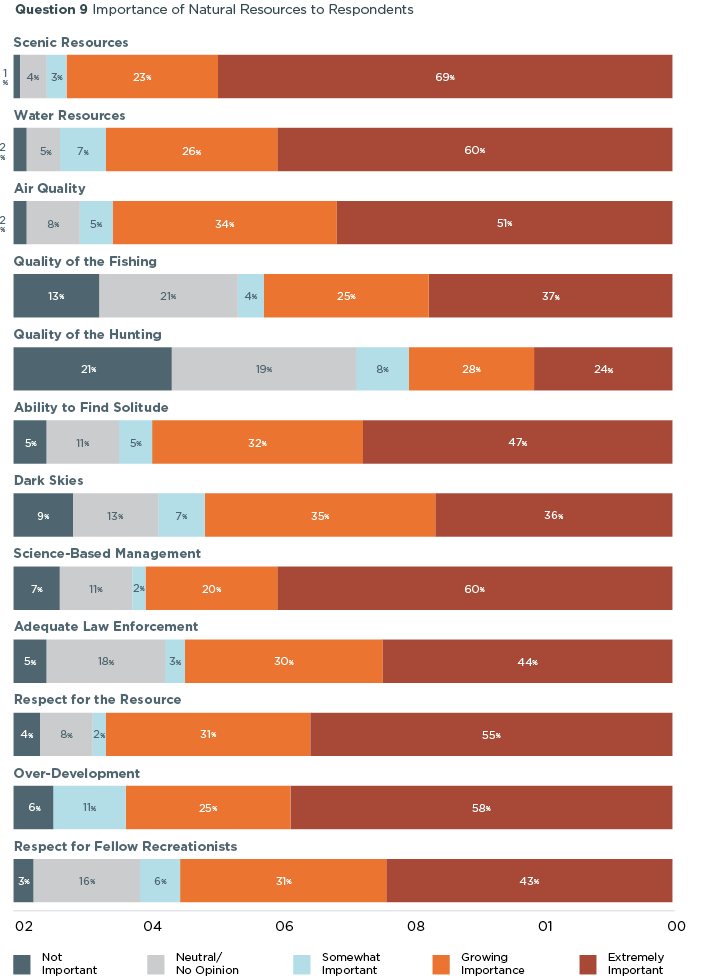
To gain a sense of the importance of specific natural resource-based issues, the survey asked respondents to rate the following 12 subjects.
Concerning specific natural resources, scenic resources were the top concern, with 92% viewing them as extremely important (69%) or of growing importance (23%). Water and air resources were also rated high in importance (86% and 85% respectively). The ability to find solitude (79%) and “dark skies” (human light pollution, 71%) also ranked high in importance, while the quality of fishing (62%) and, notably, quality of hunting (40%) ranked lower overall in importance.
Concerning human behavior and management needs, 86% of respondents ranked respect for the resource as extremely important or of growing concern, followed by concerns for over development (83%), science-based management (80%), adequate law enforcement (74%), and respect for fellow recreationists (74%).
10. Thinking about your clientele, please rate the following by importance to their experience.
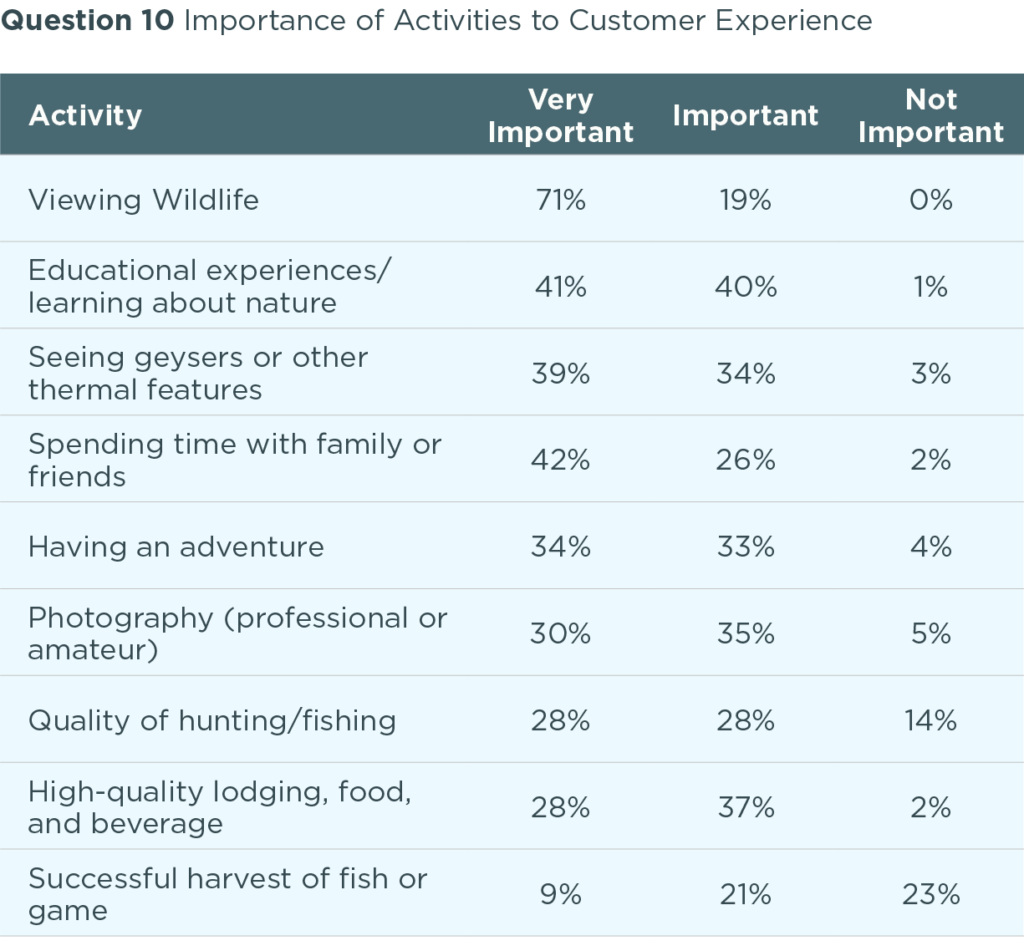
Looking to gain insight into the motivations of visitors and other customers, responding businesses ranked viewing wildlife as the top motivation (90% very important or important), followed by educational experiences (81%), Yellowstone’s thermal features (73%), spending time with family or friends (68%), having an adventure (67%), photography (65%), and quality lodging, foods, and beverage (65%). Fifty-eight percent of responding businesses ranked quality hunting and fishing as important, while only 30% considered successful harvest of fish or game to be important.
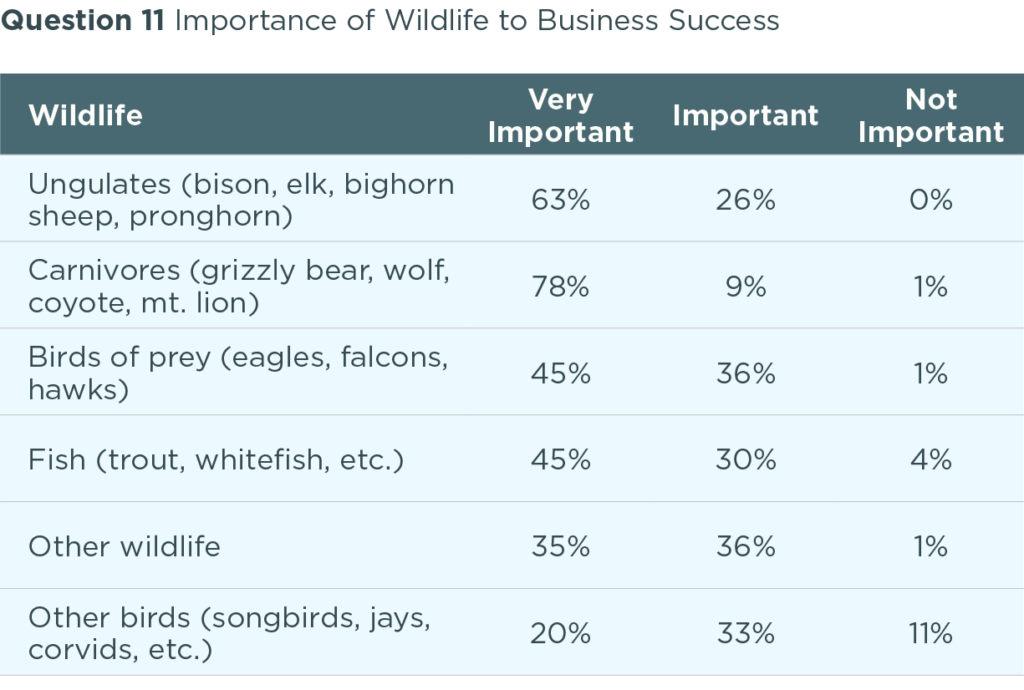
11. The Greater Yellowstone Ecosystem is known for its wildlife. Please rate the following based on their importance to your business and customers.
Not surprisingly given their backyard is Yellowstone National Park, when businesses were asked to rate the importance of various kinds of wildlife, the two top ranked types of wildlife were ungulates (e.g., bison, elk), at 89% very important or important, and carnivores (e.g., wolves and bears) at 87%. Other types of fish and wildlife were not ignored but not considered the top draws.
12. Please indicate your level of agreement or disagreement with the following statements.
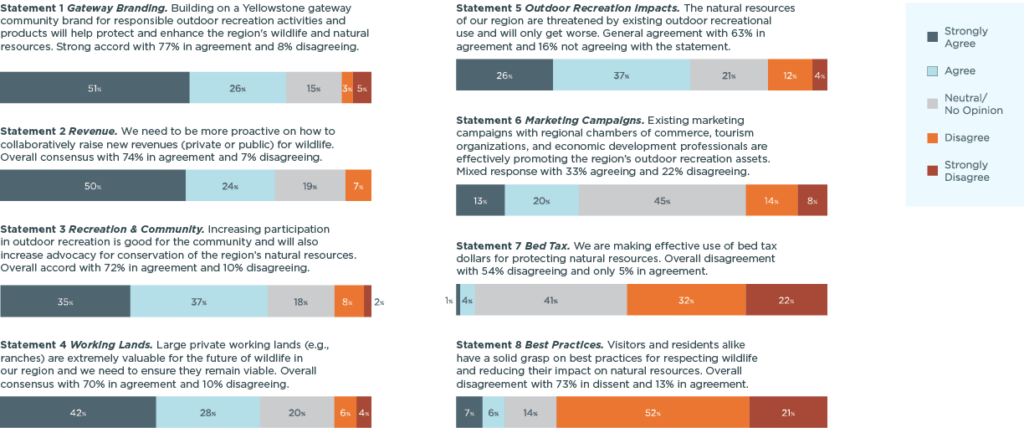
To plumb how surveyed businesses felt about various issues, they were asked their level of agreement or disagreement with the following eight statements.
13. Do you feel a personal responsibility to give back to the resource? If “yes,” how do you give back?
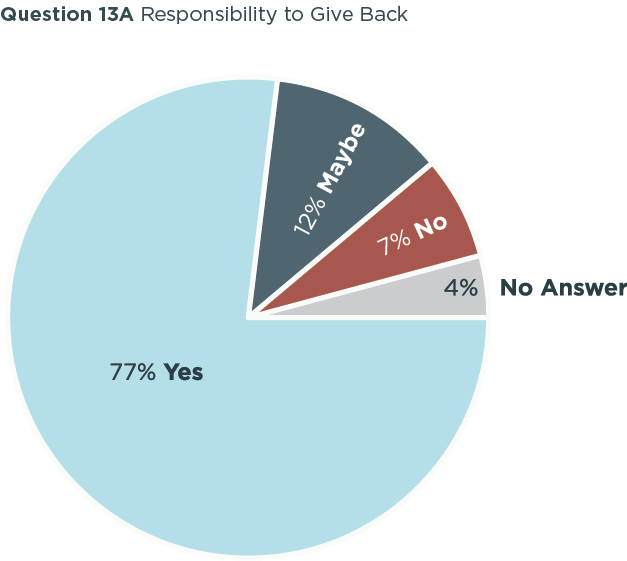
A majority (77%) of business owners/managers who responded to the survey avowed a personal responsibility to give back to the resource while 12% stated “maybe” and 7% said “no.”
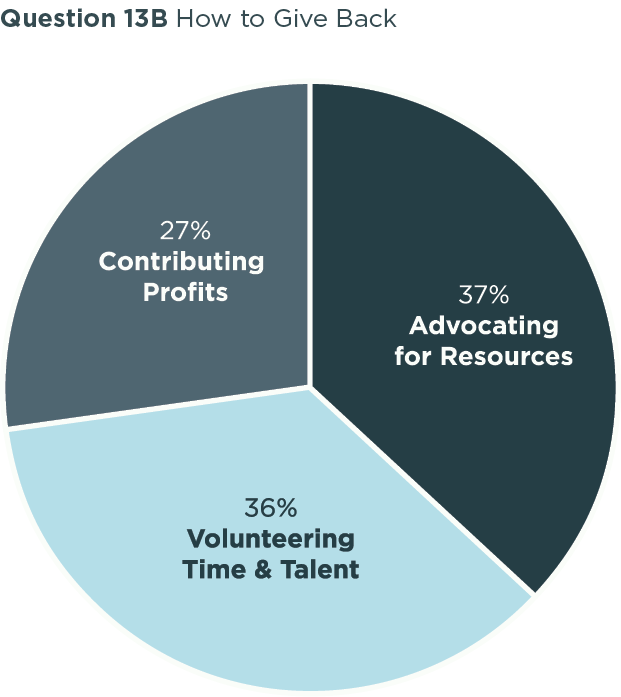
For those who answered “yes,” respondents were equally supportive of volunteering time and talent, contributing a portion of profits, and advocating on behalf of the resource. The majority of respondents listed at least two of the three methods offered.
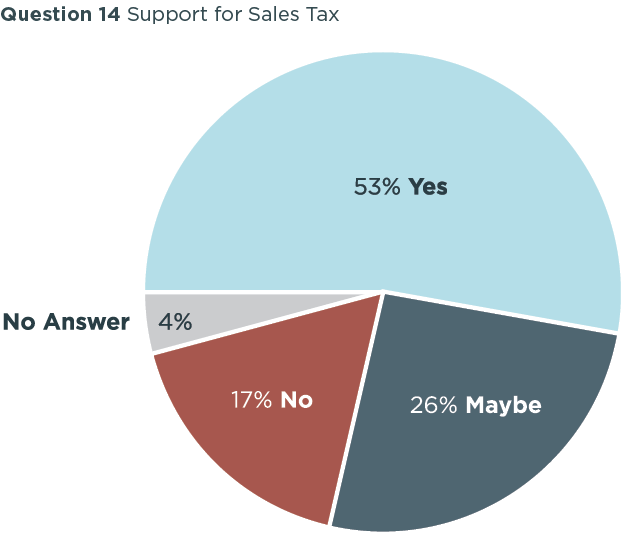
14. Would you support a local sales tax tied to our tourism industry if at least some of the proceeds went to the protection and enhancement of natural resources?
A bare majority of business interests (53%) expressed support for a sales tax. But there were 27 of 104 respondents (26%) who indicated “maybe,” suggesting they might be open to a sales tax but need to learn more about the details of such a proposal.
15. Please rate your willingness to voluntarily contribute a portion of your profits to fund the protection and enhancement of natural resources?
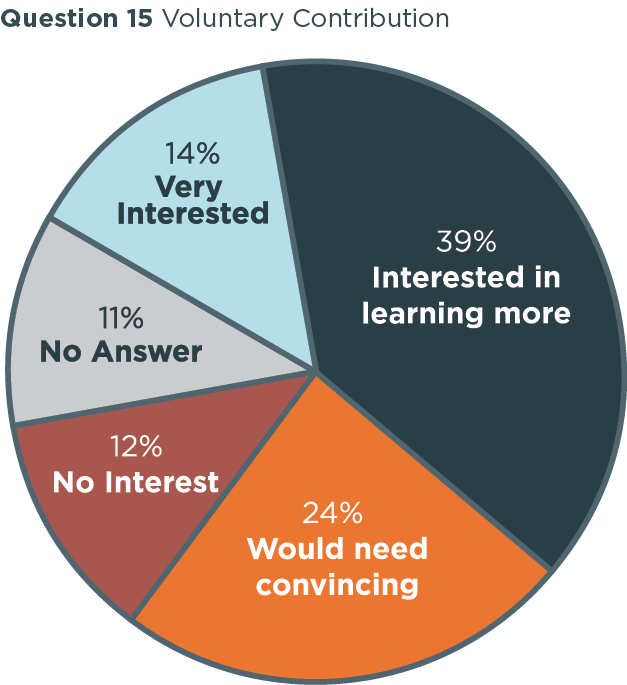
As a follow up to Question 13, 14% of business respondents were “very interested” in voluntarily contributing a portion of their proceeds to support natural resource management while 12% indicated that they were “not interested/not my responsibility.” In the middle, however, were 63% who were on the fence: 39% indicating an “interest in learning more” and 24% that would need “some convincing.”
16. What is one thing you’d like to see done to help both your business and the region’s natural resources?
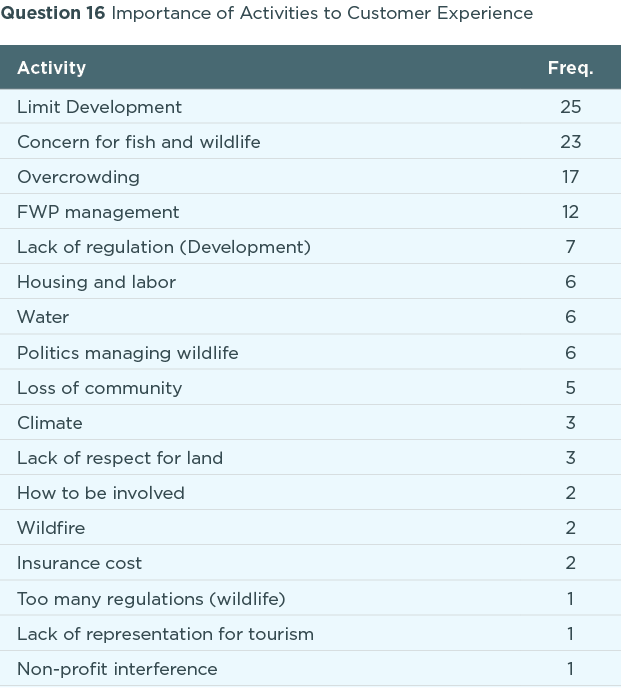
This open-ended question elicited 122 submissions from 83 respondents, which ran the full gamut of issues from too much development and overcrowding to loss of community and too much politics managing wildlife. The general subject matter is summarized here, and the full set of responses is included as Exhibit C.
17. As it relates to the region’s natural resources and your business, what’s the one thing that keeps you up at night?
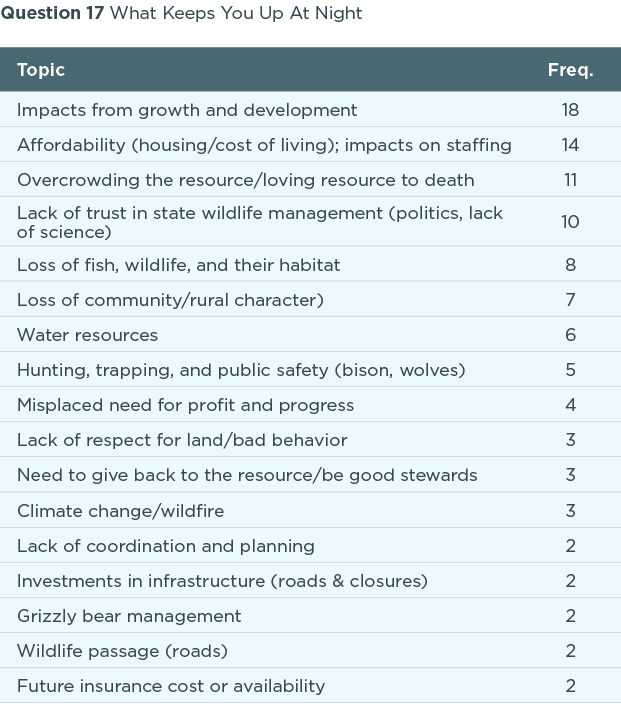
This last, open-ended question elicited responses from 88 respondents with several providing more than a single topic. A summary of themes presented two or more times is presented here, and the full set of responses is included as Exhibit D.
Demographics of respondents
Discussion and summary
Capturing the views and opinions of 104 business owners, operators, and managers represents a significant but unknown percentage of businesses in the Livingston, Paradise Valley, Gardiner, and Cooke City/Silver Gate areas that derive at least 20% of their revenues from, or due to, outdoor recreation and tourism in the region.
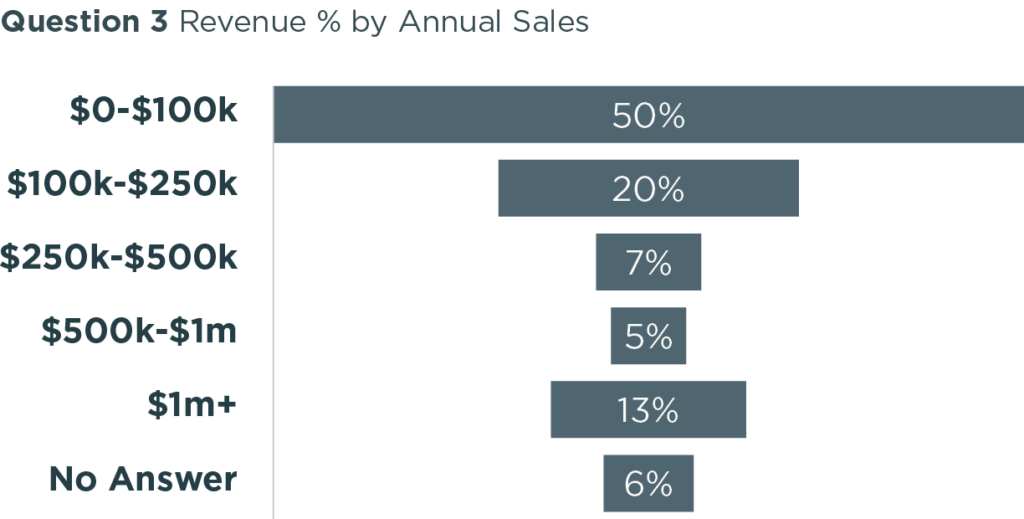
Retail, outdoor outfitting, food services, and accommodations accounted for 67% of the businesses responding, mirroring state-wide findings where the majority of outdoor industry-supported jobs were in the retail trade; accommodation and food services; and arts, entertainment, and recreation. Many of the businesses reported two or more business activities, such as guiding and retail. Fifty percent of the businesses reported estimated revenues from tourism at less than $100,000, and 70% at less than $250,000.
Asked to identify the types of recreational activities sought by customers and clients, wildlife viewing, hiking and walking, fishing, and camping were the top choices, followed by the full range of other outdoor pursuits. Queried about what wildlife species were the top draws, ungulates (e.g., bison, elk) and carnivores (e.g., wolves and bears) were #1 and #2. Other types of fish and wildlife were not ignored but not considered the top attractions. Asked about the motivations of visitors and other customers, responding businesses ranked viewing wildlife as the top motivation (90% important), followed by educational experiences (81%), Yellowstone’s thermal features (73%), spending time with family or friends (68%), and having an adventure (67%).
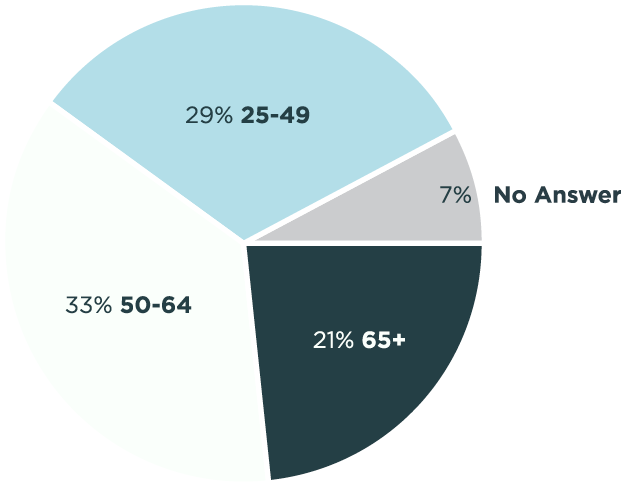
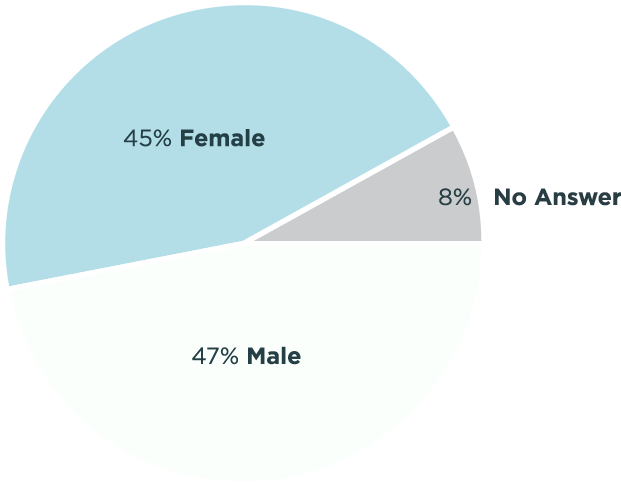
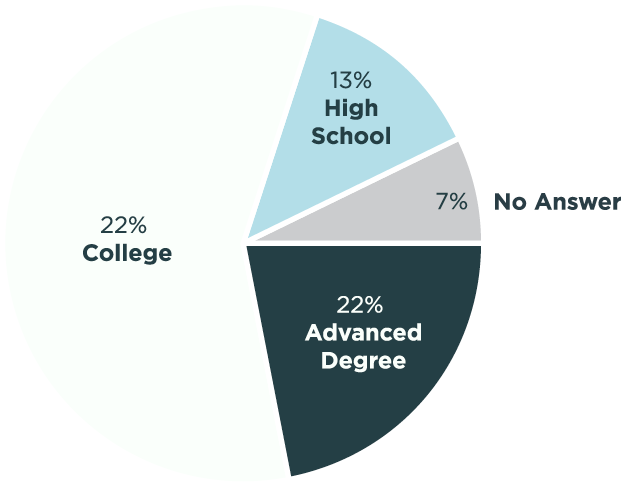
The respondent’s demographics were diverse and representative, equally divided by gender (47% female, 45% male), age class (29%: 25-49; 33%: 50-64; 21%: 65 and older) and education. The majority of respondents indicated they attended college (58%), with 22% holding advanced degrees, and 13% high school or equivalent. Of note, the opinions and attitudes expressed in the survey was found to have little alliance with a respondent’s age, education, or gender when selected minority opinions were cross-tabulated with respondent’s demographics. In other words, it would be a mistake to make assumptions of an individual’s view on community and natural resource management issues based solely on their demographics.
A major inflection point was found on the question of optimism. Three out of four respondents (75%) answered “yes” to the question, “Do you feel optimistic about the future of your business?” That optimism, however, did not extend to the future of natural resource management. When asked, “Do you feel optimistic about the future of natural resource management in your area?” 51 of the 104 respondents said “No” while another 28 indicated they were not sure—fully 75% expressed little or no optimism—a mirror opposite to the expression of optimism for their business future.
Concerning their business future, respondents expressed concerns about the availability and affordability of housing and its impact on finding and retaining the right staff. Concerns about the extent and type of development were commonly voiced as were the associated issues of overcrowding and the attendant loss of community.
To gain a sense of the importance of specific natural resource-based issues, the survey asked respondents a range of questions. Protecting scenic resources was a top concern, with 92% viewing them as extremely important or of growing importance. Water and air resources were also rated high in importance (86% and 85% respectively). The ability to find solitude (79%) and “dark skies” (human light pollution, 71%) also ranked high in importance, while fisheries conservation and the quality of fishing were also commonly cited.
Examining reasons for the lack of optimism about the future of natural resources, the survey found recurring themes around human behavior and resource management impacts. For example, 86% of respondents ranked respect for the resource as extremely important or of growing concern, followed by concerns for over development (83%), the need for, and perceived lack of, science-based management (80%), respect for fellow recreationists (74%) and need for adequate law enforcement (74%).
While there were broad levels of support for conserving natural resources, responses became much more nuanced when addressing more specific issues and proposals. For example:
Broad general support
- Building a community brand for responsible outdoor recreation activities and products found strong accord (77%) as a way to help protect and enhance the region’s wildlife and natural resources (8% disagreeing).
- Support for large private ranchlands remaining viable for their wildlife value found similar support with 70% in agreement (10% disagreement).
Mixed support
- Asked whether existing marketing campaigns are effectively promoting the region’s outdoor recreation assets, 33% agreed while 45% were neutral or registered no opinion, and 22% disagreed.
- Asked about “dissatisfaction with Montana wildlife management policies,” response was mixed, with 38% rating it as a significant or growing issue, 38% a somewhat or neutral issue, and 23% finding no issue.
Lack of general support
- A majority of respondents (73%) disagreed with the statement, “Visitors and residents alike have a solid grasp on best practices for respecting wildlife and reducing their impact on natural resources,” with only 13% in agreement.
A majority (77%) of business owners/managers who responded to the survey avowed a personal responsibility to give back to the resource while 12% stated “maybe” and 7% said “no.” Those responding “yes” were equally supportive of advocating on behalf of the resource, volunteering time and talent, and/or contributing a portion of profits, with a majority listing at least two of the three methods offered. As to contributing a portion of proceeds to support natural resource management, 14% of business respondents were “very interested” while 12% were “not interested/not my responsibility.” In the middle, however, were 63% who were on the fence: 39% indicating an “interest in learning more” and 24% that would need “some convincing.”
The need to collaboratively raise new revenues (private or public) for wildlife found strong overall consensus with 74% in agreement (7% disagreeing). However, a majority of respondents (54%) disagreed with the statement, “We are making effective use of bed tax dollars for protecting natural resources,” with only 5% in agreement.
One specific proposal for raising new revenues is imposing a local sales tax tied to the tourism industry with a percentage of proceeds supporting the protection and enhancement of natural resources. As any discussion of a sales tax in Montana is commonly a third-rail issue, it is informative that 53% of business interests expressed support for a sales tax while 17% were opposed. Sitting in the middle were 26% who indicated “maybe,” suggesting they might be open to a sales tax but need to learn more about the details of such a proposal.
In summary, the survey finds a Park County tourism industry optimistic about their chances of success but deeply concerned with the long-term sustainability of the natural resources their businesses depend on. Two open-ended questions asked, “What is the one thing you would like to see done to help both your business and the region’s natural resources?” and “As it relates to natural resources and your business, what is the one thing that keeps you up at night?” The 210 responses highlighted many issues and concerns, but recurrent themes were 1) concerns over growth and development, 2) affordability (housing, cost of living, loss of community), 3) loss of fish, wildlife, and habitat, 4) overcrowding, and 5) state management of wildlife (politics in wildlife).
Providing the incentive for optimism and action are the majority of respondents who feel a deep personal responsibility to give back to the very resources that sustain them. While their collective ideas on how to do so vary (as they should), they share a commitment to their community and stewardship—a commitment to conservation and responsible use; the responsibility to manage lands and waters wisely in order to leave a rich legacy for future generations.
Wild Livelihoods and its partners aim to harness that passion, guiding businesses and their shared clientele toward the most impactful ways to protect the resources we all depend on.
This project was initiated by Wild Livelihoods with the financial support of the Spruance Foundation II and the technical and administrative support of PERC.
Project team: Whitney Tilt, Paradise Valley Coordinator for PERC, and Jeff Reed, Evan Stout, Rhiana Peck, business people and members of Wild Livelihoods.
Photo credits: Cover Unsplash.com/Carol Highsmith; Pg 2-3 istock.com/alacatr; Pg 5 Kyle Dudgeon, “A Wild Livelihood”; Pg 9 Livingston, Montana, Livingston Chamber of Commerce; Pg 12-13 Misty River, Kyle Dudgeon; Pg 14 Red Fox, Kyle Dudgeon; Pg 16-17 Wolf Watchers, Holly Pippel; Pg 20 Left Wildlife watcher, Rhiana Peck; Pg 20 Right Hiker, Wild Livelihoods; Pg 21 Wheel line and Emigrant Peak, Whitney Tilt; Pg 23 Grey Wolf. Kyle Dudgeon Pg 25 Fishing the Yellowstone, Whitney Tilt.