
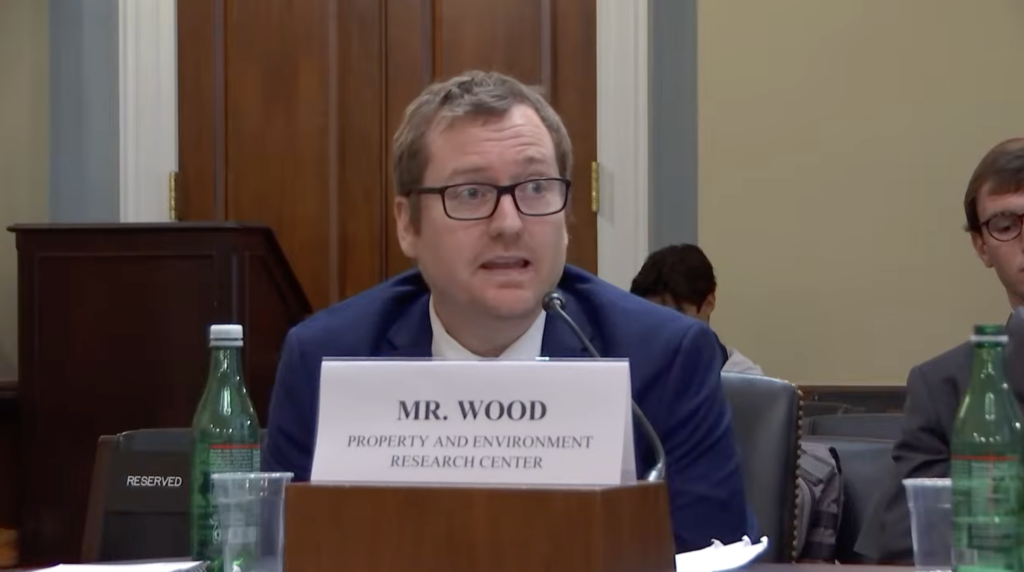
At a hearing before the U.S. House Natural Resources Committee’s Subcommittee on Oversight and Investigations examining the financial incentives driving environmental nonprofit litigation, PERC Vice President of Law and Policy Jonathan Wood delivered a pointed message: federal attorney’s fee laws have drifted far from their original purpose—and the result is a system that rewards lawsuits over conservation.
Federal laws authorizing reimbursement of attorney’s fees are a significant departure from the American rule that each party to a case should bear its own costs. But they aim to address a real problem: The expense of litigation can be a significant barrier to even righteous lawsuits challenging government action.
However, many federal fee-shifting provisions are implemented in a way that goes far beyond cost-recovery to provide a large subsidy to litigation—a subsidy so large that environmental groups have chosen litigation even in the face of cheaper, more effective tools and numerous large groups have formed with litigation as their only or primary tool for pursuing environmental improvement.
It’s highly doubtful that Congress intended this result when it passed these laws. It should consider how to reform them to better calibrate attorney’s fees to real-world litigation costs and the benefits achieved through litigation—without infringing the right to challenge illegal government action.