PERC and the Boone and Crockett Club host U.S. senators for a firsthand look at collaborative conservation.
Some conservation challenges simply can’t be understood from a hearing room in Washington DC.
You have to watch the patchwork of public forests and private ranches unfold beneath a helicopter to appreciate the scale and complexity of the Greater Yellowstone Ecosystem. You have to walk the boardwalks of Yellowstone National Park to understand the balancing act of protecting one of America’s most treasured landscapes while welcoming millions of visitors each year. And you have to explore the pastures with ranchers, scientists, and conservationists to hear how the hardest conservation problems are solved—not by one landowner or one agency, but through collaboration.
That was the purpose of PERC’s recent conservation policy tour through the Greater Yellowstone Ecosystem.
Together with the Boone and Crockett Club, PERC welcomed members of the Senate Stewardship Caucus and administration officials for three days of experiences and conversations in the places where conservation happens. Rather than talking about policy in abstract terms, participants experienced firsthand the landscapes, partnerships, and challenges that shape conservation in the West.
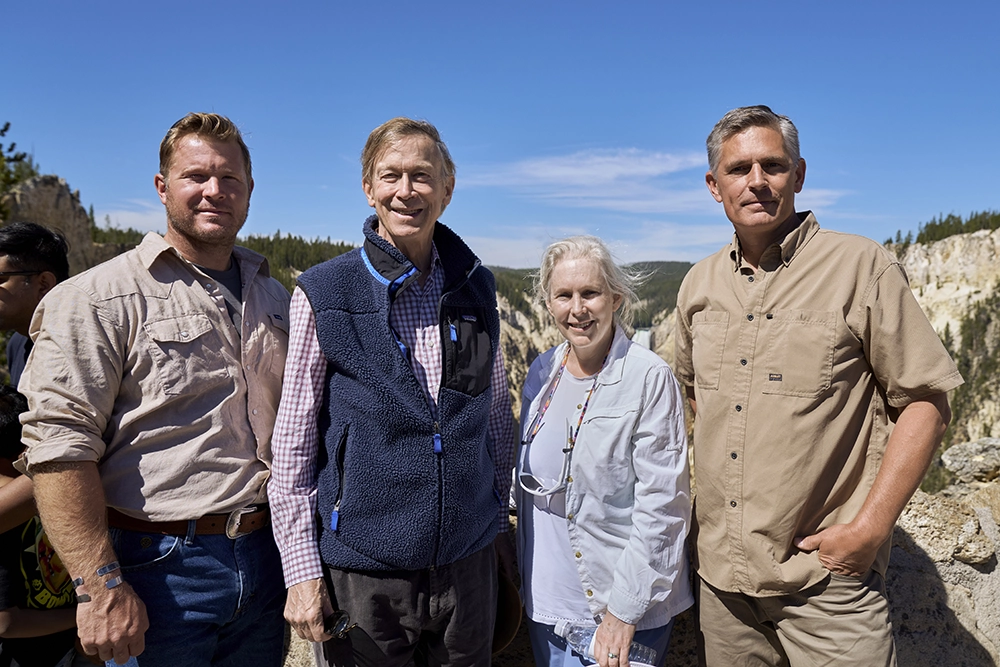
Joining us for the tour were Senators Tim Sheehy of Montana, Martin Heinrich of New Mexico, John Hickenlooper of Colorado, and Kirsten Gillibrand of New York, along with U.S. Department of Agriculture Under Secretary Michael Boren, agency officials, local landowners, and community conservation partners. The experience provided each participant with a new perspective on modern challenges.
“Montana is home to some of our nation’s most treasured landscapes, and it was an honor to join my Senate colleagues in the Greater Yellowstone Ecosystem to see firsthand why conserving these lands matters,” said Montana Senator Tim Sheehy. “The best conservation policies are informed by the people who live, work, and steward our public lands every day, and I look forward to continuing to discuss commonsense, locally driven solutions that protect our public lands while supporting the communities, ranchers, sportsmen, and land managers who make Montana the Last Best Place.”
“This kind of experience is exactly what we’d hoped the Senate Stewardship Caucus could foster: Senators from both sides of the aisle and different parts of the country had the opportunity to see how Yellowstone National Park is building new housing for their rangers, to learn about how a fourth generation ranching family is using wildlife friendly fencing to provide safe passage for migrating elk, and to hear from people on the ground about what’s making a difference and what’s falling short,” added New Mexico Senator Martin Heinrich.
Exploring Greater Yellowstone
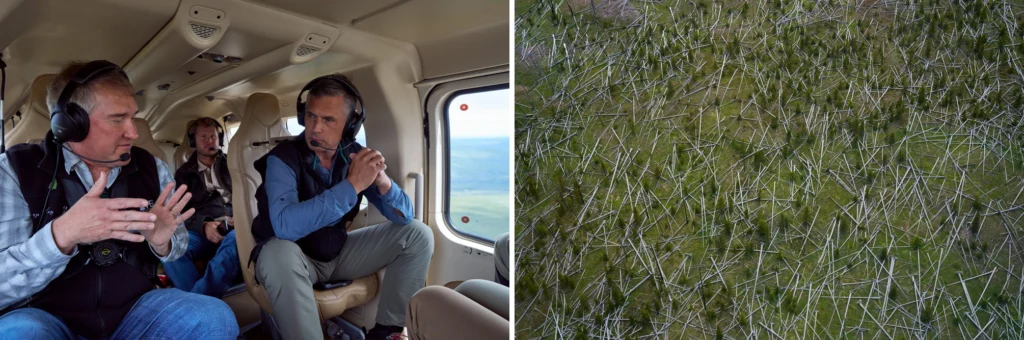
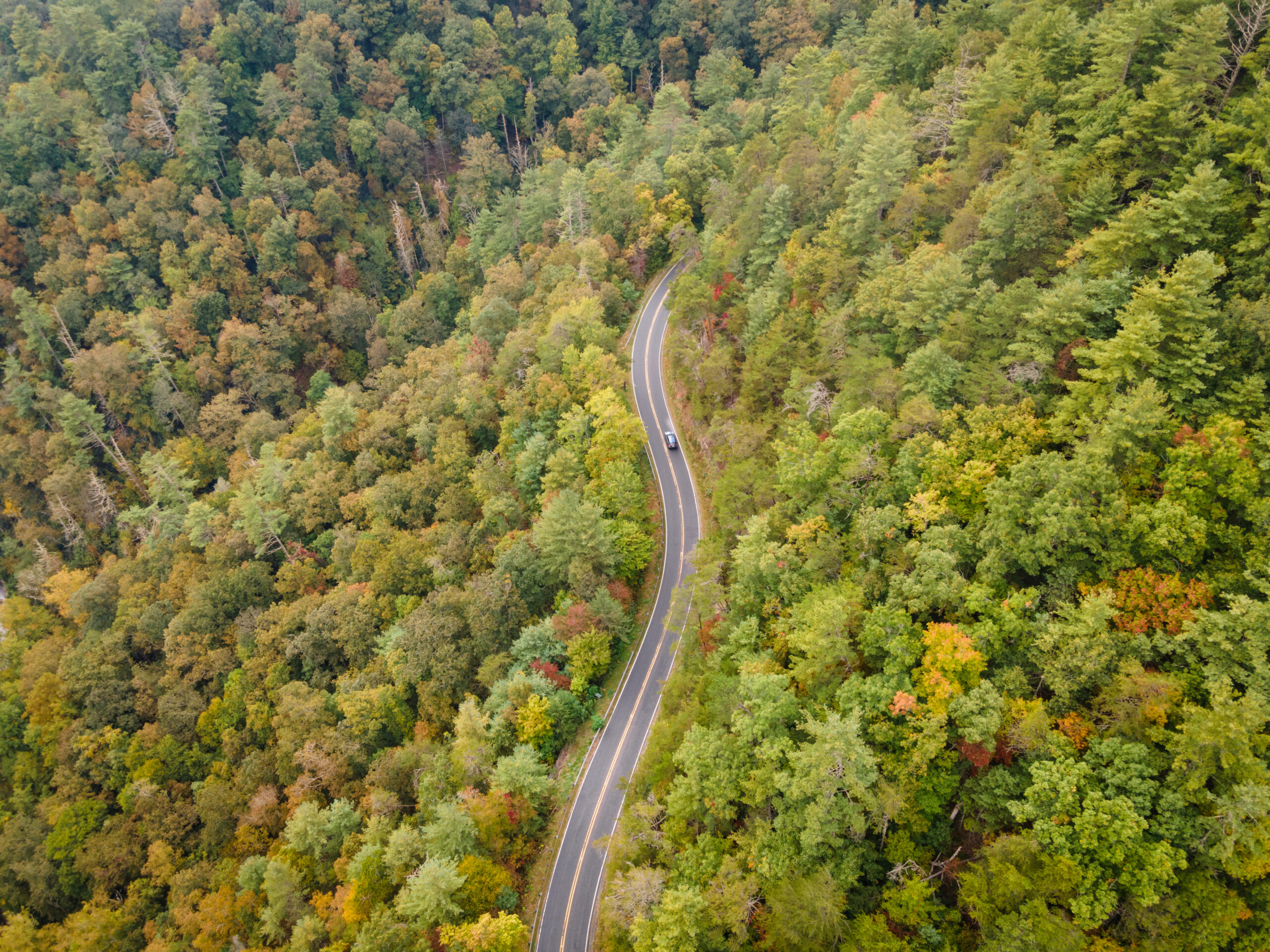
The journey began in the air. Flying by helicopter over the 22 million acres of mountains, forests, rivers, and valleys in the Greater Yellowstone Ecosystem offered an immediate lesson in scale. Participants saw wildfire scars stretching across watersheds, active forest restoration projects, migration corridors connecting seasonal wildlife habitat, and the intricate mix of public and private ownership that makes conservation in the American West both challenging and uniquely collaborative. From above, it became clear that healthy forests, resilient communities, abundant wildlife, and reliable water supplies are all connected.
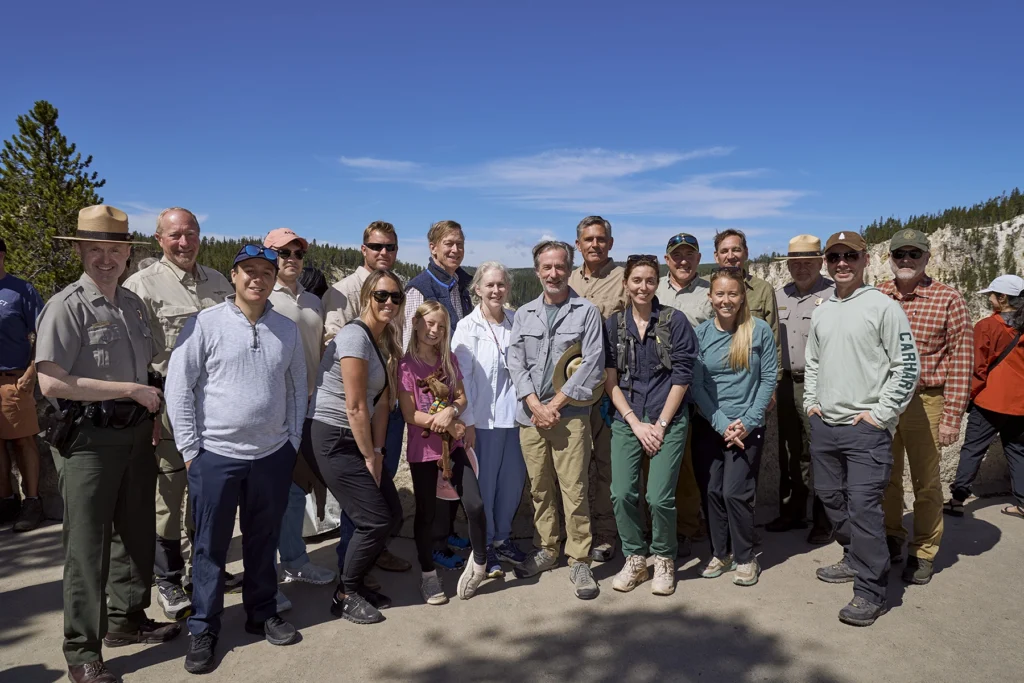
Those connections became even more tangible inside Yellowstone National Park. As the group traveled through the park with Superintendent Cam Sholly, conversations naturally shifted from sweeping landscapes to the practical realities of stewardship. How do park managers accommodate record visitation while protecting fragile geothermal features? What does it take to rebuild roads and bridges after catastrophic flooding? How do infrastructure investments, visitor fees, and congressional funding decisions affect the ability of America’s first national park to fulfill its mission?
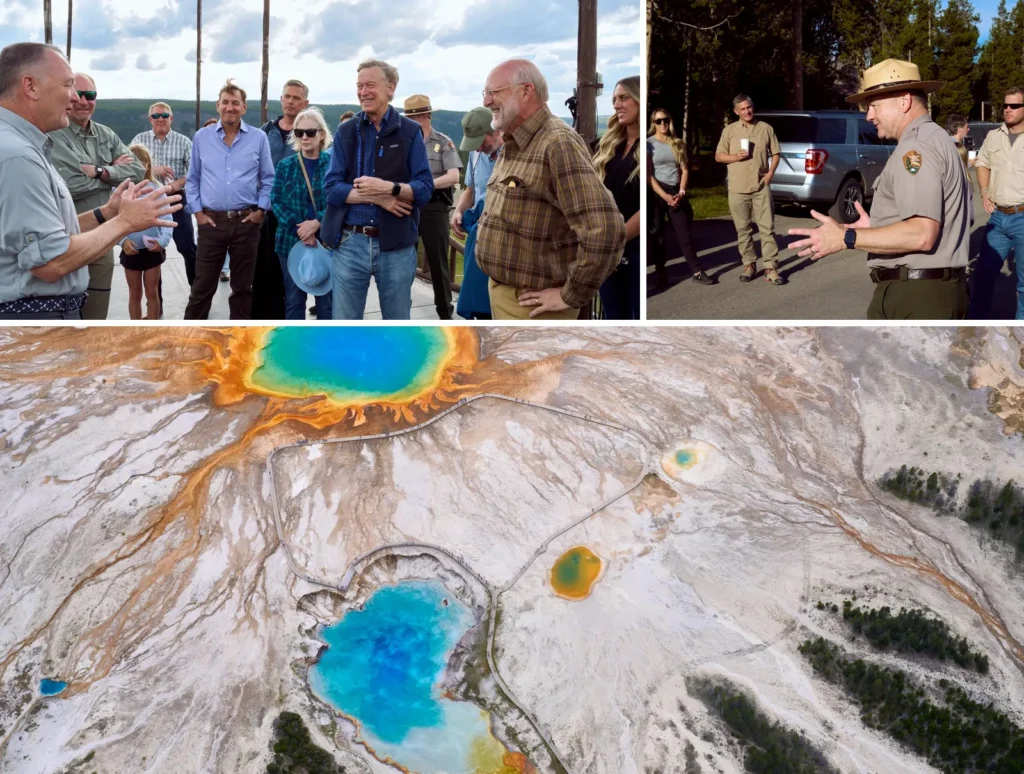
The answers weren’t delivered from behind a podium. They were shared while overlooking the Grand Canyon of the Yellowstone, touring newly completed infrastructure projects, and visiting places still bearing the marks of the historic 2022 floods. Each stop demonstrated that successful conservation depends not only on dedicated managers, but on policies that give them the flexibility and resources to respond to changing conditions.
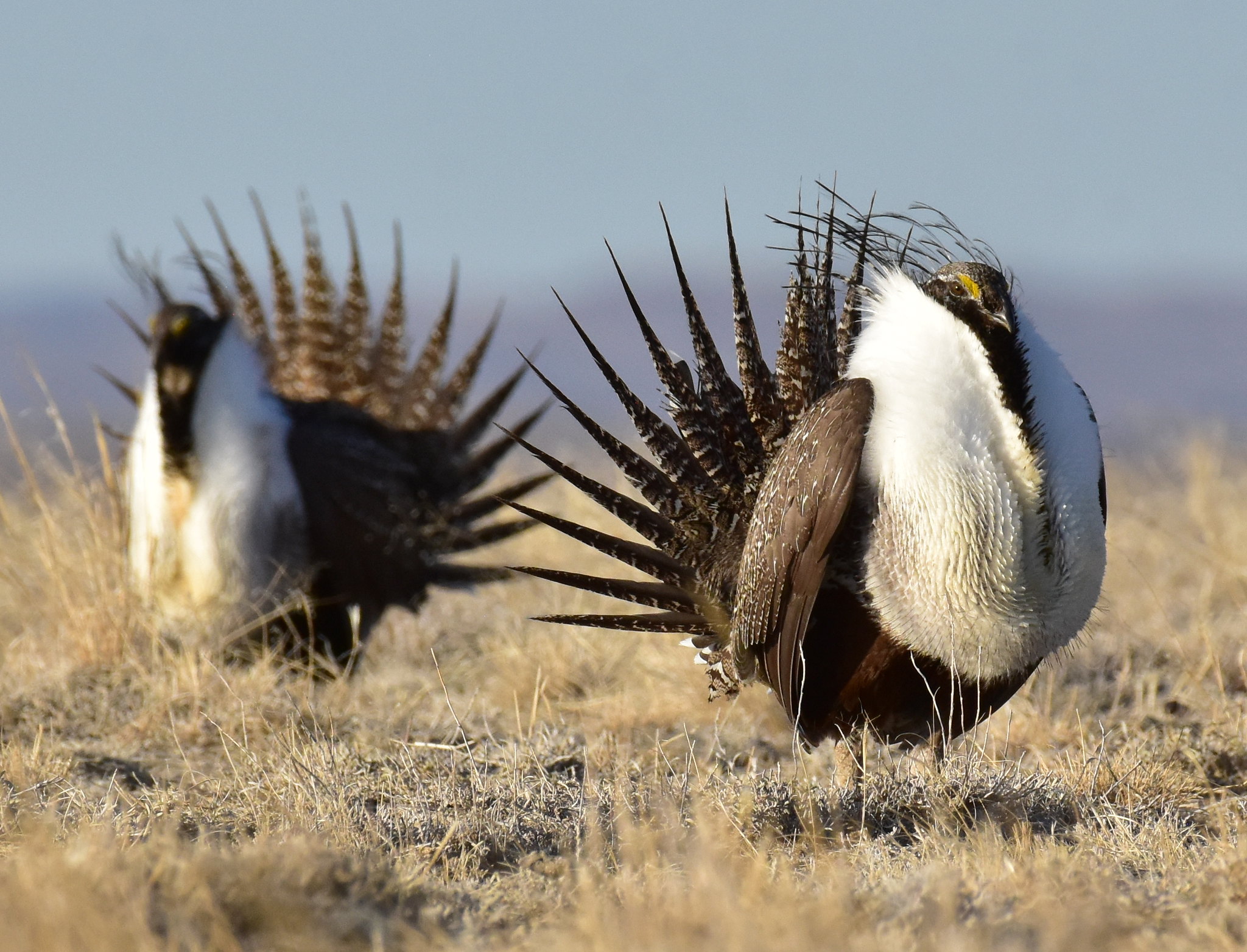
Outside the park, another lesson emerged: Wildlife doesn’t recognize property lines. Elk, mule deer, and other species migrate across the boundaries of national parks, national forests, and private ranches. Conserving those migrations requires recognizing and working with landowners who engage daily in essential habitat conservation work.
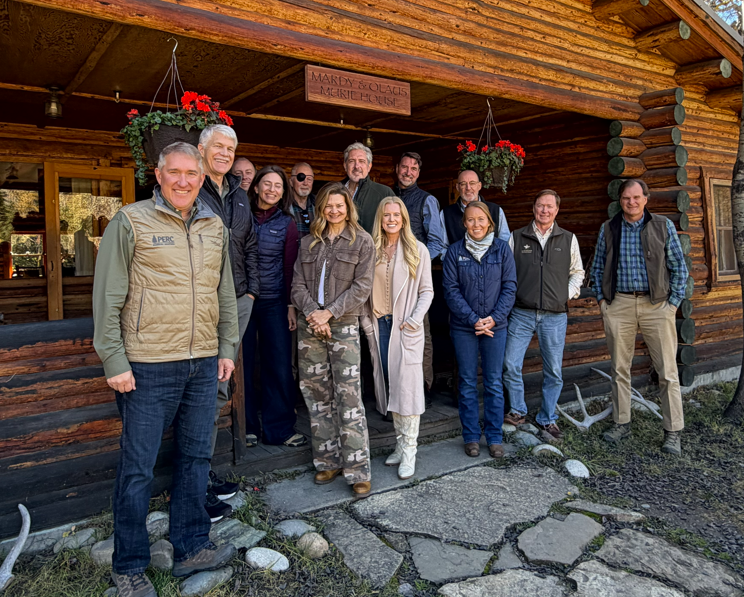
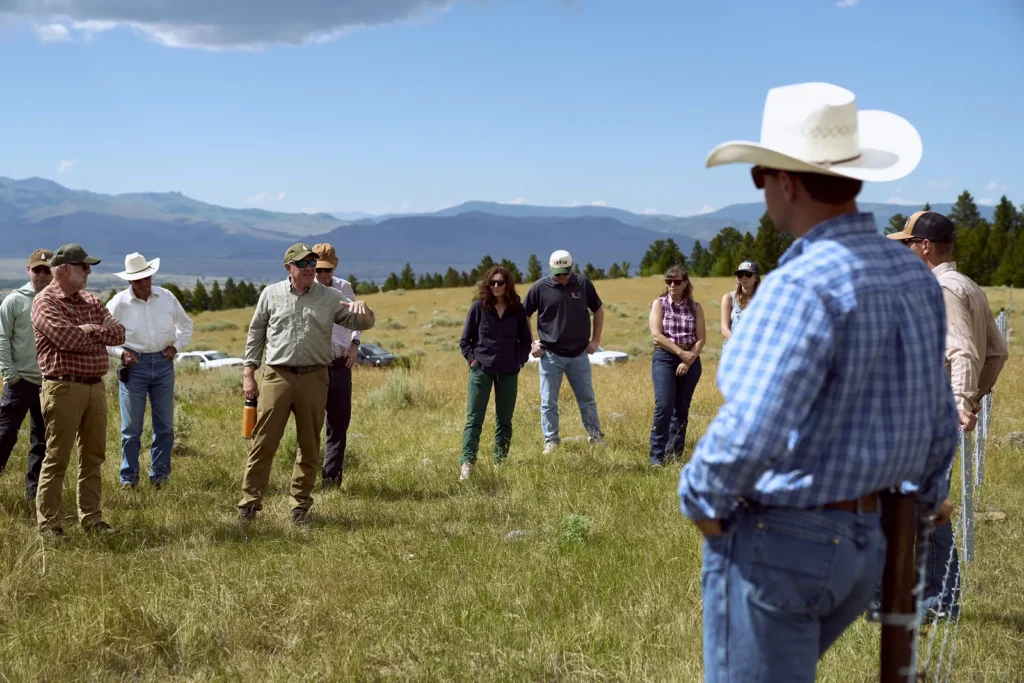
At the Petrich Ranch in Paradise Valley, senators met one such family. Walking the ranch, participants saw wildlife-friendly fencing and invasive species removal projects, learned about elk occupancy agreements and conservation easements, and discussed the realities of living and working alongside wildlife every day. These conversations reinforced something PERC has long believed: lasting conservation succeeds when policies create incentives for stewardship and empower private landowners to be part of the solution rather than treating them as obstacles.
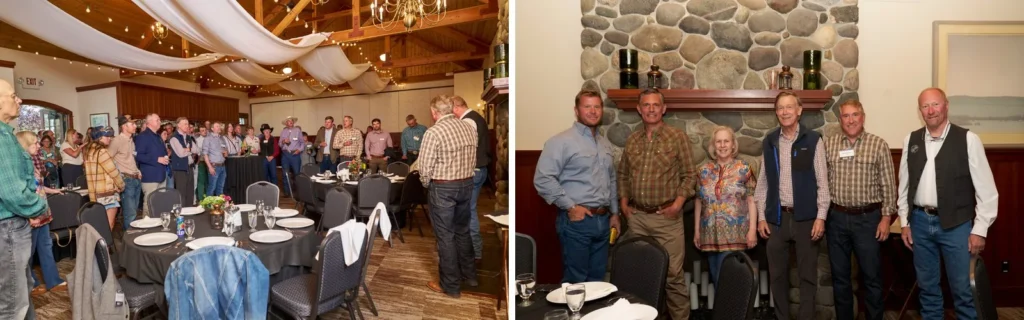
We concluded the trip spending time with the many ranchers, conservation organizations, scientists, and state and federal partners working to conserve the land, water, and wildlife of the Greater Yellowstone Ecosystem at a community dinner reception. It was a chance to reflect on the lessons learned throughout the trip and how those lessons can be applied to policy efforts by the Senate Stewardship Caucus.
The Future of Conservation Policy
Throughout the trip, one theme surfaced again and again: conservation works best when it brings people together.
Federal land managers, state officials, researchers, ranchers, nonprofit leaders, and policymakers all brought different perspectives to the discussion. While their responsibilities differed, their shared goal was unmistakable—healthy forests, thriving wildlife, resilient communities, and maintained public lands that can be enjoyed for generations to come. The conversations demonstrated that durable conservation is built not through ideological divides, but through practical partnerships grounded in science, local knowledge, and shared stewardship.
At PERC, creating opportunities like this is central to our mission.
Good conservation policy begins with understanding the landscapes it affects and listening to the people who know them best. By bringing lawmakers into the field, we can move beyond theoretical debates and ground policy discussions in real-world experience.
We’re grateful to our partners at the Boone and Crockett Club, Yellowstone National Park, the U.S. Forest Service, the Montana Department of Natural Resources and Conservation, the Petrich family, and the many community leaders who generously shared their time and expertise throughout the week. Most importantly, we thank the members of the Senate Stewardship Caucus for their willingness to leave Capitol Hill behind, ask thoughtful questions, and engage directly with the people stewarding one of the world’s most remarkable landscapes.