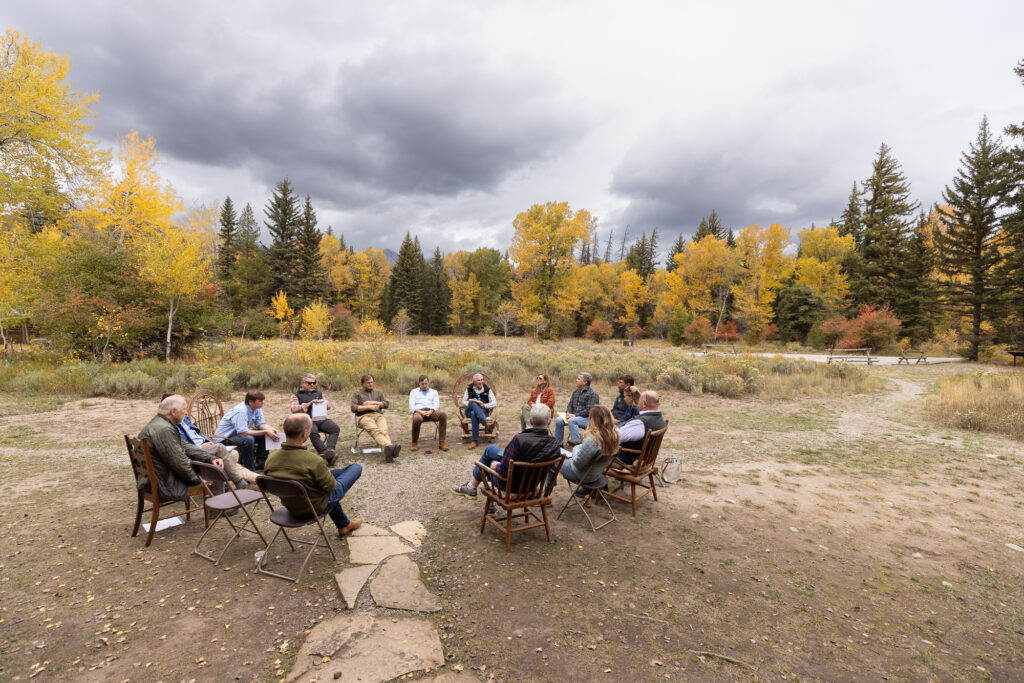
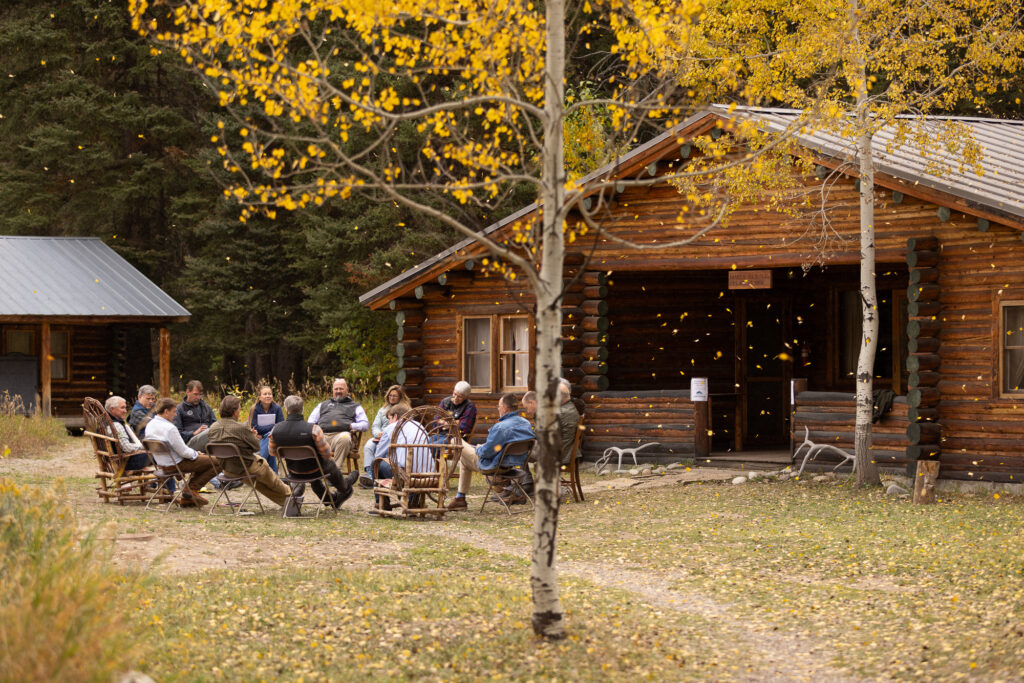
This fall, PERC convened some of America’s foremost conservation leaders for a remarkable gathering in Grand Teton National Park. The “Next Era of Conservation” thought leader dialogue brought together experts from across the conservation spectrum to look ahead at the next 50 years, exploring both the challenges and opportunities that lie beyond the horizon.
Grand Teton National Park Superintendent Chip Jenkins opened the gathering with welcoming remarks, followed by a powerful introduction from the Murie Ranch’s Wayne Turner, grounding participants in the remarkable legacy of the place where they stood.
A Setting Steeped in Conservation History
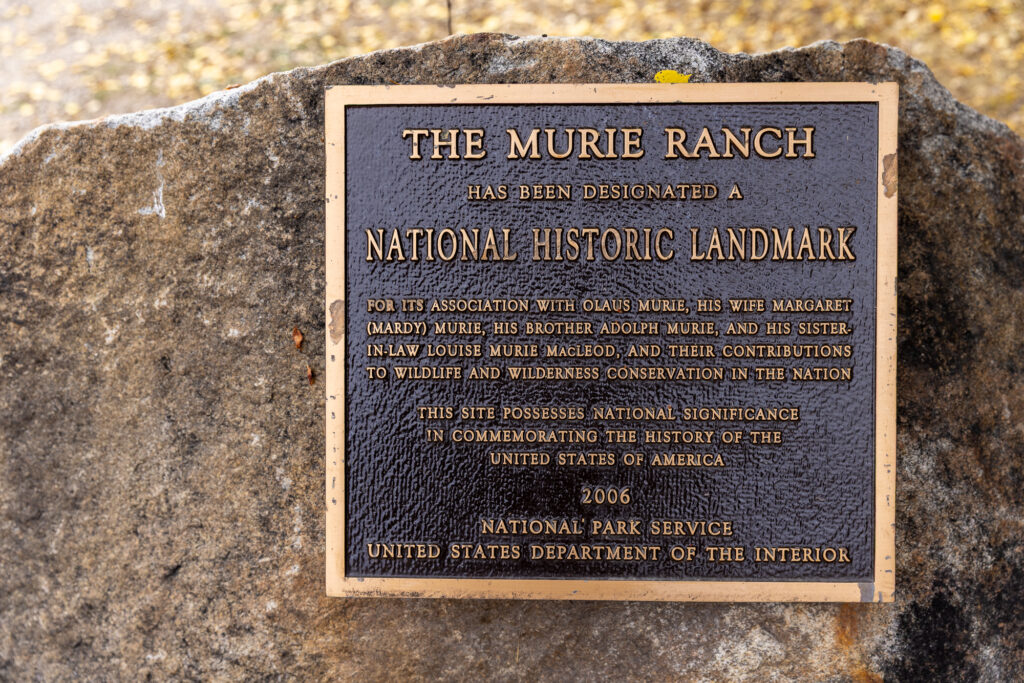
“Great things happen when people come together here,” said Murie Ranch Executive Director Paul Hansen as he greeted the workshop participants. It’s a sentiment that has defined the Murie Ranch for generations.
Just west of Moose, Wyoming, in Grand Teton National Park, sits the small enclave of log cabins nestled in a meadow of sage and sticky geranium. Named for conservationists Margaret and Olaus Murie, as well as Adolph and Louise Murie, the ranch became their home in 1945 and slowly evolved into an outpost for conservation leaders.
For two decades, the western headquarters of the Wilderness Society convened here, making it the unassuming epicenter for conservation in America. The original Wilderness Act of 1964 was drafted on the ranch’s porch, and here advocates championed the protection of 8.6 million acres in the Arctic National Wildlife Refuge. Presidents, congressmen, senators, governors, philanthropists, and students all made the journey to the remote gathering place to discuss the value and meaning of conservation.
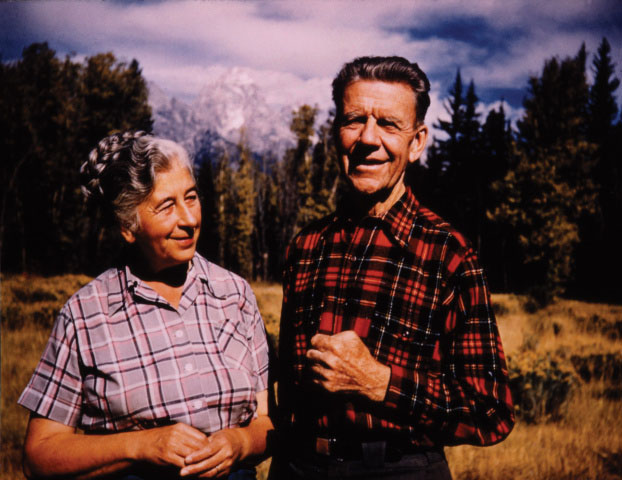
The Muries were conservation giants who shaped America’s wilderness legacy, not from marble halls in Washington, but from a log cabin in the shadow of the Tetons—quietly, patiently, humbly. Their effectiveness lay in their ability to gather people around a shared love of wild places, and that spirit still echoes in every conversation held beneath these beams.
Now part of the Teton Science Schools campus, the Murie Ranch continues its legacy of inspiring people to engage with nature and protect wild places.
Nature seemed aware of the day’s importance as well. Throughout the event, elk bugles echoed in the distance. An opportune break offered participants the chance to observe a tree-climbing black bear chowing down on some berries. It was an ideal setting to ponder conservation’s future.
Learning from History to Build the Future
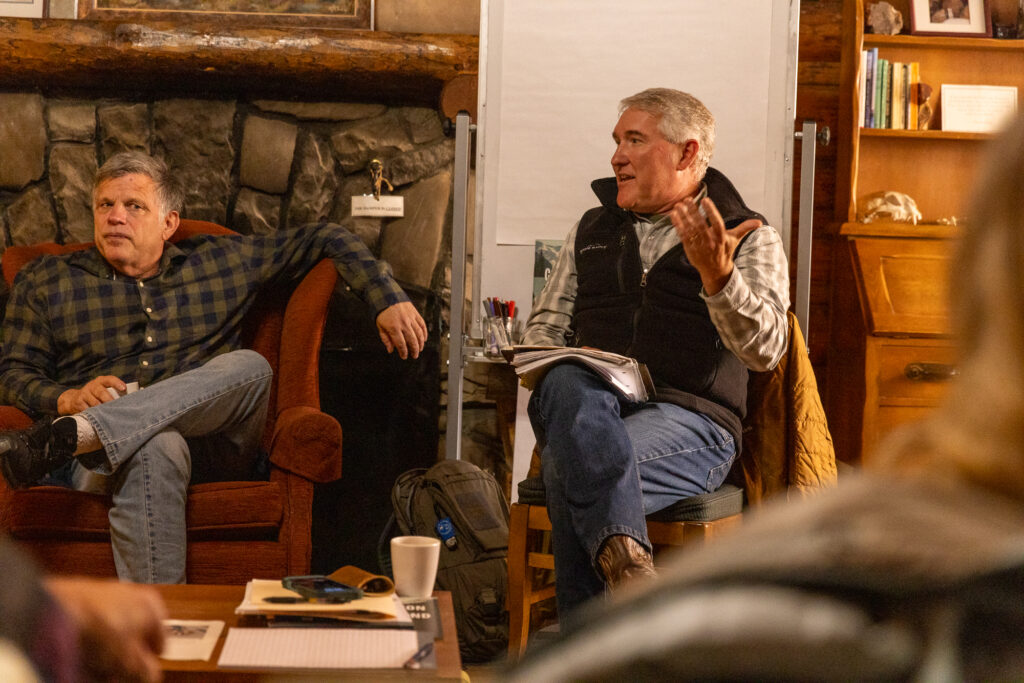
The workshop began with inspiring remarks from a special guest. Douglas Brinkley—bestselling author and Presidential Historian for CNN—set the stage by positioning the dialogue in historical context.
Brinkley, who serves as the Katherine Tsanoff Brown Chair in Humanities and Professor of History at Rice University, brought his deep expertise in conservation history to bear on the discussion. His 2022 book Silent Spring Revolution chronicles the rise of environmental activism across a generation with efforts spanning the Kennedy, Johnson, and Nixon administrations.
Brinkley’s historical perspective reminded participants of the bold thinking and collaboration that defined previous eras of conservation success, challenging the group to imagine how today’s leaders might write an equally transformative next chapter.
A Cross-Section of Conservation Leadership
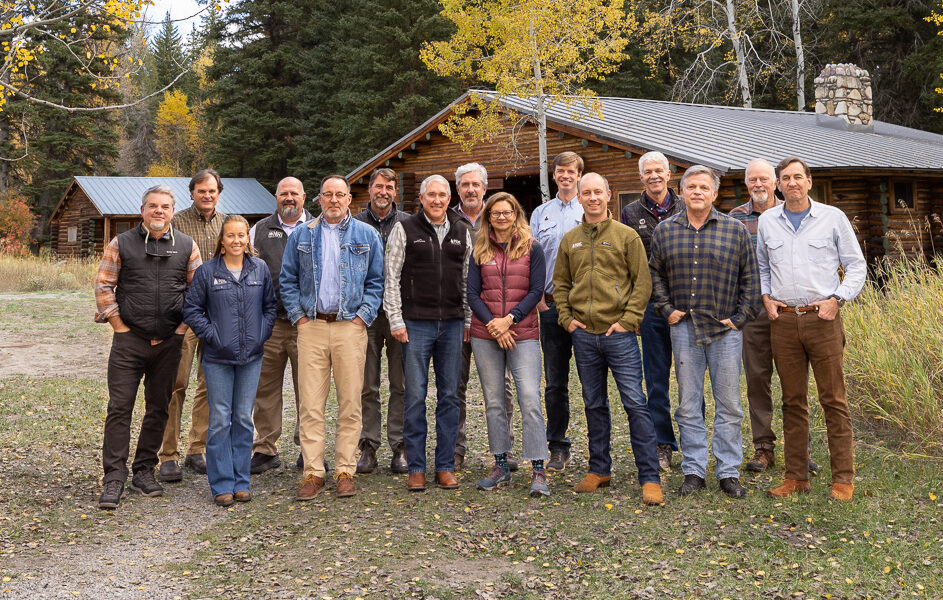
The dialogue brought together an impressive and diverse group of conservation leaders representing government agencies, nonprofits, academic institutions, and advocacy organizations. Participants included:
- Robert Bonnie, distinguished scholar, Stone Center for Environmental Stewardship at the University of California, Berkeley.
- Douglas Brinkley, American historian and bestselling author, presidential historian, CNN
- Shoren Brown, director, U.S. Nature Initiative
- Hannah Downey, associate vice president of policy, PERC
- Chip Jenkins, superintendent, Grand Teton National Park
- Roel Lopez, director, Texas A&M
- Rupert Munro, COO, PERC
- Collin O’Mara, CEO, National Wildlife Federation
- Simon Roosevelt, board vice president of conservation policy, Boone and Crockett Club
- Greg Schildwachter, founder, Watershed Results
- I Ling Thompson, CEO, Foundation for America’s Public Lands
- Rob Wallace, former assistant secretary for Fish, Wildlife and Parks, U.S. Department of the Interior
- Tony Wasley, president/CEO, Wildlife Management Institute
- Brian Yablonski, CEO, PERC
This gathering represented decades of combined experience working on everything from endangered species recovery and public lands management to private land stewardship and wildlife policy.
Forward-Looking Dialogue
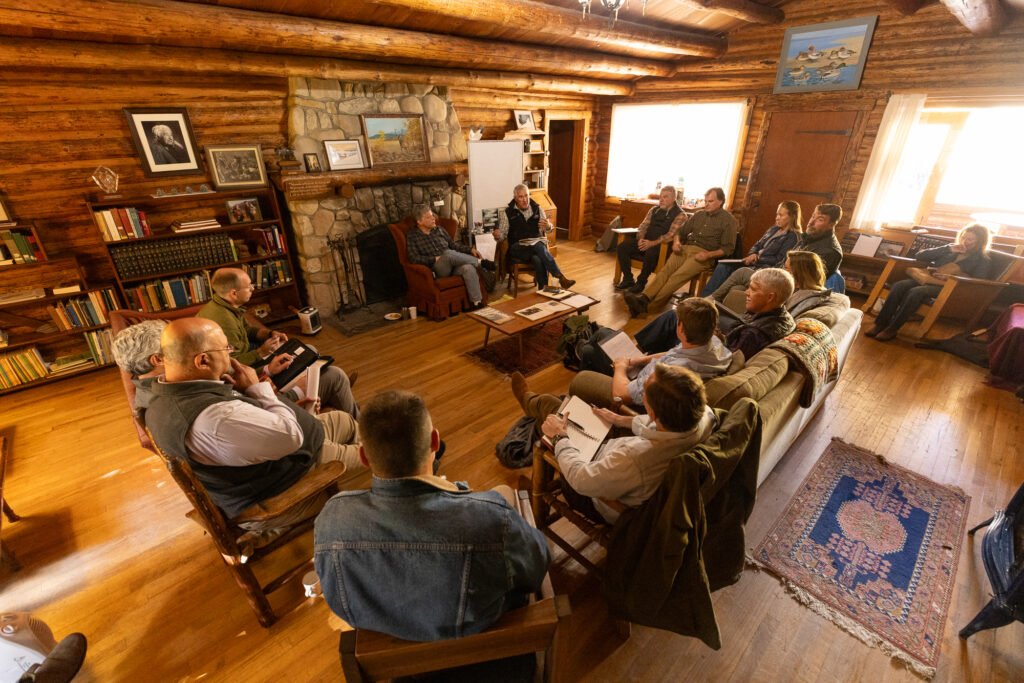
Throughout the convening, participants explored fundamental questions about conservation’s future:
- What are the challenges and obstacles we face?
- What tools and solutions might drive success in the decades ahead?
- How can we move beyond outdated models to embrace faster, more flexible, and more collaborative conservation approaches?
The conversations ranged from policy opportunities to the roles of markets, technology, partnerships, private lands, and even popular culture, and identified the new ways of thinking that the next era demands. Throughout the sessions, the tone remained optimistic and solution-oriented, with participants bringing their diverse perspectives to illuminate pathways forward.
Continuing the Conversation
The dialogue doesn’t end at the Murie Ranch. This winter, PERC will publish a special edition of PERC Reports magazine featuring perspective pieces from participants, offering readers a window into the most innovative and forward-looking ideas shaping conservation’s future (To receive a free printed copy, subscribe here.) These essays will serve as an invitation to a wider audience to join in building the next era of conservation.
Just as the Muries and their contemporaries gathered at the ranch to imagine and advocate for wilderness protection, today’s conservation leaders are charting an ambitious course forward. With the same spirit of innovation, collaboration, and commitment to lasting impact, this new generation is ready to write the next chapter of conservation success.
The next era of conservation is taking shape—and it’s filled with possibility.