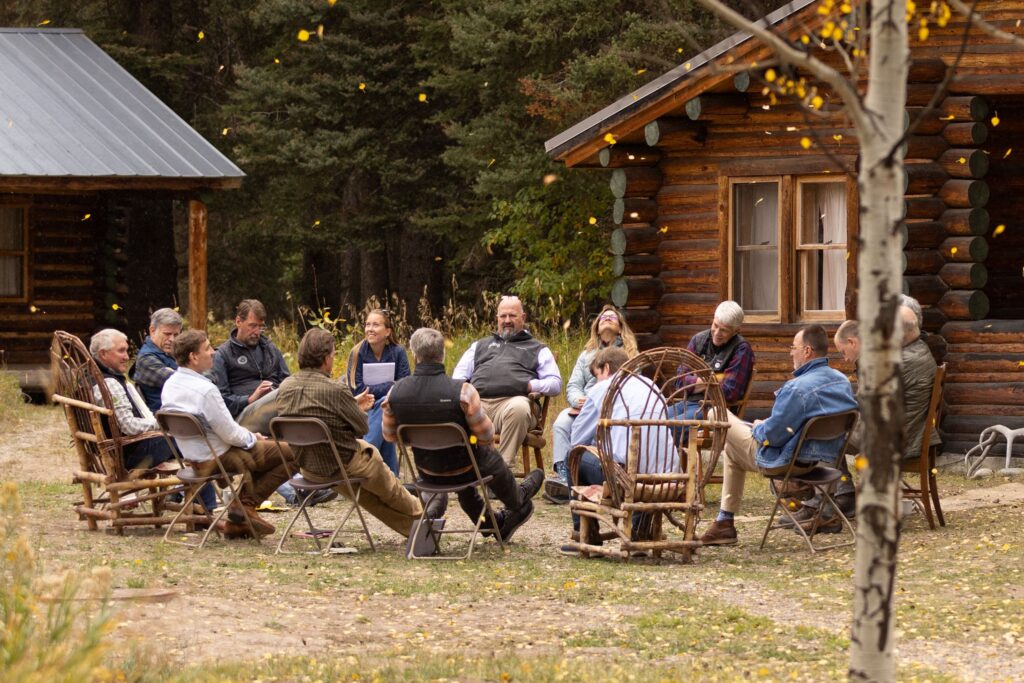
Gathered in a tiny cabin under the enormous shadow of the Grand Teton, a collection of conservation leaders sits around the hearth in mismatched and well-worn chairs and couches. The menagerie of seats might be the perfect metaphor for this diverse group of idealists.
The cabin belongs to a tiny giant of American conservation history: Mardy Murie. Affectionately called “the grandmother of the conservation movement,” she was a naturalist and writer who, along with her wildlife biologist husband Olaus, dedicated her life to wilderness. For nearly 60 years, conservationists made pilgrimages to the log cabin seeking her inspiration and advice. It became the basecamp for a conservation movement.
Nestled on what used to be a private inholding within the boundaries of Grand Teton National Park, the shelter is now as it was decades ago. A photo with Mardy and John Denver sits on the mantle. The presidential medal of freedom lies somewhere nearby. Her bed is neatly made. The group of conservationists PERC has assembled is intentionally compact. Those in attendance were selected based on their ability to step back and think big while untethered by narrow fields of vision. We think Mardy would have liked them all.
Anchored by the environmental historian Douglas Brinkley, it includes a great-great grandson of Theodore Roosevelt, visionary CEOs of respected national conservation organizations, the national park’s superintendent, a wildlife ecologist, and former conservation leaders from both Republican and Democratic administrations. We have come together for the seemingly impossible purpose: inspire the next great era of American conservation. The Murie cabin is the perfect setting to inspire the would-be inspirers.

An American Notion of Conservation
To audaciously set out to shape conservation’s future, you must first know its history. And it begins with a simple statement: Conservation is America’s birthright. As we approach our nation’s 250th anniversary, it’s apparent that among the many concepts America has given the world, conservation ranks near the top. And American conservation was born out of an inferiority complex with Europe.
In the years after our founding, America struggled to find its identity. It was something that weighed on Thomas Jefferson in correspondence with Old World acquaintances. Europe was a place of culture and served as the custodian of Western civilization. It had castles and cathedrals, museums and artifacts, art galleries and masterpieces, fine cuisine and high fashion. America could claim nothing of the sort. It was a hodgepodge of former extractive colonies and remained relatively wild—an undiscovered frontier but for the Atlantic seaboard. Wealthy Americans travelled not as tourists within the United States but as innocents abroad, to Europe on immersive Grand Tours to Paris, Rome, and the like.
All of that changed with westward expansion. Beginning with Jefferson’s Lewis and Clark expedition in 1804 and continuing through the establishment of Yellowstone as the world’s first national park in 1872, our nation entered a distinct age of European-American discovery and settlement. The wonders of the natural world familiar to many Native American tribes revealed themselves to explorers and settlers—steaming geysers and thermal features, groves of redwoods and sequoias, lofty mountain peaks and momentous rock formations, grand canyons of unfathomable depths, coastal volcanoes, majestic waterfalls, raging rivers, and herds of buffalo and elk silhouetted across wide-open prairies. Our scenery sublime became the cultural asset America sought.
Suddenly, we had something that even Europeans coveted. We embraced the patriotism of place. And in response, sometimes too late, we created a new notion of conservation and developed tools to protect our newly emerging national legacy. With the glorification of the West and the showcasing of such dramatic scenery, historian Alfred Runte describes in National Parks: The American Experience, a shift in contemporary views: “The nation slowly grasped the opportunity until the words ‘public’ and ‘protection’ were no longer far apart. Just as Europe had retained custody of the artifacts of Western civilization, so the United States might sanctify its natural wonders.”
Douglas Brinkley reminded us in Mardy’s cabin that America has seen successive “waves of environmental progress”—or “eras” of conservation. Admittedly, eras can be hard to define, but scholars like Brinkley have provided us the construct of eras through which to view the evolution of conservation.
The first era of American conservation gained steam in the late 19th century—a time when the western frontier closed and a tragedy of the commons was developing on unclaimed federal rangelands and forests. Into this moment stepped a remarkable figure: President Theodore Roosevelt, who designated more than 230 million acres of this unclaimed land as national monuments, national parks, and national forests. A hunter and a naturalist, Roosevelt advocated for an expansive government response— as strong and robust as him—to protect America’s most cherished landscapes.This Preservation Era focused on drawing lines on a map, sometimes on actual maps sprawled on the floor of the White House, and saying: “Here, nature is protected. Here, it will endure.”
But by the middle of the 20th century, pollution had become the defining environmental crisis, and attempts to solve it ushered in a new era. In the wake of Rachel Carson’s Silent Spring and the first Earth Day, the federal government passed a sweeping suite of new laws regulating air and water pollution, many of them in overwhelming bipartisan fashion. This new Regulatory Era brought the Clean Air Act, the Clean Water Act, the National Environmental Policy Act, and the Endangered Species Act. This was another unprecedented expansion of federal power, led by large and sometimes new government agencies.
Like the tools of the previous era, the regulations were designed for specific problems of the times. As decades pass, tools age, and challenges evolve. Then, we are in a different era.
The Rusting of Old Tools
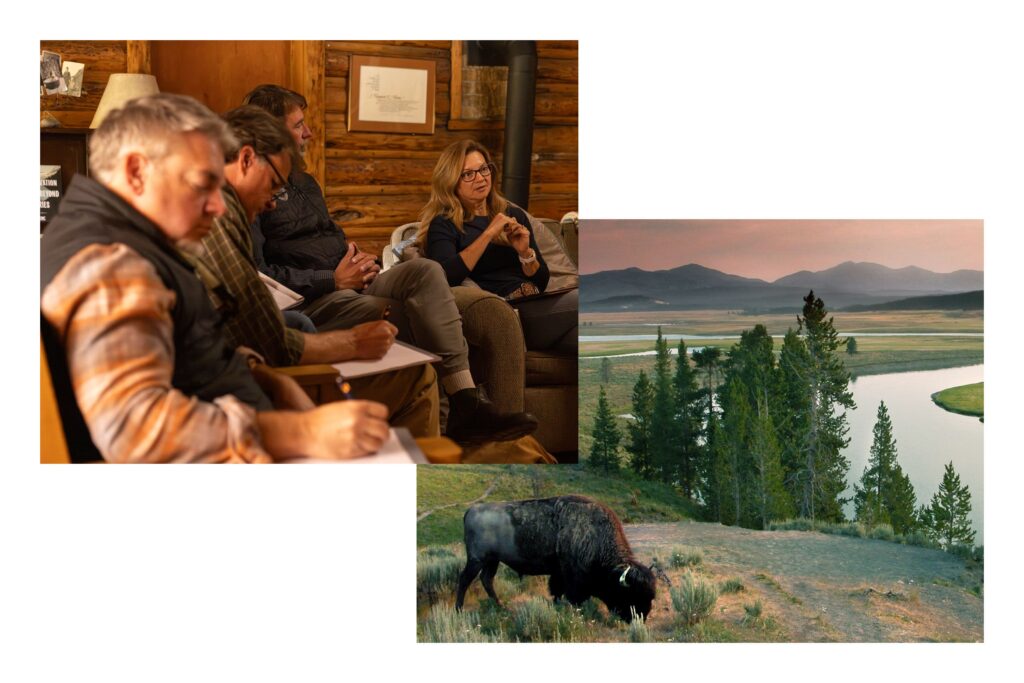
Fifty years later, how do we know that we are on the precipice of the next era? It seems eras emerge after a widening disconnect between the problems and the tools. Today, many leaders in the conservation community now acknowledge the need for novel solutions. Like those who gathered at the Murie cabin, they appreciate historic conservation efforts, yet they also recognize that we need to continuously learn and improve our tools for conservation. Rather than defending outdated processes, they create space for new ideas and possibilities.
Consider the types of challenges leading us into the next era.
America’s colorless private lands
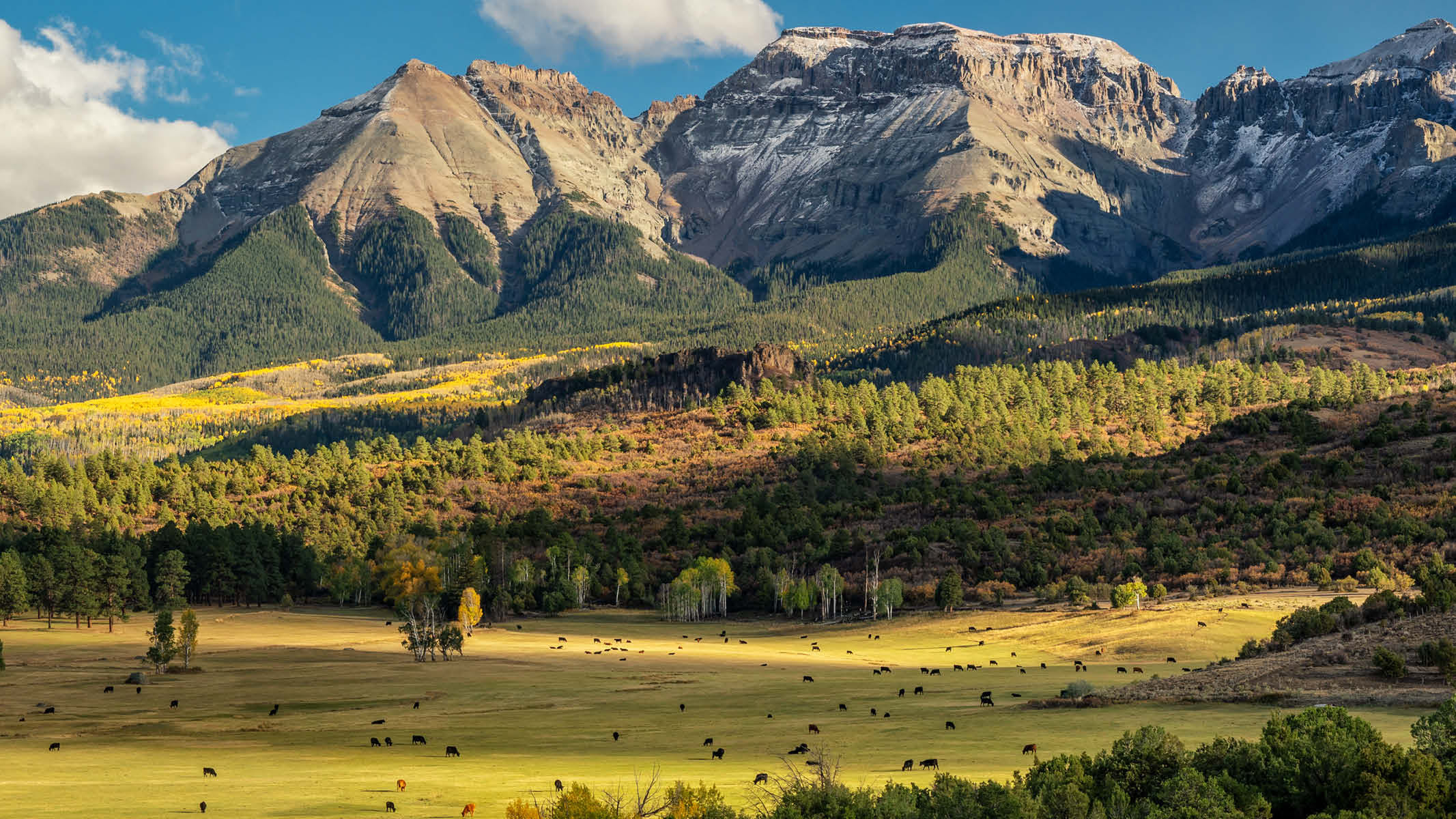
Over the previous two eras, we have all but ignored the importance of private land stewardship. Almost any atlas of America can show you the discrepancy. The maps within are colorful mosaics, with national parks in brown, national forests in green, and state and tribal lands in their own hues. But private land is the white space in between—not worthy of a color. That must change.
Private lands are often the best-quality lands, the lands settled first, near water sources and on fertile soils. Rock and ice and desert were generally left in government hands. The story worth telling is this: Seventy-five percent of all wetlands in America are on private lands, as are 80 percent of grasslands and biodiversity hotspots. And two-thirds of all threatened and endangered species rely primarily on habitat found on private land.
What’s more, while the federal government owns 640 million acres of land, privately owned ranches, farms, and forests comprise double that amount—1.3 billion acres. It is there where open space and habitat loss are in need of conservation. An average of 1.8 million acres of farmland becomes developed each year. This should spawn an outpouring of creativity, but to date it has not. It is time we give private land its own color on the map.
A public lands management disaster
On bedrock public lands, preservation has been championed over conservation. Under previous eras, hundreds of millions of acres of federal land were set aside and designated for preservation or for specific uses such as grazing, timber, and mineral development. But proper stewardship of those lands has often taken a back seat to the acquisition of more area or to a designation carousel of how to classify them.
This failure to manage our public lands properly has had severe ramifications. National parks face $23 billion in overdue maintenance, threatening the ecological integrity of iconic landscapes including the Grand Canyon and Yosemite. Similarly, misguided fire-suppression policies have turned America’s national forests into wildfire hotspots. Roughly 80 million acres are in need of restoration—a backlog that leaves our forests littered with excess fuels, more vulnerable to insects and disease, and less resilient to drought and climate change. And on BLM lands, the failure to address overpopulated herds of wild horses and burros combined with the spread of invasives like cheatgrass are ruining rangeland habitat.
In the next era of conservation, the focus should be on conserving public lands, rather than just preserving them, through better, active management.
Too little and too much wildlife recovery
In previous eras, conservationists responded to the near decimation of wildlife by pulling some species, like bison, bald eagles, and grizzly bears, back from the brink of extinction. Earlier and enduring tools, including the establishment of game wardens and state fish and wildlife agencies, the outlawing of market hunting, and the Endangered Species Act and the Migratory Bird Treaty Act, worked to prevent harm to species but, in most cases, they have failed to motivate recovery efforts.
Of all the wildlife species listed under the Endangered Species Act over the past half-century, only 3 percent have recovered and been delisted. While the act provides strict regulations intended to keep species from going extinct, it offers little reward for recovering species to a healthy status. A landowner who helps a listed species recover is likely to be “repaid” only in the form of more oversight and regulation. Consequently, many endangered wildlife lie in a kind of purgatory, not quite blinking out of existence, but still quite a distance from recovery.
Today, an additional, newer challenge stems from select species’ success and resulting abundance. While federally listed species stagnate in recovery efforts, hunters and anglers through their state wildlife commissions have championed game species, with remarkable results. Now, some states are overflowing with turkey, elk, deer, and the like, bringing a host of novel problems related to “muchness.” Today, there are as many white-tailed deer in the United States as at the time of Lewis and Clark—over 30 million—with a declining pool of hunters to help control populations. Similarly, the spread of invasive species, from pythons in the Everglades to lionfish in the Caribbean, demonstrates the perils of “too many.” What to do with too little and too much wildlife stand as real challenges in the next era.
The drying of the West
The western United States has always been an arid climate, a place where the old cowboy expression still holds true: Whiskey is for drinking, and water is for fighting. As urban populations grow and the impacts of climate change take hold, water scarcity is on the rise, while traditional tools for managing growing demands—from tapping new supplies to mandating reduced use—become less realistic and palatable. The upshot is more conflict. Iconic waterbodies like the Colorado River and the Great Salt Lake are imperiled, with some researchers warning that the latter could dry up in as little as five years.
The ossification of conservation
Perhaps the most toxic challenge of all is that we’ve lost our ability to collectively address and confront the big conservation challenges. The list of reasons is many: The weaponization of collective action. Partisanship. Litigation. Red tape. But perhaps the most dangerous of all is narrow thinking paired with unexamined fealty to the tools of the previous eras.
To hear many in the conservation community today, solutions are as simple as more government spending. Success today is measured by dollars secured through funding bills that often lack clear deliverables, benefits, or outcomes. Furthermore, trust in the federal government is at an all-time low, rendering less feasible the type of sweeping federal actions that characterized previous eras and are favored by old school conservationists today. To take on the challenges of the next era, we will need more expansive and creative thinking, something lacking in the bureaucracies and processes of Washington, D.C.

An Innovation Era
The view from where I sit is different. Leading a national conservation organization, geographically based on what remains of the frontier, and far away from the restrictive settings of metropolises like Washington, New York, and San Francisco, provides a distinct perspective. Our big sky is more than just descriptive; it is life with a soaring musical score. Something Roosevelt experienced in his time here.
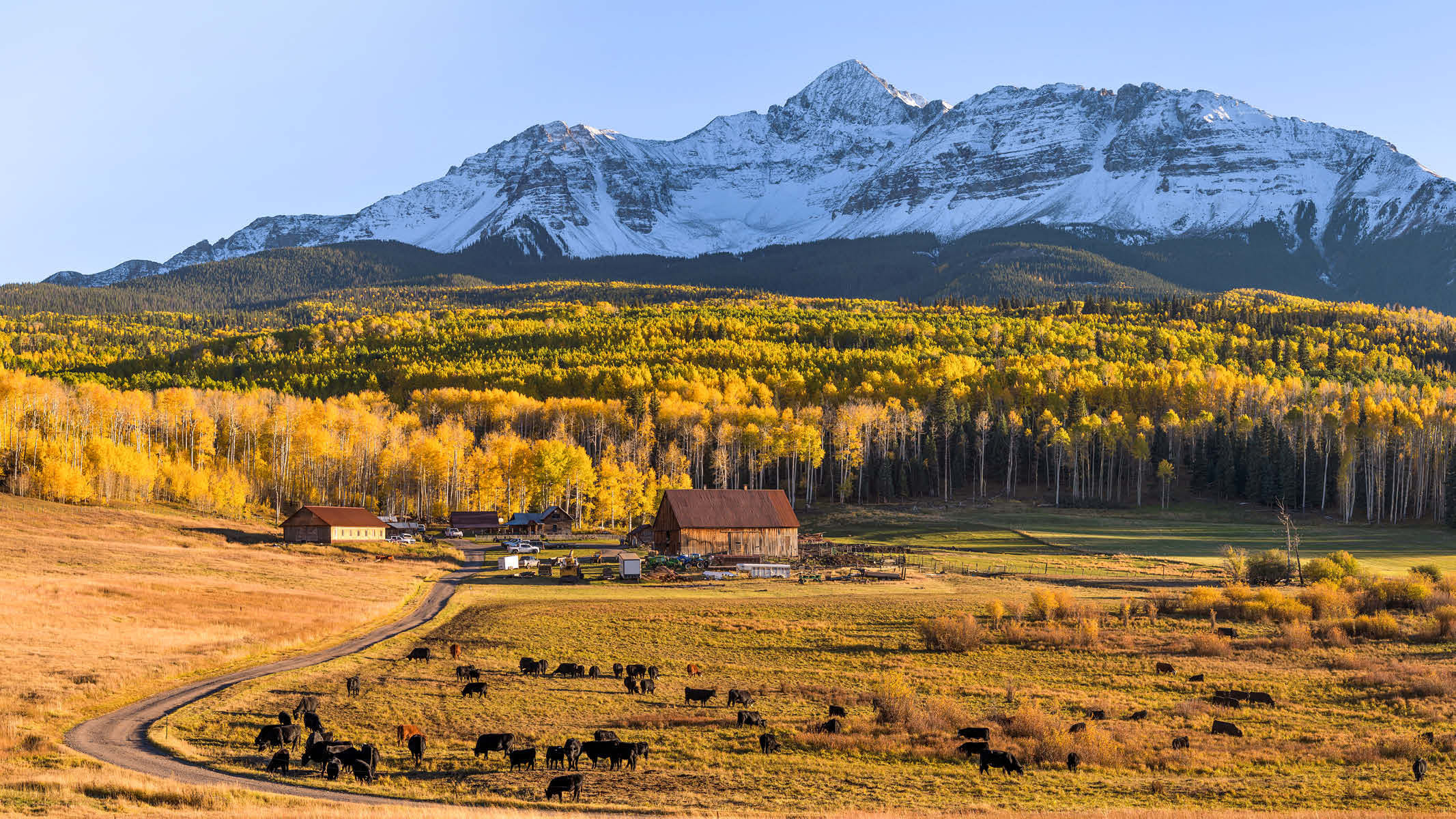
Beyond Montana’s raw natural beauty, this region is something of a petri dish that yields conservation innovations. PERC is close to the ranchers and farmers who feel the impact of our work. We are nearby and inspired by the world’s first national park. The rivers in our region are the foundations of the great waterways of America. We exist in the heart of the largest intact temperate ecosystem on Earth. We live among grizzly bears, gray wolves, and the distant relatives of the great herds of buffalo that once roamed this country. And we have been discovered, with development on our doorstep, especially in the colorless, privately owned places on the map.
This unique perspective leads me to a chain of ideas that might be characterized as conservation’s Innovation Era.
Private lands are the next frontier of conservation
These lands need a vivid color on the map. Encouraging their stewardship will require an expanded, flexible set of tools, much more than what we have today. For example, conservation easements, which compensate landowners for forgoing development in perpetuity, have been effective, but they have fostered a limited way of thinking about private land conservation over the last 50 years. Perpetual easements are appealing to conservationists, but they are not always the right answer for people living on the land. Perpetuity is a long time.
Additional tools like habitat and conservation water leasing, wildlife occupancy agreements, payment for presence programs, compensation funds, virtual fencing technology, and other emerging innovations need to be accelerated to expand the private lands toolbox. Relatedly, if you are a conservationist in the business of private land stewardship, you will need to embrace “property rights” and be able to say the term out loud. The flexibility and creativity that the future of conservation demands will be based on trust and the notion that those who own the land are more than just another “stakeholder.” It is their land.
Similarly, when the history of this era is written, there will be a chapter on conservation ranching. It began decades ago when the entrepreneur Ted Turner invested considerable wealth in nearly two million acres of large landscapes with the goal of managing the lands not for development or extraction, but for conservation. The story of the wealth of America is also the story of the wealth of conservation. And Turner started a trend of high-net-worth individuals buying up vast acreage, amassing properties the size of national parks. Today, the holdings of the top 100 landowners in America are the size of the state of Florida. To many this is an affront, but most of these landowners are investing in conservation, expending resources on wildlife, water, and land management that government could never provide. The landscape is better for their stewardship. Will the better angels of conservation in our national DNA prevail over the forces of envy and hate?
Conservation must be bottom up, not top down
Locally led conservation efforts need to take the place of divisive designations or mandates from Washington. They will prove more durable. As the Austrian Nobel laureate in economics Fredrich Hayek observed, all knowledge is localized, particular to time and place, and when dispersed individuals are free to act on their knowledge, order emerges from the bottom up.
For conservation, that means solutions should bubble up from those closest to the problem or landscape. That might mean the members of a regional watershed group, or the superintendent of your closest national park. It’s why so much of PERC’s on-the-ground work starts with listening to ranchers rather than parachuting in like paternalistic missionaries to explain why our way is superior and proceeding to pile on restrictions and requirements that fall to the landowners to deal with. It’s also why we support providing national parks superintendents with more authority to experiment and manage the $330 million in fee revenue they generate each year by serving visitors.
Speed up proactive conservation efforts, rather than slowing things down
Conservation means action. This applies especially to the goals of better managing our public lands and recovering wildlife. Tools of the previous era, like the National Environmental Policy Act and the Endangered Species Act, were established for inaction, to delay or derail projects that would harm ecosystems and animals. Today, those laws stymie numerous projects that would produce conservation benefits. Planning, process, and litigation are crushing the soul of much-needed conservation action. Today, because of environmental reviews and litigation, projects to restore our national forests and wildlife habitat can take up to nine years before work on the ground can even begin. These dynamics not only apply to restoration projects on public lands but also to fixing deferred maintenance in national parks and recovering wildlife on private lands.
For years, PERC has been trumpeting the need to speed up conservation. But there is now a name for it. A growing movement has coalesced around the concept of “abundance,” inspired in part by the recent book under that title by Ezra Klein and Derek Thompson. It has united traditional Democrats frustrated that government is not working as it should with libertarian-oriented reformers frustrated by a malignant regulatory state. These strange bedfellows point to a path forward by asking the hard question: What works to actually deliver affordable housing, scientific breakthroughs, or clean energy? Conservation should be added to that list.
Incentives and markets will need to play a more prominent role in the next era
There is a growing recognition that conservation needs to work for people, not against them—as mandates often do. A leader of one of the largest environmental organizations in America wrote to me recently with an observation: “Solutions that last are those that benefit people’s lives. We need to move beyond the concept that pain today for some potential future gain is workable. Humans don’t respond well in that system, and change fails to stick.” When conservation pays, conservation sticks. A tagline for PERC, and possibly for the next era, reads: Incentives matter for conservation. That should resonate as much as “It’s the economy, stupid,” did in the 1990s.
Incentives and markets align the interests of people with the needs of the environment. They reward rather than punish. The tools we deploy with ranchers coping with critters—wildlife occupancy agreements, payment for presence programs, disease compensation funds, and virtual fencing technology—all flip the script. They reward landowners for the public benefits they provide rather than punishing them for hosting wildlife on their property. This feels like a recipe for better endangered species recovery.
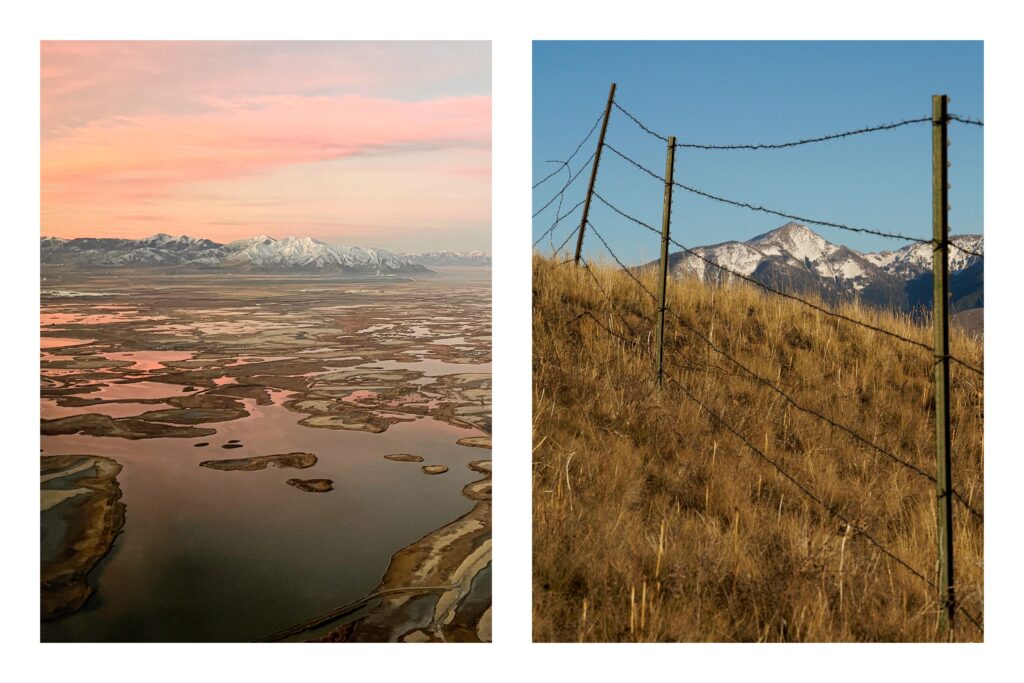
Voluntary exchange may also be the most promising way to restore the Great Salt Lake. PERC is part of an effort to help the state of Utah to develop a voluntary water leasing market, one that compensates farmers to reduce water use and allow more flows to reach the lake. Rather than mandating cuts, leasing recognizes farmers as essential partners. Coupled with new satellite technologies to measure and track conserved water, these arrangements will allow agriculture to remain viable while reviving one of the West’s most recognized ecosystems.
Finally, a handful of other innovations—in technology, ambition, and philanthropy—will likely shape the next era of conservation.
Today, thanks to GPS tracking and remote sensing, we know that many species of wildlife migrate through corridors that transect a tapestry of public and private landownership boundaries. A focus on conserving the fluidity and messiness of corridors, connectivity, and cross-boundary solutions will be just as relevant in our time as the creation of more geometric national parks and forests were in the time of T.R.
Moreover, setting big goals that can be achieved in an era’s-worth of time is a worthy priority. Where are the conservation moonshots? Why can’t we set a goal of recovering 10 percent of endangered wildlife rather than the dismal 3 percent of the last 50 years? Why can’t we “de-fence the West” of 625,000 miles of barbed wire in a way that makes better economic sense for ranchers through virtual fencing?
Similarly, private philanthropy is a marketplace that must become more entrepreneurial in backing new tools, experiments, and innovations. Conservation philanthropists tend to circle the wagons around the safe, older tools of the past or the politically popular issues of the day. But such safe thinking perpetuates the disconnect between challenges and solutions, rather than encouraging invention. With more tolerance for risk, the philanthropic community can act as a player in conservation markets to catalyze conservation innovation.

From Static to Dynamic
The story of conservation in this country has never been static, but it feels static at this moment. Perhaps our reliance on federal, top-down problem solving for more than a century has run its course. Perhaps our feet are stuck in the cement of the previous eras. That said, there are signs of vitality.
The window of what is socially and politically possible is shifting. As the wildfire crisis in our forests explodes, there is growing bipartisan support to accelerate mechanical thinning and prescribed burning by cutting red tape and limiting litigation. Some conservation organizations are beginning to soften hardline stances on endangered species policy, enabling quiet conversations about how to improve actual recovery rates. Likewise, wildlife migration policy became a priority for the first Trump administration, then bucked the trend by continuing to be championed by the Biden administration rather than being unwound as many other policies were.
Finally, conservation groups once seen as regulatory and litigious adversaries of private landowners like ranchers and farmers are recognizing that development has become an even greater threat than extractive industries. Many of these groups have recalibrated and now seek to work with private landowners by harnessing incentives that enable these ranches and farms to operate in an economically viable way. Trust still needs to be built to bridge to more landowners, but many conservationists now see working lands as integral to their efforts.
These are all paradigm shifts that would make conservation more dynamic. For those of us who recently sat on the hallowed ground that is Mardy Murie’s front porch, the message could not have been clearer: We stand at a hinge point in America’s conservation story.
As inaugural participants in an ongoing dialogue about the next era of conservation, we may not have all the answers. But a good place to start would be an environmental reboot with several aims: 1) double down on private land stewardship with newer creative tools, 2) pivot from using evermore regulation to harnessing incentives, innovation, and markets that reward conservation, 3) lean into the local by bringing a bottom-up, rather than top-down, mentality to the challenges of today, and 4) recognize the need for reforms that deliver action and speed, especially when it comes to improving the management of our public lands and imperiled wildlife.
These approaches are not so much a departure from our heritage as they are a natural extension of it. Pillars on which the tools of the next era emerge. In that vein, next year we will return to the Murie cabin to continue the dialogue and further advance a vision for the next era of conservation. Fall at the Murie Ranch is unparalleled, and the locale never fails to inspire, as it did generations before us.
In October 2003, when Mardy Murie drew her final breath at age 101 inside of her home, she had just heard a description of the autumnal scene outside. Leaves at their peak color, fluttering to the ground like nature’s confetti. A black bear in a tree next to the cabin gorging on serviceberries. The Grand Teton moody, moving in and out of the clouds. Now, her spirit seems to say: Fortunate are the few who can help write history even as we are living through it.