When elk stream out of Yellowstone National Park during their annual migration, they don’t stop at the park boundary. They move through Paradise Valley—one of the most important migration corridors in the Greater Yellowstone Ecosystem—crossing working ranchlands that have supported both wildlife and livelihoods for generations.
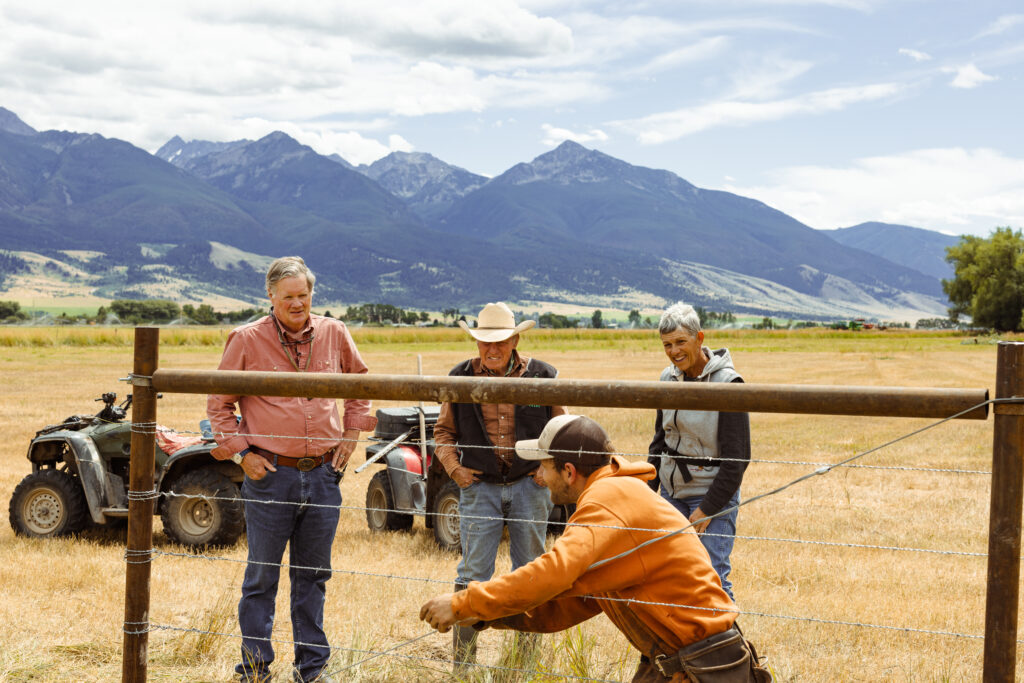
That shared landscape is what inspired PERC’s Paradise Valley Fence Fund, a privately funded effort launched in early 2025 to help ranchers deal with one of the most persistent and costly challenges of living with wildlife: damaged fences. From perennially broken barbed wire to growing conflicts with grizzly bears, fencing issues topped the list of concerns raised by local landowners, and for good reason.
In its first year, the Fence Fund has already made meaningful progress. The Fund supported three ranch projects repairing or replacing more than 4,500 linear feet of wildlife-damaged fencing, including full conversions to wildlife-friendly designs that reduce future damage while allowing elk and other animals to move more safely across the landscape. One project replaced over half a mile of damaged woven wire fence with a design better suited to both livestock management and migration.
The Fund has also played a critical role in preventing human–grizzly bear conflicts. Working with Montana Fish, Wildlife & Parks, Bear Awareness Gardiner, and other local partners, the Fence Fund helped deploy electric fencing to secure 21 high-risk attractants—from beehives and fruit trees to bone piles and poultry enclosures—across the Upper Yellowstone Watershed. These proactive measures help keep bears wild, reduce losses for landowners, and lower the chances of dangerous encounters near homes and ranches.
Sometimes, the simplest solutions are the most effective. The Fund also developed and distributed custom gate signs that encourage seasonal wildlife passage through open gates when livestock aren’t present. By deterring trespassing while encouraging migration, these small signals can make a big difference for migrating animals while maintaining trust with landowners.
Why does this kind of work matter so much in Paradise Valley? Because keeping working lands working is one of the best conservation tools we have. When ranchers are supported—rather than burdened—for providing habitat and migration routes, those lands are less likely to be subdivided and more likely to remain open, productive, and wildlife-friendly. Offsetting the real costs of living with elk and grizzlies builds tolerance, cooperation, and long-term stewardship where it matters most.
With supplies stocked, partnerships in place, and momentum building, the Paradise Valley Fence Fund is well-positioned for the seasons ahead. As hibernating bears awake and elk and other wildlife move across the valley this spring, the Fund will continue helping landowners protect their operations while sustaining one of the most iconic migration landscapes in North America—proof that conservation works best when it starts from the ground up.