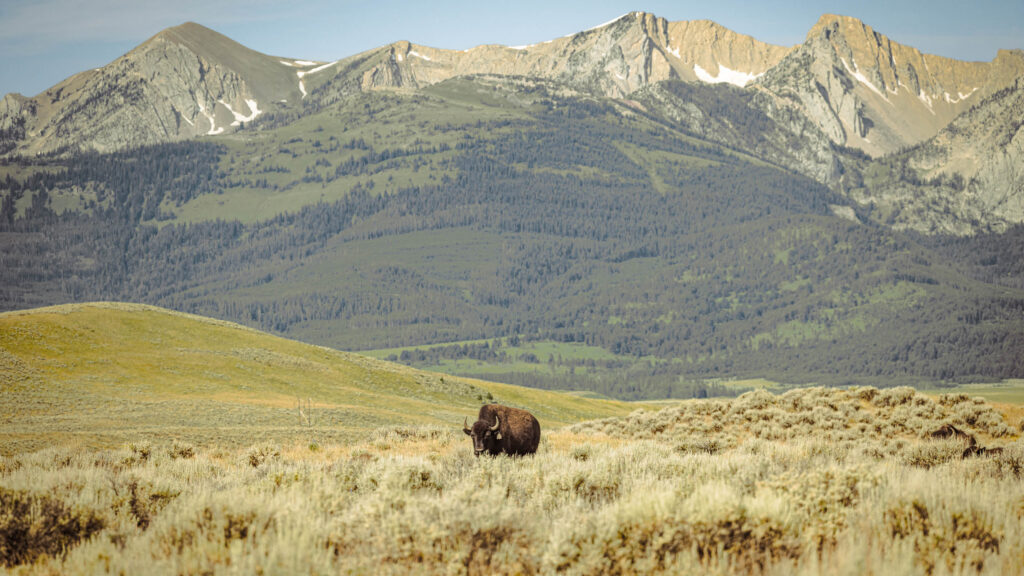
Roughly two decades ago, I sat in a booth at Ted’s Montana Grill in Tallahassee, Florida, with Beau Turner, splitting a plate of bison sliders. Beau is the youngest son of the late Ted Turner. He also manages wildlife projects for Turner Enterprises, which includes oversight of biodiversity projects and ranching for the nearly 2 million acres of land owned by the family.
The restaurant was decorated with dark wood, bison heads, and classic oil paintings of the West, yet Beau was there to talk about the Turners’ efforts to aid recovery of the bison—the very species we were devouring at that moment. He explained that raising bison began as a hobby on a South Carolina property in the late 1970s. It grew into a booming enterprise encompassing six western states.
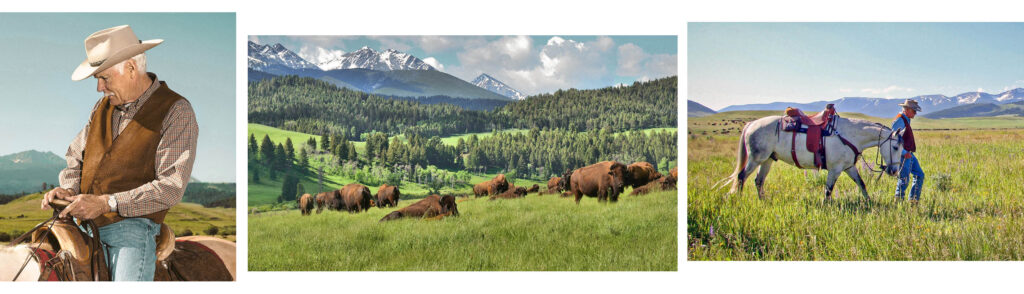
Bison restoration brought its own learning curve. “We made a lot of mistakes early on,” said Beau. When the Turners first began raising bison at the Flying D Ranch, a 114,000-acre spread in southwestern Montana, calving rates dropped. So Beau learned about the importance of herd rotation, grass health, rainfall, and the critical role of people in the restoration process. Today, their herd sustains an 80 to 90 percent calving rate.
The near extirpation of the American bison in the 19th century was one of the great environmental catastrophes in our nation’s history. Resilient by nature, bison have spent the last century making a miraculous comeback. The credit mostly goes to private ranchers and conservationists employing market-based approaches. Today, restoration of the bison is an environmental success story in its own right.
Entrepreneurs to the Rescue
In the early 1800s, it was believed as many as 30 million bison roamed the Great Plains. By the end of the century, the bison was close to extinction, with roughly a thousand left. As bison numbers plummeted, sportsmen, including Theodore Roosevelt, rushed in for one last chance to hunt the now-elusive animal. “Gone forever are the mighty herds of the lordly buffalo,” Roosevelt declared.
Yet just as enterprising men helped hasten this environmental calamity through market hunting, so too did individual entrepreneurs, private ranchers, and conservation groups help bring the bison back from the brink. The bison’s recovery began with a few westerners who thought the novelty value of saving the last remaining bison might be high. The handful of wild bison that they captured eventually became the seed herds for ranches and government preserves. In 1902, Congress purchased 21 of these bison to breed with the remaining couple of dozen in Yellowstone National Park, and they eventually grew into the nation’s most iconic herd.
Then, in 1905, a group of wealthy easterners organized the American Bison Society, with backing from then-President Roosevelt, for the protection of the bison on public preserves. Members raised $10,000 in private contributions to buy a herd for the newly created National Bison Range in Montana, and several other public herds were eventually established in other states.
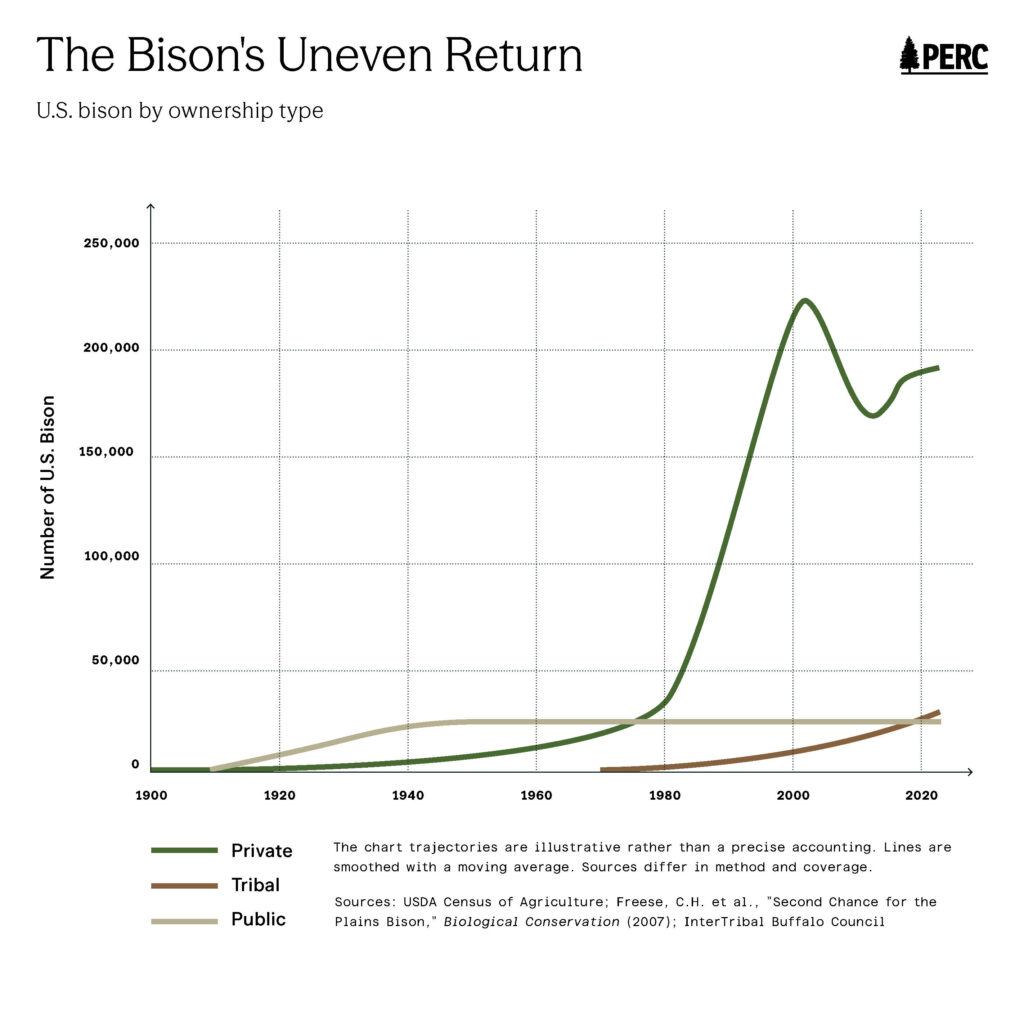
With help from these entrepreneurs, many bison were preserved in public herds in places like Yellowstone, but bison restoration on public land was limited by geography and capacity. In 1914, the federal government owned just 10 percent of the captive bison in the United States, which amounted to only a few hundred. Today, states or the federal government still manage less than 10 percent of bison in the country, with roughly 20,000 total bison in public herds—a total that has changed little in recent decades.
The real action is on America’s private ranches. In the late 1970s, about the time bison were capturing Ted Turner’s attention, there were only about 20,000 bison in private herds. Due mostly to the development of an established, if specialized, market for bison meat over the past 50 years, the Department of Agriculture estimates that there are now 192,000 bison on private ranches and farms in the U.S. Including bison in tribal and public herds, the animal’s numbers have rebounded to a total of roughly a quarter-million across the country.
A Sustainable Bison Market
Nobody understood the bison market better than Ted Turner. In fact, one might argue that he was the bison market—his roughly 45,000 bison still collectively make up the largest private herd in existence, accounting for about one in 10 bison on the planet. And his restaurant chain helped take bison meat mainstream. Yet Ted’s Montana Grill restaurants, with nearly 40 locations across more than a dozen states, represent only a portion of the meat market.
Turner died in 2026, at the age of 87. His passing closed a chapter, but the enterprise—and the idea behind it—outlive him. Turner showed that a rancher with capital and conviction could rebuild populations of a once-imperiled species on private ground, and that selling bison was not at odds with saving them—it was the very thing that helped ensure they continue to thrive. He was the most visible of the bison’s private stewards, though far from the only one, and the approach Turner scaled up is being carried on by a new generation of ranchers.
If Ted stimulated demand, Beau has helped ensure the supply. He appreciates the role of his family’s operation in enhancing the future of these magnificent animals. “By promoting bison ranching, by promoting the bison industry as a whole, we move away from ever listing the bison as an endangered species,” he explains. “We should be proud of that. Private ranchers are definitely doing a service for bison.” The Turner family, by capturing the economic value of the bison, put itself in a unique position to help restore the animal to its native lands.
That is good for the bison, but it is also good for health-conscious Americans. As Time magazine once observed about the bison: “Sometimes you have to eat an animal to save it.” That logic still drives the market. Bison remains one of the leanest red meats available—lower in fat and cholesterol than beef, and raised without added hormones—and demand has only grown as many Americans have turned toward whole, minimally processed food. Yet supply cannot keep pace. The United States harvests only about 65,000 to 80,000 bison in an entire year, while the beef industry slaughters some 125,000 cattle every single day. That scarcity, set against steady demand, has pushed bison prices to record highs, with retail prices often doubling those of beef.
Bison ranching also gives the Turners the opportunity to diversify their revenue streams from the land—including hunting, fishing, lodging, and timbering—and ultimately helps make Turner Enterprises a better business. As Beau reminded me, the goal of his family’s business goes beyond profit: “manage the land in an economically sustainable and ecologically sensitive manner, while promoting the conservation of native species.”
A Wild Idea
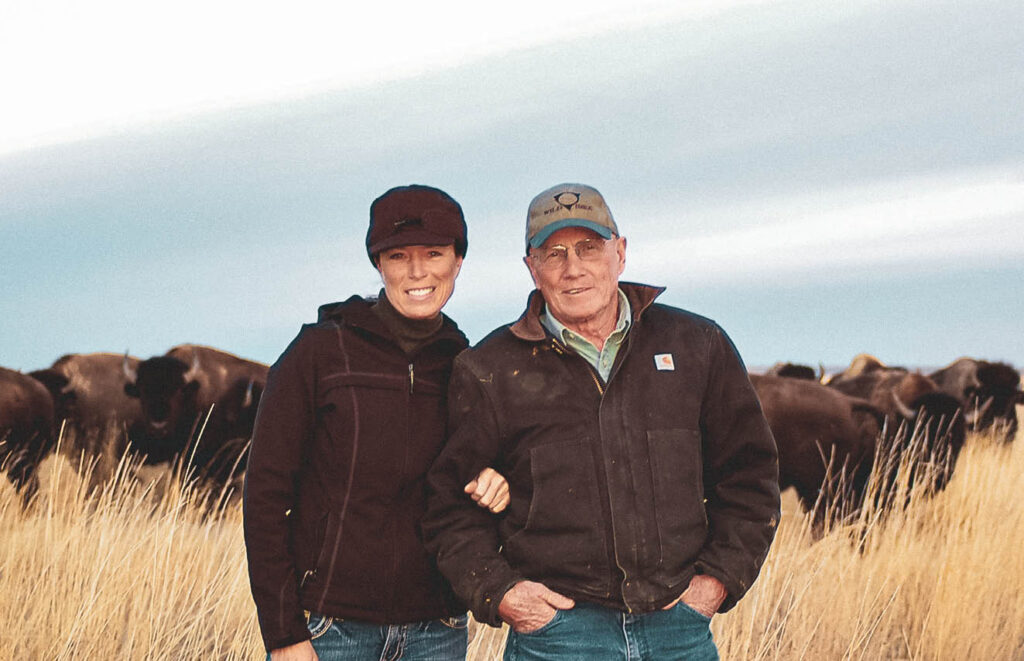
Outside Rapid City, South Dakota, another conservationist-rancher has been working to restore the bison for the better part of three decades. There, Dan O’Brien and his wife Jill own roughly 800 bison and a company they founded called Wild Idea Buffalo. Their scenic Cheyenne River Ranch includes deeded acreage as well as land leased from the neighboring Buffalo Gap National Grassland.
O’Brien has carved his own niche market for bison. Comparing what he does to a winery, he takes great pride in field harvesting the bison he ships to customers around the country. Rather than moving his bison to a slaughterhouse, Wild Idea bison are dressed in the pasture where they stood at his ranch. The harvest harkens back to an earlier time. “The concept is very sellable,” O’Brien says. “It’s a very spiritual, humane nature of harvest. We don’t get stress or adrenaline in the meat.”
O’Brien describes his customers as “environmentally conscious.” His method of care and harvest is a big reason people order his meat. A former cattle rancher who saw reintroducing bison as a way to restore his rangeland, O’Brien is also emphatic about the environmental benefits that come from raising bison. Foremost, he sees a difference with impacts to riparian zones. “In this country, water is so important,” he says. “We have springs and the river. But you find cattle standing in the water, defecating and trampling the vegetation around it. Buffalo are up on the hill in the breeze.”
He also sees a benefit for the adjacent national grasslands. When O’Brien leased his 20,000 acres from Buffalo Gap, he received a permit for 70 percent of the grazing rights. Where the previous owners would graze 600 cows in the summer, O’Brien only turns his bison loose in the winter, with far less impact to the grasslands. Benefits come not just from the seasonal change, but because bison graze “on the move”—missing a lot of the grasses. “We are marketing the health of the Great Plains,” explains O’Brien, “and the buffalo are a big part of that.”
Margin and Mission
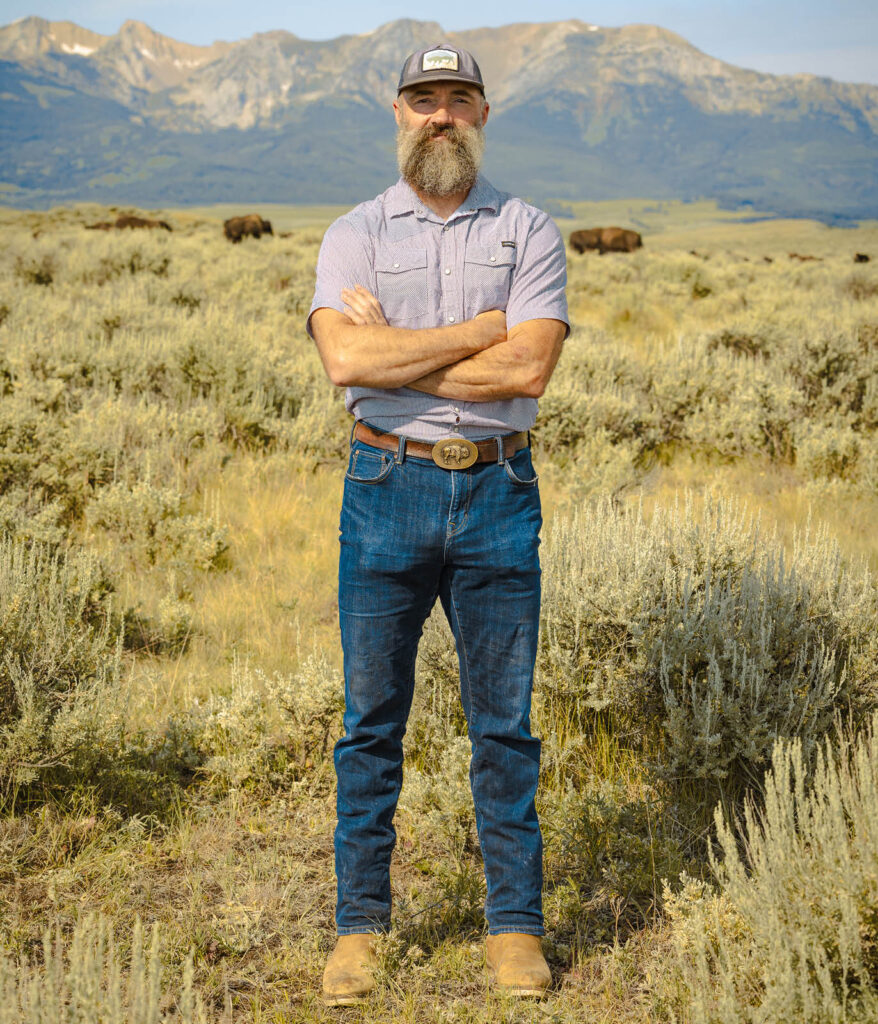
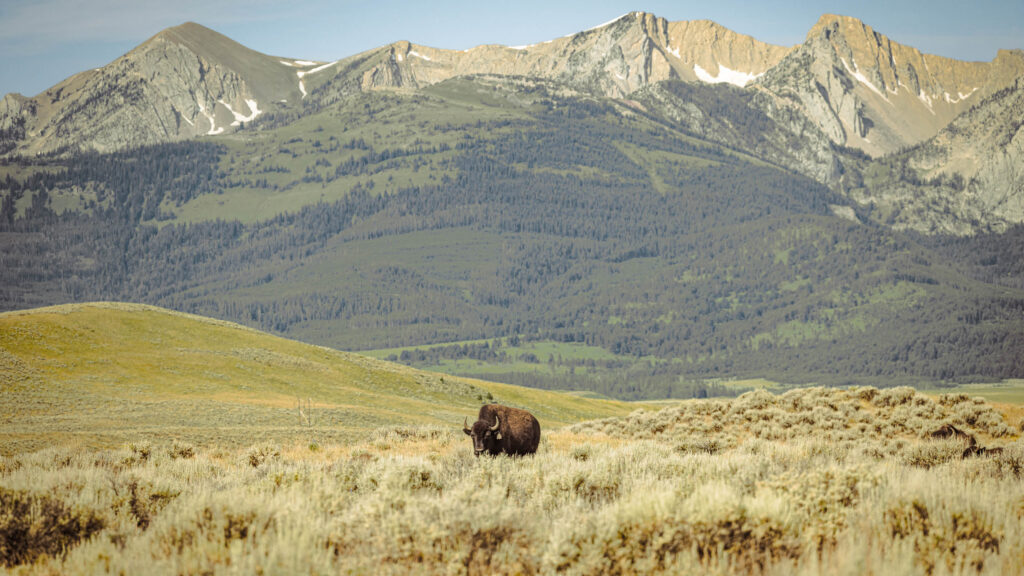
In the Shields Valley of southwestern Montana, where the Bridger Mountains rise about 30 miles northeast of Bozeman, a first-generation rancher named Matt Skoglund is doing in miniature what Ted Turner did on a continental scale: building a bison herd from scratch on native grass. Skoglund and his wife Sarah established North Bridger Bison in 2018 and today run about 250 bison across more than 2,500 acres.
Skoglund came to ranching the long way around, through conservation. He spent a decade working on bison policy before concluding that the surest way to conserve nature was through the marketplace rather than around it. “If we’re going to protect the natural world, it has to happen through how we produce things and how we consume things,” he says. An inspiration for him is Yvon Chouinard, the founder of Patagonia, who kept his company private so he could bend it toward a purpose. Skoglund’s own version is a phrase he repeats like a creed: “No margin, no mission.” The ranch is unabashedly mission-driven, he says, but the numbers still have to work.
And the numbers, he believes, are moving in only one direction. The bison business remains small. “On any given day, more beef will be killed today than bison in a whole year,” Skoglund says. “This is not a crowded space.” He has watched bison meat travel from curiosity to staple—“from an exotic niche meat, like ostrich 25 years ago, to everyone wanting bison now because it’s so healthy and delicious.” He’s betting that the national turn toward whole, unprocessed food will only accelerate.
Echoing Wild Idea Buffalo’s strategy, North Bridger Bison sells its meat the way a small winery sells its vintages: directly to consumers, and entirely on its own terms. Customers buy by the quarter, half, or whole animal through the ranch’s website. About half of the Skoglunds’ clients live in Montana, and the rest are scattered across nearly every state in the country. Roughly once a week, Skoglund takes his rifle and field harvests a bison on the open pasture where it has spent its whole life. He learned the practice from another source of inspiration to him—O’Brien—and adopted it because he similarly refused to subject his bison to the stress of a long haul to a slaughterhouse. His bison spend their entire lives roaming, wallowing, and grazing on the ranch, never seeing the inside of a trailer.
Because bison are classified as livestock, ranchers like Skoglund must follow the same rules as their cattle-ranching neighbors. At North Bridger Bison, that means rounding the herd into a corral for one low-stress day each winter to ear-tag, pregnancy-check, and vaccinate, before the animals are turned back out to grass. Even if the law considers them livestock, the herd still carries its ancestors’ wildness traits—and potential for peril. Skoglund says that the old cows are the bison he has to be most careful of, recounting a time he left his back turned to one for too long. Before he knew it, she charged him, sending him scrambling over a fence to safety. “The first thing I did,” he says, “was look around to make sure none of my neighbors were watching.”
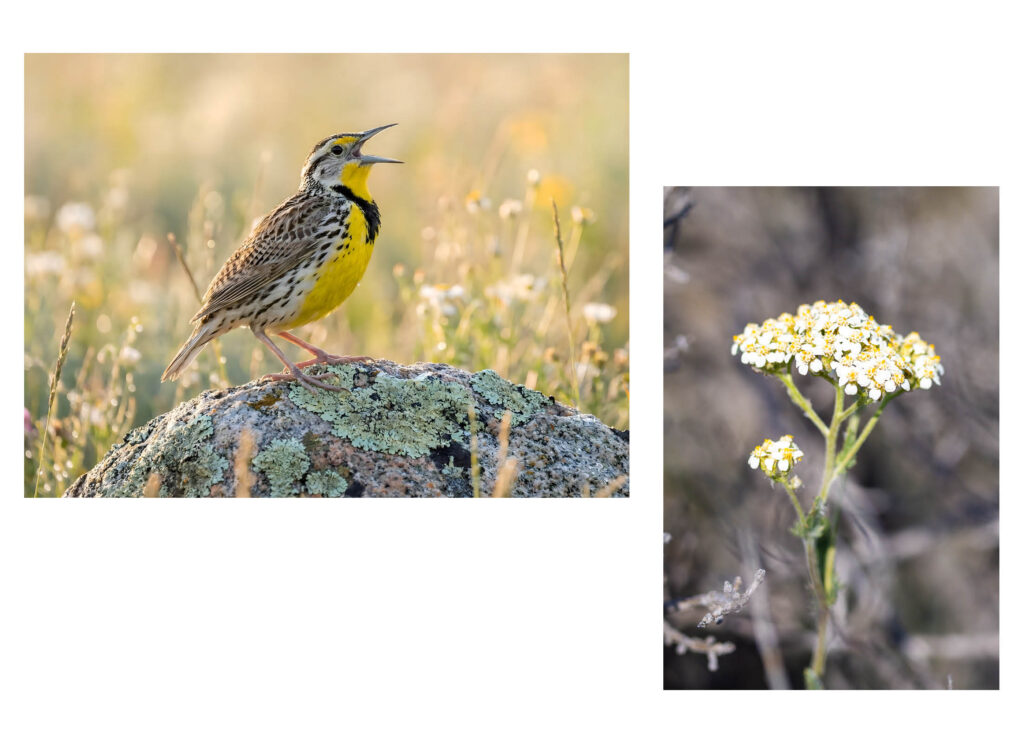
Other than the annual day in the corral, the bison largely tend to themselves, and the land, Skoglund says, has responded. Western snowberry and wild rose have exploded across the ranch, feeding mule deer and giving songbirds places to nest. “One of the biggest things I’ve noticed since we started,” he says, “is a large increase in the number of birds—grassland birds, songbirds, raptors.” The ranch is now the first Audubon-certified bird-friendly bison ranch in Montana.
The Skoglunds recently expanded their operation by leasing more ground, and they expect to keep growing, along with the industry around them. “There will be more bison ranchers and more bison producers in 10 years than there are today,” Skoglund says. It’s essentially the same bet the Turners made decades ago, scaled down to a single family in a single valley: that the surest path to saving the buffalo runs straight through the market for it.
Pay Their Own Way
“If buffalo are going to make a comeback, they are going to have to pay their own way,” says O’Brien. “Public herds can’t do it with their hands tied. Governments are not geared for that. Only private enterprise can get that job done.”
At roughly a quarter-million head strong in the United States, and some 400,000 across North America, the bison comeback is one of the most remarkable stories of a species recovery in the last hundred years. The bison have made their way back—without assistance from federal legislation like the Endangered Species Act—largely because private conservationists were able to market the majesty of this American icon. Yet public preserves like Yellowstone have provided a measure of protection for the bison and wildlife viewing opportunities for visitors. Those herds serve as bison ambassadors—providing opportunities to get up close, though not too close, to observe the creatures in their natural habitat. They are an economic draw in their own right. Those experiences have helped create a constituency for and a fascination with the American bison—a chance for ordinary people to experience this heritage.
Beau Turner notes the importance of public conservation, but he also talks about an advantage that goes with private conservation efforts: “I don’t want to lose people being close to the land and the creativity that comes with ownership. Ownership of the land ties you to it.”
With the future of this once endangered animal in the hands of eco-ranchers and market-minded preserves, the outlook for the “lordly buffalo” is promising—a chance to continue to return a native species to more of the lands it once roamed, and, through sound ownership incentives, to right past wrongs.