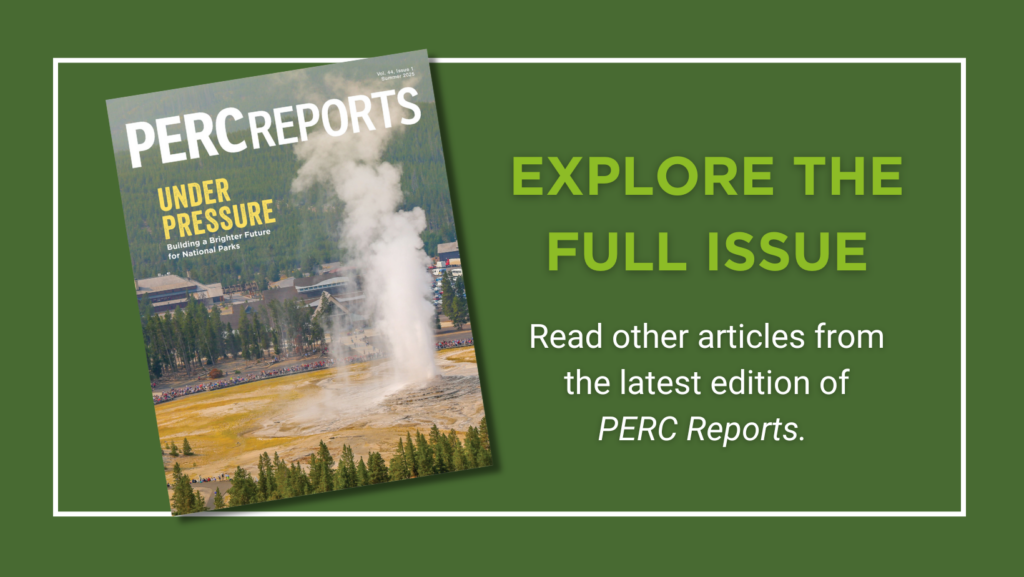
This special issue of PERC Reports explores the next wave of solutions for our national parks.
PERC’s influence on national park policy spans decades. In the mid-1990s, our research helped spark the Recreation Fee Demonstration Program, the first legislative initiative to allow parks to retain visitor fee revenue and reinvest it onsite. The simple but profound shift—letting parks keep the money they earn from visitors—aligned incentives for better management, improved visitor services, and laid the foundation for a lasting federal policy that continues today.
In 2015, PERC testified before Congress on the growing crisis of deferred maintenance. As lawmakers continued to add new units to the national park system, budgets grew strained, and existing parks languished. Our message was clear: Conservation starts with taking care of what we already own. That message gained traction and helped redirect the national dialogue toward park stewardship, not just expansion.
Three years later, in 2018, our researchers were once again at the center of the conversation—this time championing the idea of a dedicated endowment-like fund to maintain national parks. Those ideas became the backbone of the Legacy Restoration Fund, established through the Great American Outdoors Act, to help pay for overdue maintenance needs on parks and other public lands.
That legacy of influence continues today. In this issue of PERC Reports, Brian Yablonski describes how another PERC idea—charging international visitors more to help maintain America’s parks—is becoming reality. With a presidential executive order now in place, this common-sense reform could transform global admiration for our parks into tangible support to protect them.
Tate Watkins lays out a broader vision for reform. He shows how creativity, flexibility, and local leadership—not just more money—are key to solving our parks’ most persistent challenges. His essay outlines five principles for modernizing park stewardship.
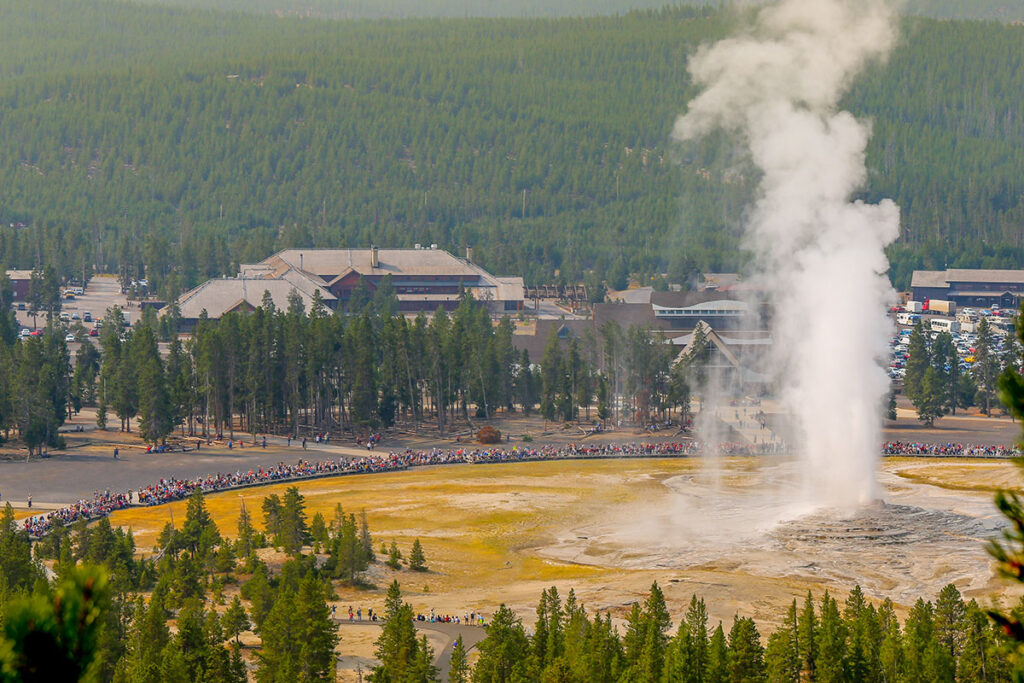
Kat Dwyer zooms in on Yellowstone—the park that started it all but now faces unprecedented pressures. Her essay explores how targeted entrance fees and smarter funding models can help Yellowstone endure record visitation while adequately maintaining it for the next generation.
Jarrett Dieterle takes readers to an unexpected corner of the park system: historic battlefields. He reveals how private preservation efforts are not only saving pieces of American history, but also restoring ecosystems and supporting biodiversity in the process.
Finally, Birch Malotky reminds us that conserving wildlife inside park boundaries is only part of the challenge. Many species rely on seasonal migrations that carry them far beyond park borders. Her essay explores how creatively conserving surrounding landscapes—especially private lands—will be essential to the long-term success of park-based wildlife protection.
Together, these stories are rooted in the idea that stewardship is best achieved not through top-down mandates, but through local initiative, private ingenuity, and practical incentives. PERC has been part of that revolution from the beginning.
Now, as record crowds and environmental pressures put new strains on the park system, these ideas are more relevant than ever. The future of our national parks depends on them.