
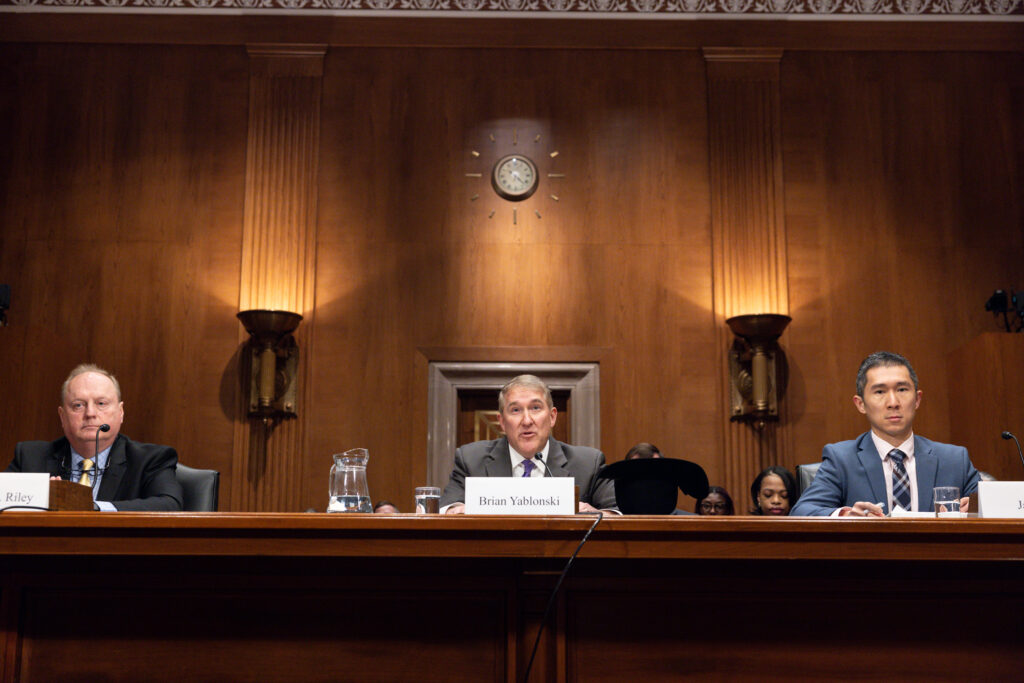
At a hearing before the U.S. Senate Committee on Environment and Public Works on the challenges and opportunities of implementing the Endangered Species Act (ESA), PERC CEO Brian Yablonski delivered a clear message: preventing extinction is not the same as recovering species, and it’s time for policy to reflect that reality.
More than 50 years after the ESA’s passage, the law has succeeded in one important respect—99 percent of listed species have avoided extinction. But recovery, the ESA’s ultimate goal, has remained elusive. Just 3 percent of listed species have fully recovered. Yablonski’s testimony highlights a central challenge: the regulatory tools that help prevent extinction are often the very ones that hinder recovery.
Drawing on decades of experience and PERC’s research, Yablonski outlined a better path forward, one rooted in incentives, local leadership, and collaboration. Instead of relying solely on top-down regulations, policymakers should reward recovery progress with incremental regulatory relief, empower states and landowners as conservation partners, and reduce litigation that diverts resources away from on-the-ground recovery efforts.

Ultimately, conservation works best when it aligns incentives and works with people, not against them. By shifting from a system that penalizes the presence of species to one that rewards their recovery, we can deliver better outcomes for wildlife, landowners, and communities alike, and finally make meaningful progress toward recovering America’s most imperiled species.