

Miliken Institute ReviewFebruary 2006 By Donald R. Leal At long last, Mark Lundsten, captain of the fishing boat Masonic, could relax a little. He had spent hours navigating his vessel through heavy seas to get to the halibut grounds in time for their opening, then pushed himself and his crew hard in an all-out effortContinue reading “Saving Fisheries with Free Markets”
Author Archives: admin
Conservative Conservation:
What’s New at Hoover Hoover Institution January 2006 Can you be a conservative and an environmentalist? How to reconcile the two positions, that some see as conflicted, was the topic of Hoover fellow Terry Anderson’s presentation at a Hoover Institution Breakfast Briefing on January 18. Anderson, the John and Jean DeNault Senior Fellow, is executive directorContinue reading “Conservative Conservation:”
Bush Takes an Environmental Stand on Fishing
Providence Journal January 9, 2006 By Donald R. Leal U.S. coastal fisheries are in trouble. Experts say that overfishing plagues roughly one-third of the nation’s fish stocks. Red snapper in the Gulf of Mexico has yet to recover from excessive catches that were first noted in the mid-1980s. Cod from GeorgesContinue reading “Bush Takes an Environmental Stand on Fishing”
Recent environmental news out of China
has lent new momentum to the gloomy view of China’s environmental future amidst its headlong rush for economic growth. However, the gloom over China’s environment may be overstated. China is an ideal test case of the controversial idea of the "environmental Kuznets Curve," according to which economic growth precedes environmental improvement. The question for ChinaContinue reading “Recent environmental news out of China”
The China Syndrome and the Environmental Kuznets Curve

American Enterprise Institute December 21, 2005 By Steven F. Hayward Recent environmental news out of China has lent new momentum to the gloomy view of China’s environmental future amidst its headlong rush for economic growth. However, the gloom over China’s environment may be overstated. China is an ideal test case of the controversial ideaContinue reading “The China Syndrome and the Environmental Kuznets Curve”
Advertising for Clean Water
By Carol Ferrie Every year, corporations spend about $150 billion on advertising, says Paul Polizzotto, but very little of it goes to improve quality of life. Polizzotto — surfer, businessman, and environmentalist– has figured out a way to harness some of those advertising dollars through the Adopt-A-Waterway program. "You don’t have to take the oathContinue reading “Advertising for Clean Water”
Wreaking Environmental Harm

While many farmers are conscientious stewards of the environment, the incentives of U.S. agricultural policies can lead to practices that damage the environment. Agricultural price supports and trade barriers stimulate production on marginal land, leading to overuse of pesticides, fertilizers, and other effluents. A central if unstated purpose of U.S. farm policy is toContinue reading “Wreaking Environmental Harm”
The Shifting Roles of NGOs

Nongovernmental organizations (NGOs) used to be gadflies and outsiders challenging businesses and governments (think Greenpeace and Public Citizen, for example). Today, however, NGOs are moving in new directions. Some, for example, are acting increasingly like government agencies, issuing a new generation of de facto regulations in the form of standards, guidelines, and certifications. OthersContinue reading “The Shifting Roles of NGOs”
Chili Power

African elephants are not only majestic animals, but also cropraiding nuisances, endangering human lives and livelihoods. Conservation groups have determined that in order to protect elephants it is necessary to protect the people who are sharing the land with them. It is a complex situation that in some areas has been solved by the simpleContinue reading “Chili Power”
At Home in Debris
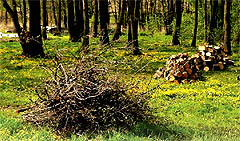
Typically in the past, rural and suburban landowners had no trouble taking care of their seasonal accumulations of brush, branches, dead leaves, and other organic debris. They piled it in the backyard and set it alight. Now, many towns and counties ban outdoor burning as the smoke can cause health problems. The alternative is toContinue reading “At Home in Debris”