

Godwin Nnanna is the investigations editor for Business Day, Nigeria’s leading financial daily based in Lagos. He has been a journalist since 1997 and has won a number of international and local journalism awards for his writings. Godwin has spent the last week at PERC as a Media Fellow, exploring free market environmentalism and property rights. Continue reading “Q & A with Godwin Nnanna on the Niger Delta and Pollution”
Author Archives: admin
Planned Obsolescence: The Good and the Bad

 by Addison Del Mastro
Just like good and bad cholesterol, there is good and bad planned obsolescence – the business practice of consciously limiting a product’s lifespan. This may come as a surprise to many people, since planned obsolescence usually has a negative connotation. As with cholesterol, it’s important that we understand what planned obsolescence is, how it can be good and bad, and what we can do to fight the bad kind.
The good types of planned obsolescence are “value engineering” and “functional obsolescence.” Value engineering is a design process that seeks to use as little material as possible in a product while still delivering an acceptable lifespan. It also suggests that all the parts in a product should fail at about the same time, so that none are “overbuilt” relative to the rest. Functional obsolescence is when a genuinely superior product is introduced, making the old one comparatively less desirable.
The bad kind of planned obsolescence consists of the introduction of superfluous changes in a product that don’t improve utility or performance. This might best be described as “pseudo-functional obsolescence.”
Value engineering
Cell phones don’t last for 20 years. If they wanted to, cell phone manufacturers could make phones much more durable than they currently are. Is this bad planned obsolescence? No. This is value engineering.
The useful life of a cell phone is limited to only a few years due to the rapid rate of technological improvement in the field. This means that it’s wasteful to build a cell phone with a physical lifespan much longer than its useful life. It makes sense that cell phones are built out of inexpensive plastic parts; this ensures a more affordable product. If a cell phone were not value engineered – if it were made out of titanium, for example – it would last longer than anyone would want it to, would cost more, and would use up more resources.
Designing certain products to be less durable than they could be actually conserves resources and delivers a more affordable product to the consumer.
Functional obsolescence
Functional obsolescence occurs when an innovation is introduced into the marketplace, making an older product obsolete. A classic example is the automobile replacing the horse and buggy, or the transition from simple cell phones to more functional smartphones. Functional obsolescence creates waste, but the trade-off is that consumers get a superior product. In many cases functional obsolescence takes place because the new product requires less time and work, meaning an increase in the resource of human time.
Meet Jeremy Gingerich, PERC Enviropreneur
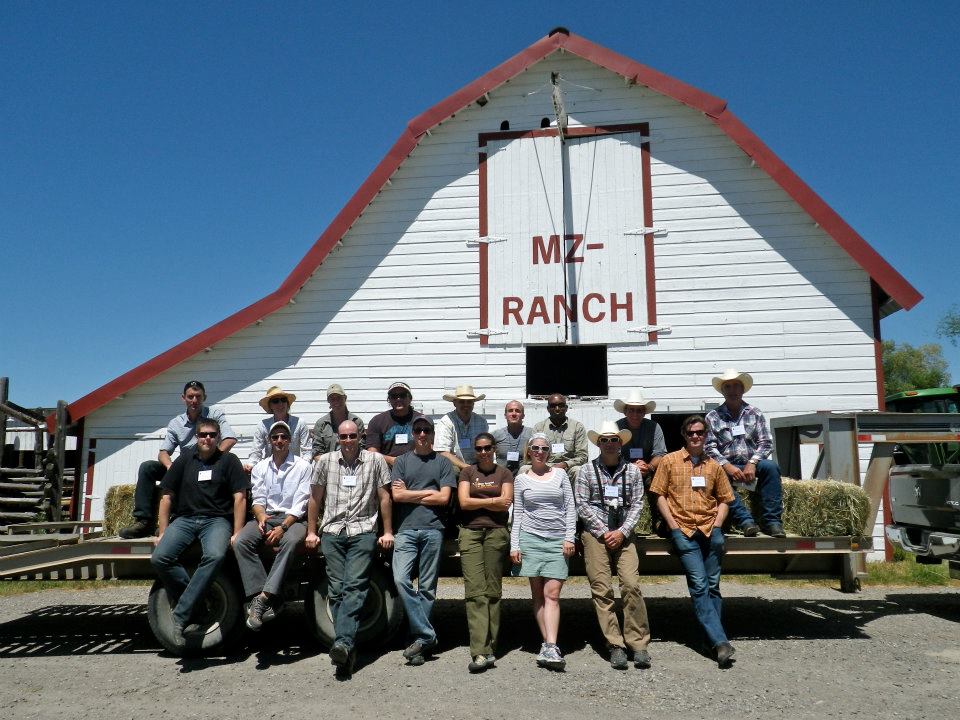
After two weeks of workshops, mentoring sessions, and networking, this year’s 14 enviropreneurs head home to implement the innovative market-based conservation strategies they explored at PERC’s 2012 Enviropreneur Institute. Check out what one enviropreneur, Jeremy Gingerich, has to say about protecting open landscapes in the west and how his time at the Enviropreneur Institute will help himContinue reading “Meet Jeremy Gingerich, PERC Enviropreneur”
Whose Fracking Rights?
Denis and Barbara Prager fear the day that hydraulic fracturing takes place on their land in the Shields Valley of Montana. The threat of ‘fracking’ is real and there is nothing they can do. While the Prager’s own the surface rights to their property, the state owns the subsurface and mineral rights. The state has theContinue reading “Whose Fracking Rights?”
Growth is Green

“Economic growth is green,” says Dino Falaschetti, PERC’s new executive director. Growth occurs only when markets are allowed to work to move goods and services from low-productivity uses to high-productivity uses. “Making more with less is conservation. Making more with less is sustainable,” adds Falaschetti. “When environmental policy puts growth at risk, it is brown, notContinue reading “Growth is Green”
Sustainable Landscapes
PERC Enviropreneur Institute (PEI) Alum Jeremy Gingerich talks about the importance of open landscapes and how the skills from PEI will help him achieve his goals.
Let Freedom Ring
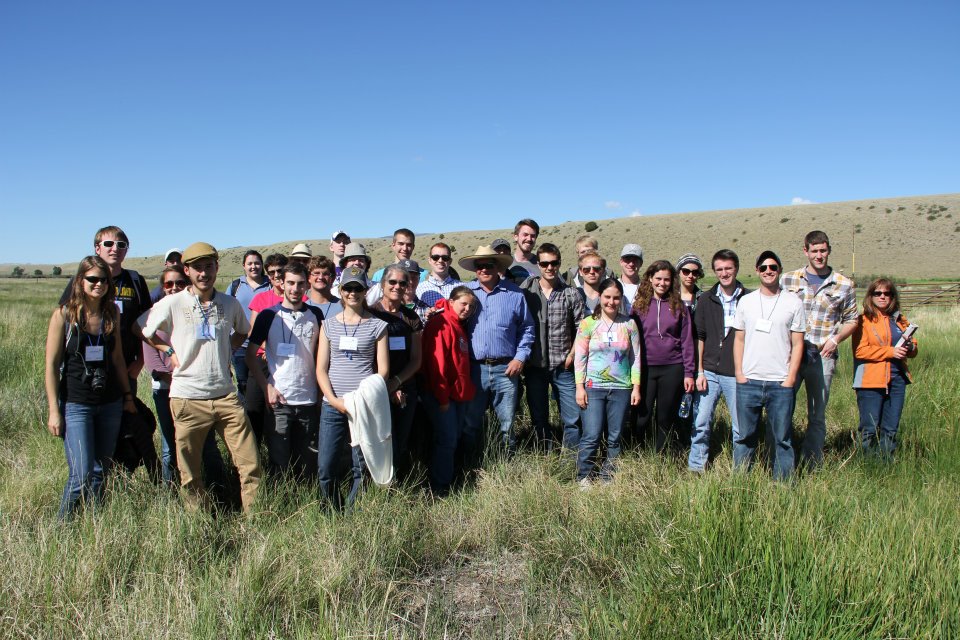
While June brings a great group of students to Montana each year, July brings thoughts of freedom. The two have much in common. Every year PERC and Liberty Fund co-sponsor a program for students. It is a weeklong seminar that provides an opportunity for a group of undergraduate college students to become immersed in ideas about theContinue reading “Let Freedom Ring”
The Political Economy of Environmental Justice
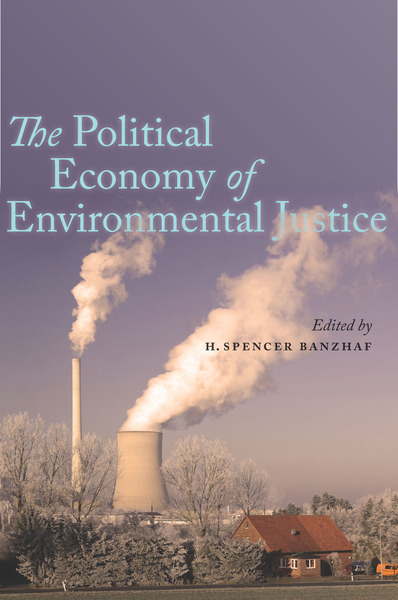
In the first book-length examination of environmental justice from the perspective of economics, a cast of top contributors evaluates why underprivileged citizens are overexposed to toxic environments and what policy can do to help.
The Economics of Waste Management
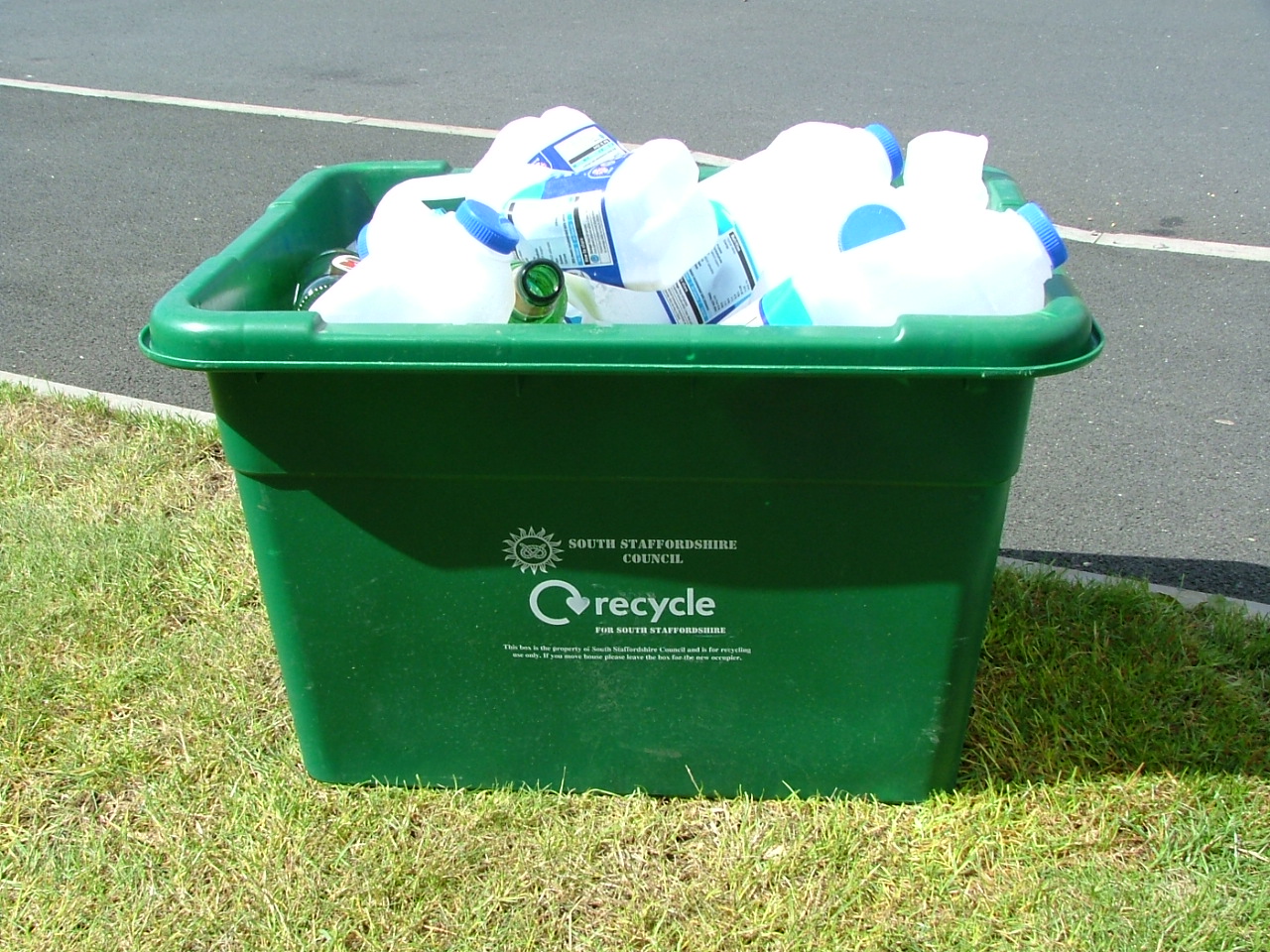
Professor of trash, Daniel Benjamin, discusses the economics of waste management with John Batchelor. Benjamin explains how recycling involves reusing valuable goods and that value is determine by market mechanisms, not government. https://www.perc.org/sites/default/files/media/JBS%20Benjamin%20070212.mp3
Markets and the Environment
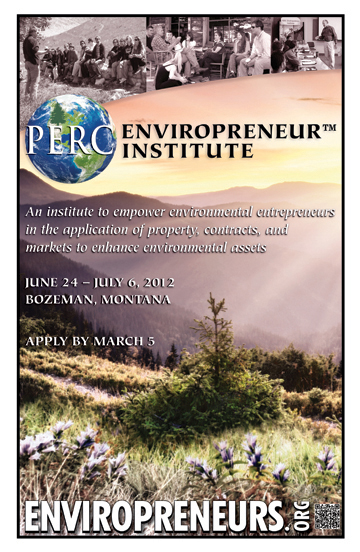
John Batchelor interviews Kurt Schnier about PERC’s Enviropreneur Institute. He explains how the value of goods is reflected in prices, and how markets can improve environmental amenities. https://www.perc.org/sites/default/files/media/JBS%20Schnier%20070212.mp3