
The link between natural resources, institutions, and economic prosperity is nowhere more apparent than on American Indian reservations
Types Archives
Comments on PERC Reports Summer 2011
A Solution in Search of a problem Thanks to Spencer Banzhaf for his article, “The Case for Cap-and-Trade” as a market application to fossil fuel use. Certainly, once a cap-and-trade system is operating, prices would be set by market trading, responding either to pricing (or taxing) emissions; or setting a quota on allowable emissions. TheContinue reading “Comments on PERC Reports Summer 2011”
Halloween fright, population fear are both fantasy

As our quality of life continues to improve, the world’s prevailing sentiment continues to be one of a disastrous future, all because the population has reached 7 billion. Are these worries real or just a scare tactic?
Endangered species and the roles of science and policy

Whether a given species is at risk of extinction may be a scientific question, but what to do about it is not. What conservation measures should be adopted to address such threats, and at what cost, are policy
questions, says Jonathan Adler
The Leaky Ark
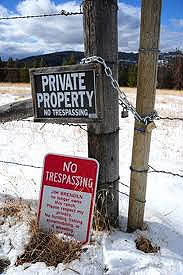
The Endangered Species Act (ESA) was enacted in 1973 and today is viewed as the most powerful environmental law in the nation as well as one of the most controversial.
“Decoupling” the listing decision how the species should be protected how it should be protected could
allow more creative measures tailored the needs ad and circumstances of each species.
How about a Green Tea Party
Terry Anderson of PERC supports the Green Tea Party in 2012 and its preseidential candidate Kermit the Frog. Kermit promises environmental quality with limited government and budget cuts.
Return on investment
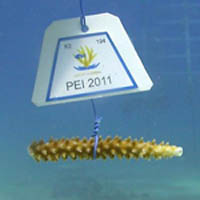
By Reed Watson PERC recently acquired ownership of some valuable real estate in the Florida Keys. To the staff’s disappointment, it was not winter office space. Instead, we adopted a piece of Staghorn coral transplanted by the Coral Restoration Foundation. The property is a gift from the 2011 Enviropreneur Institute Fellows. Restoring Florida’s coral reefsContinue reading “Return on investment”
Creating incentives for oil companies to protect surface land

One fellow at PERC’s 2011 Enviropreneur Institute explored ways to create incentives for oil companies to work with conservation organizations like TNC to plan their projects to avoid sensitive areas and minimize impacts.
Jobs vs the environment, one more time
Jonathan H. Adler PEC Visiting Fellow The New York Times tries to provide some perspective to the renewed debate over the economic effect of environmental regulation, and the effect of regulation on jobs in particular. The story was prompted by President Obama’s decision to ask Environmental Protection Agency Administrator Lisa Jackson to withdraw a proposedContinue reading “Jobs vs the environment, one more time”
Unnatural Corn Class Action

Jonathan Adler PERC Visiting Fellow Grist reports on a class-action suit that is being filed against ConAgra for allegedly deceptive marketing of its various vegetable oils. The core of the complaint seems to be that some ConAgra products, such as Wesson corn oil, are labeled as “100% natural” even though they contain oil from geneticallyContinue reading “Unnatural Corn Class Action”