
Earth Day is Cause for Celebration: Environmental Trends Mostly Positive By Steven Hayward with Michael De Alessi, Holly L. Fretwell, Brent Haglund, Joel Schwartz, Ryan Stowers, and Sam Thernstrom Full Text PDF Chapter on Public Land Management by Holly Lippke Fretwell [[{“type”:”media”,”view_mode”:”media_original”,”fid”:”7249″,”attributes”:{“alt”:””,”title”:””,”class”:”media-image”,”typeof”:”foaf:Image”,”style”:”width:110px;height:146px;float:left;margin:0 1em 1em 0;”,”wysiwyg”:1}}]] SAN FRANCISCO – The ninth annual Index of Leading EnvironmentalContinue reading “2004 Index of Leading Environmental Indicators:”
Types Archives
Bureaucrats and Indians
The New York Times Opinion June 28, 2005 By John Tierney Crow Agency, MT — The Crow Indians rode with Custer at Little Bighorn, but they have since reconsidered. On the anniversary of the battle Saturday, they cheered during a re-enactment when Indians drove a stake through his fringed jacket and carved out the heartContinue reading “Bureaucrats and Indians”
Old West violence mostly myth
By Peter J. Hill Once again as summer progresses, tourists are trying to recapture the romance of the West. Recalling the violent images fostered by Hollywood, they seek out ghost towns, ride horseback at dude ranches and take part in exciting re-enactments of conflicts among vigilantes, sheriffs, cowboys and Indians. What they don’t realize isContinue reading “Old West violence mostly myth”
Smart Growth?
Rocky Mountain News July 9, 2005 By C. Kenneth Orski and Jane S. Shaw "Smart-growth" policies, which became popular nationwide during the 1990s, are regulations designed to reduce suburban sprawl and control growth. They encourage people to live close together within walking distance of shops and offices. One goal is to reduce the use ofContinue reading “Smart Growth?”
Smart Growth?
Rocky Mountain News July 9, 2005 “Smart-growth” policies, which became popular nationwide during the 1990s, are regulations designed to reduce suburban sprawl and control growth. They encourage people to live close together within walking distance of shops and offices. One goal is to reduce the use of the automobile. Another is to create neighborhoods fullContinue reading “Smart Growth?”
Let’s lift the burden
Scottsdale Tribune June 27, 2005 Paying modest fees would enablenational parks to cover costsof protection and upkeep By Holly L. FretwellSpecial to the Tribune Load up the car. Throw in the pillows, the DVD’s, the CD’s, and headphones. The season for cross-country travel is upon us. Carloads by the millions are heading for national parksContinue reading “Let’s lift the burden”
The Mild, Mild West
The New York Times Opinion June 25, 2005 By John Tierney Deadwood, S.D. — The actors from HBO’s "Deadwood" are coming to the scene of their crimes today, and they can expect a hero’s welcome when they pose for pictures on Main Street. Some people in the real Deadwood are offended byContinue reading “The Mild, Mild West”
Ten Key Elements of Economics
The Insider Spring 2005 By James Gwartney, Richard L. Stroup, and Dwight R. Lee 1. INCENTIVES MATTER. All of economics rests on one simple principle: that incentives matter. Altering incentive, the costs and benefits of making specific decisions, alters people’s behavior Understanding incentives is an extremely powerful tool for understanding why people do the thingsContinue reading “Ten Key Elements of Economics”
Environmental False Alarms
The Weekly StandardApril 25, 2005 By Terry L. Anderson In his new book Collapse, Jared Diamond begins with a chapter on my home state of Montana. Although painting a romantic picture of “Big Sky Country,” he decries environmental tragedies including toxic mining waste, forest fires, soil exhaustion, water shortages, and invasive species. Diamond blames theseContinue reading “Environmental False Alarms”
Vision through a Narrow Lens
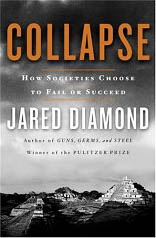
Energy & Environment Vol. 16 No. 3&4 2005 By Jane S. Shaw Pulitzer Prize-winning author Jared Diamond’s new book Collapse: How Societies Choose to Fail or Succeed argues that past societal collapses have occurred in large part because the societies failed to adapt to changing environmental conditions. He warns that modern societies and civilization tooContinue reading “Vision through a Narrow Lens”