This article was originally published in The Hill.
When the Interior Department announced that international tourists will soon pay a $100 surcharge to enter the most popular U.S. national parks, the Sierra Club blasted the move as “gouging foreign tourists” in a way that “won’t provide the financial support these crown jewels of our public lands need.” It’s an emotionally charged critique, but it’s completely wrong.
A higher charge for non-residents isn’t a barrier to access. It’s a long-overdue way to ensure that America’s best idea can keep up with the pressures of popularity. Fees paid by overseas travelers—people who have often already invested thousands of dollars to journey here—can directly bolster park budgets at a time when iconic sites are strained by record crowds and aging infrastructure.
Starting in 2026, overseas visitors to 11 of the most popular U.S. national parks, including Yosemite, the Grand Canyon, and other bucket-list sites, will pay a $100 surcharge on top of the base entrance fee. The price of non-resident “America the Beautiful” annual passes will then rise to $250 while remaining $80 for U.S. residents.
This is one of the smartest and fairest ways to conserve the nation’s most celebrated landscapes. It’s a policy innovation that couldn’t come at a more needful time, and it will mean more money, less politics, and better care for our parks, while bringing our country into line with premiere tourist destinations around the world.
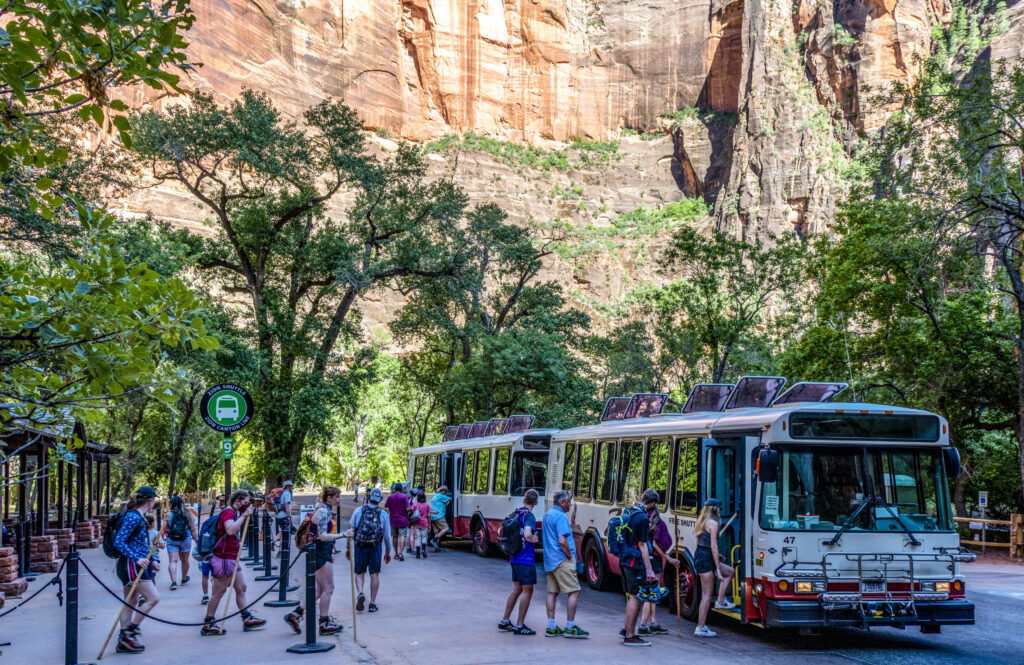
If you’ve ever stood in line for coffee at Old Faithful or boarded a shuttle at Zion and heard the hum of different languages, you’ve seen firsthand how much international visitors love America’s parks. They make up about 15 percent of annual visits to Yellowstone and up to 40 percent of visits to the Grand Canyon.
According to my organization’s economic analysis, a $100 non-resident surcharge at Yellowstone could approximately quadruple entry-fee revenue at the park, raising an additional $55 million for the park. That kind of windfall could transform a park’s ability to care for its resources.
And anyone involved can tell you those precious resources are struggling today. The National Park Service collectively faces nearly $23 million in overdue maintenance. That neglect appears in failing wastewater systems, eroded trails, potholed roads, crumbling boardwalks and employee housing so dilapidated it makes staffing difficult. The Great American Outdoors Act’s Legacy Restoration Fund provided a temporary boost, but it can’t solve the long-term mismatch between aging infrastructure, record visitation, and inflation-eroded appropriations.
Awe has an upkeep cost, and right now, we’re not keeping up.
Fortunately, data is on our side. Evidence consistently shows that a higher price at the gate doesn’t scare away international tourists who have traveled thousands of miles to get there. Our analysis found that demand from overseas visitors to Yellowstone is highly inelastic. A 10 percent fee increase would reduce international visitation by an estimated 0.03 percent — practically a rounding error. The average international visitor to Yellowstone spends about $4,500 on their trip. Against that backdrop, a $100 surcharge barely registers.
International visitation to the U.S. was expected to dip in 2025 but rebound in 2026 amid the World Cup and America’s 250th anniversary.
When those tourists visit national parks, they’ll be supporting them more than ever. Eighty percent of all entrance fees remain at the site where they are collected, while the rest supports other parks in the system. That means more decisions — and more dollars — rest with the people who know each park best, not with distant legislators who may or may not pass a budget on time.
A superintendent facing a failing water pipeline at the Grand Canyon or a crumbling bridge at Acadia can’t wait for the next budget cycle drama on Capitol Hill. A more robust, user-supported funding stream allows timely action and creates a positive feedback loop: Parks that invest in better visitor experiences generate more resources to keep improving them, and cope with the pressures of booming visitation.
Dozens of national park systems around the world already understand this, and charge non-residents significantly higher fees. Galapagos National Park charges $200 for foreign tourists versus $30 for Ecuadorians. Kruger National Park, in South Africa, charges roughly $25 per day for international visitors versus $6 for locals.
The U.S. also applies similar logic in other contexts. Many state parks charge more for out-of-state visitors. State wildlife agencies routinely charge non-residents much higher fees for hunting and fishing licenses. A Montana resident may pay under $50 for an elk permit, whereas a non-resident pays more than $1,200.
Americans don’t balk at these differences when we travel abroad or across state lines. We understand that locals subsidize their parks through taxes—and that paying a bit more helps care for resources that deserve it.
If we want national parks worthy of the wonder they inspire, we need to steward them like they matter. Asking international visitors to chip in a little more isn’t gatekeeping—it’s a way to make sure people from around the globe will be able to enjoy these magnificent places for generations to come.