
Bozeman, Mont.—As wildfires grow more destructive and costly across the American West, new research from fellows at the Property and Environment Research Center (PERC) offers compelling evidence that proactive forest management can reduce both the economic and environmental tolls of wildfire.
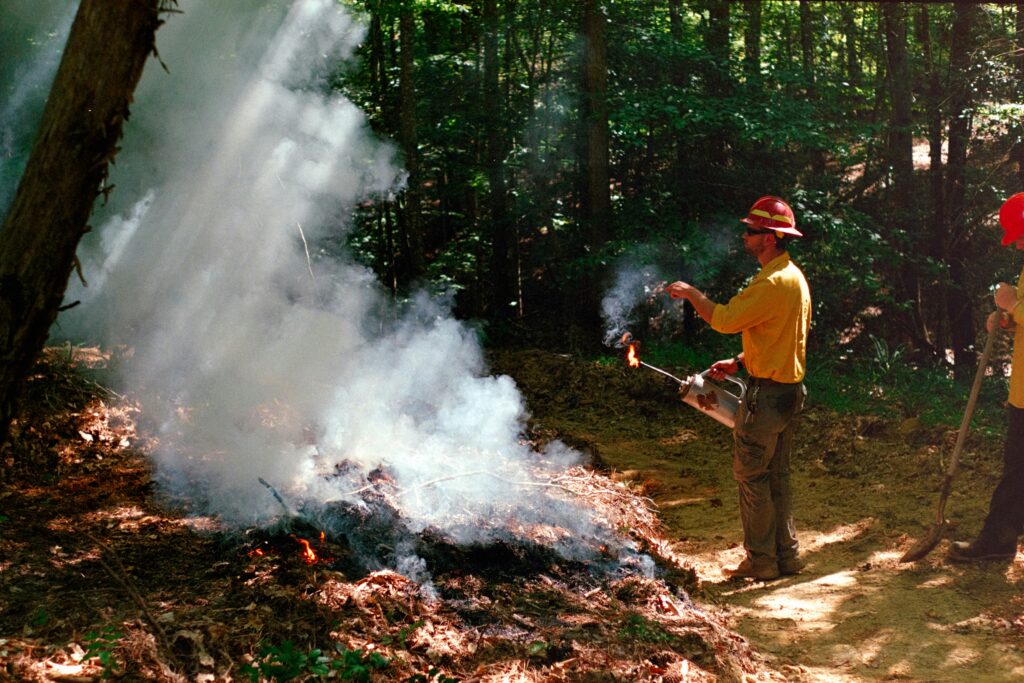
PERC’s latest report, Beyond Wildfire Suppression: The Economic Case for Fuel Treatments on National Forests, presents the most comprehensive real-world analysis to date of how fuel treatments—such as prescribed burns and mechanical thinning—affect wildfire outcomes. Drawing on newly compiled, high-resolution data, the report demonstrates that these treatments not only improve forest health but also deliver significant economic returns.
The report presents results from academic research by Frederik Strabo, PERC and UC Davis postdoctoral scholar, and Matthew Reimer, UC Davis associate professor of agricultural and resource economics. Their work has been accepted for publication in Science, one of the world’s leading peer-reviewed journals, underscoring the rigor and credibility of the findings.
“Wildfire policy has long emphasized suppression, but our research shows that complementing it with greater investment in prevention can deliver substantial public benefits,” said Strabo. “Targeted fuel treatments reduce damages, lower firefighting costs, protect communities, and restore healthier, more resilient forests.”
New Data Make the Economic Case for Prevention
For decades, policymakers and land managers have lacked clear, large-scale evidence on whether fuel treatments pay off. This report fills that gap.
Using detailed data on wildfire behavior, treatment locations, suppression efforts, and economic damages, the analysis finds:
- Strong returns on investment: In the Pacific Northwest, every $1 spent on fuel treatments yields between $5 and $6 in reduced federal firefighting costs.
- Reduced economic damages: Across the western United States, each $1 invested in fuel treatments in national forests generates an average of $3.73 in avoided damages from smoke exposure and property loss.
- Billions in avoided losses: Fuel treatments prevented an estimated $2.8 billion in wildfire-related damages between 2017 and 2023.
The findings provide the first large-scale empirical evidence—based on observed wildfire outcomes rather than simulations—that proactive forest management delivers measurable economic benefits.
Healthier Forests, Lower-Risk Fires
Beyond cost savings, fuel treatments meaningfully improve forest conditions and reduce fire severity. Areas that received treatments experienced 36 percent less burned area and 26 percent lower rates of high-severity fire, helping maintain more resilient, fire-adapted ecosystems.
By reducing excess fuel loads built up over decades of fire suppression, treatments restore more natural fire regimes and lower the risk of catastrophic wildfire.
From Suppression to Stewardship
The federal government spends billions each year fighting wildfires, yet growing evidence shows that prevention is more effective—and more economical—than relying on suppression alone.
By demonstrating that fuel treatments can both reduce wildfire damages and free up resources for broader forest restoration, the report makes a strong case for rebalancing wildfire policy toward proactive stewardship.