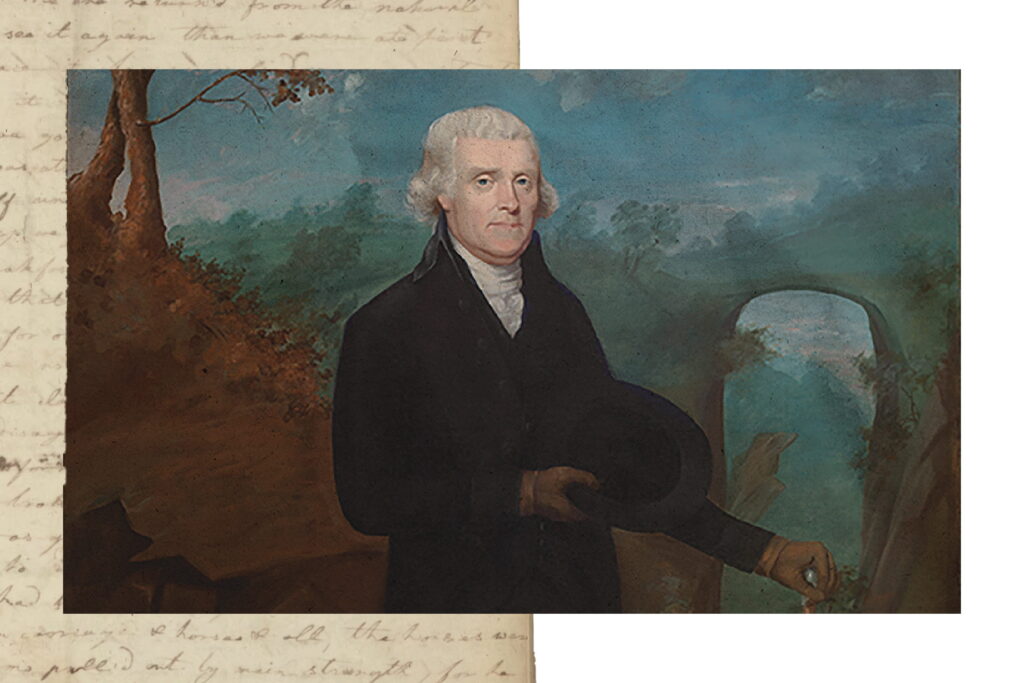
Two years before he authored the Declaration of Independence, Thomas Jefferson set out on the lifelong project of conserving Virginia’s Natural Bridge. Michaelle Browers has described the effort as “perhaps the first major act of nature preservation in the new republic.” The man who would be Governor of Virginia and President of the United States conserved this natural wonder not through power but through property rights. After purchasing Natural Bridge from his future penpal—King George III—Jefferson was its steward until his death 52 years later.
Despite this prominent early act of conservation and his career cataloguing and championing America’s environment to European skeptics, Jefferson is largely absent from the traditional history of American conservation. Under the traditional story, American conservation’s genesis is the Progressive Era of the late 19th and early 20th centuries, when federal and state power expanded considerably, including to address environmental concerns. From this era, we get President Theodore Roosevelt, national parks and forests, comprehensive zoning and regulation of private property, and the first generation of regulatory agencies.
Beginning our story here, however, constrains conservation around a political movement and its prejudices. Through the progressive lens, conservation is principally a question of government policy, and private stewardship is taken for granted. The era’s principal tools are regulations designed to address pollution, which are applied even to very different challenges, like the rising cost to landowners of providing open space, wildlife habitat, and other environmental benefits.
Two hundred and fifty years ago, Thomas Jefferson asserted as self-evident that we all have natural rights to life, liberty, and the pursuit of happiness and that the government’s principal role is to secure these preexisting rights. His actions and writings also suggest a classical liberal model for conservation, one built not on force and faction but on freedom and cooperation. That model reveals private landowners as conservationists involved in the private provision of public goods—and the need for bottom-up, collaborative tools to support these efforts. Jefferson should play a more prominent role in the story of American conservation’s past and future.
The Most Sublime of Nature’s Works
Before the Grand Canyon, Old Faithful, and Giant Sequoias, two other American natural wonders captured the young nation’s—and the world’s—attention: Niagara Falls and Virginia’s Natural Bridge. Niagara Falls remains iconic, but Natural Bridge has faded in prominence—as has the story of its conservation.
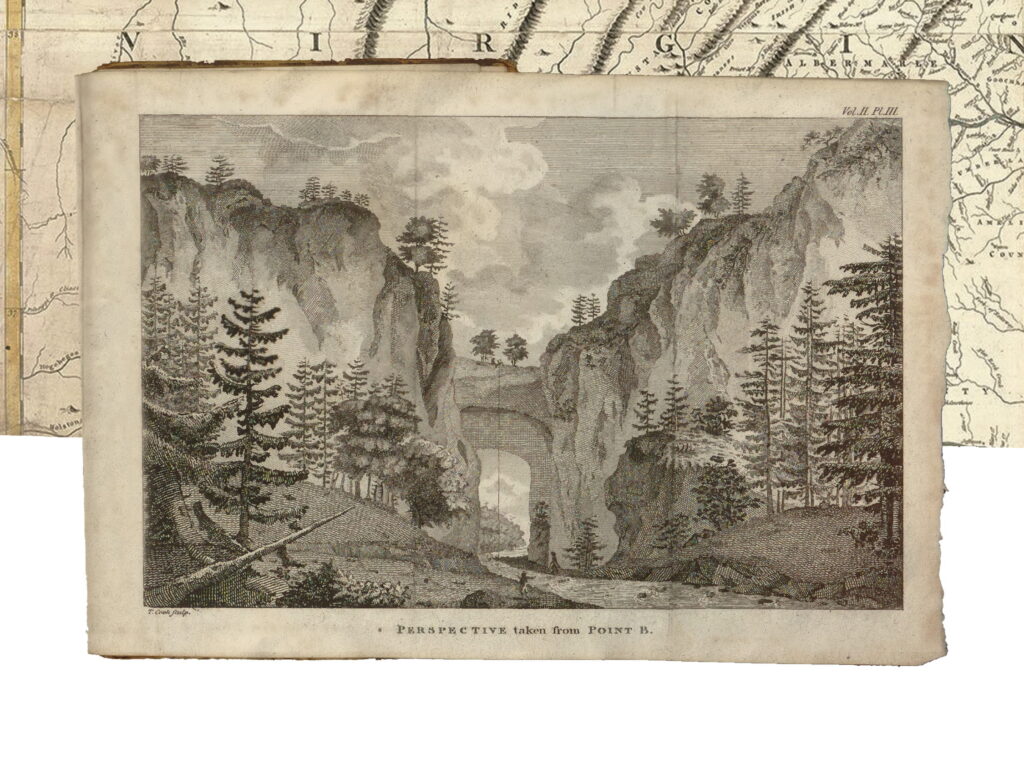
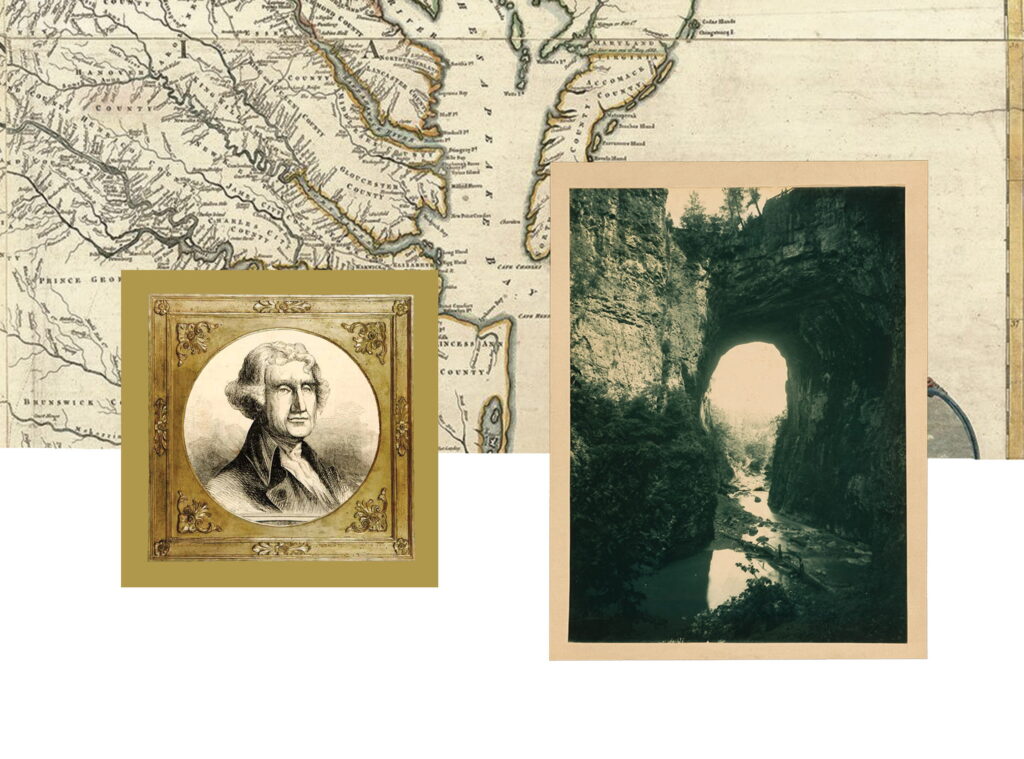
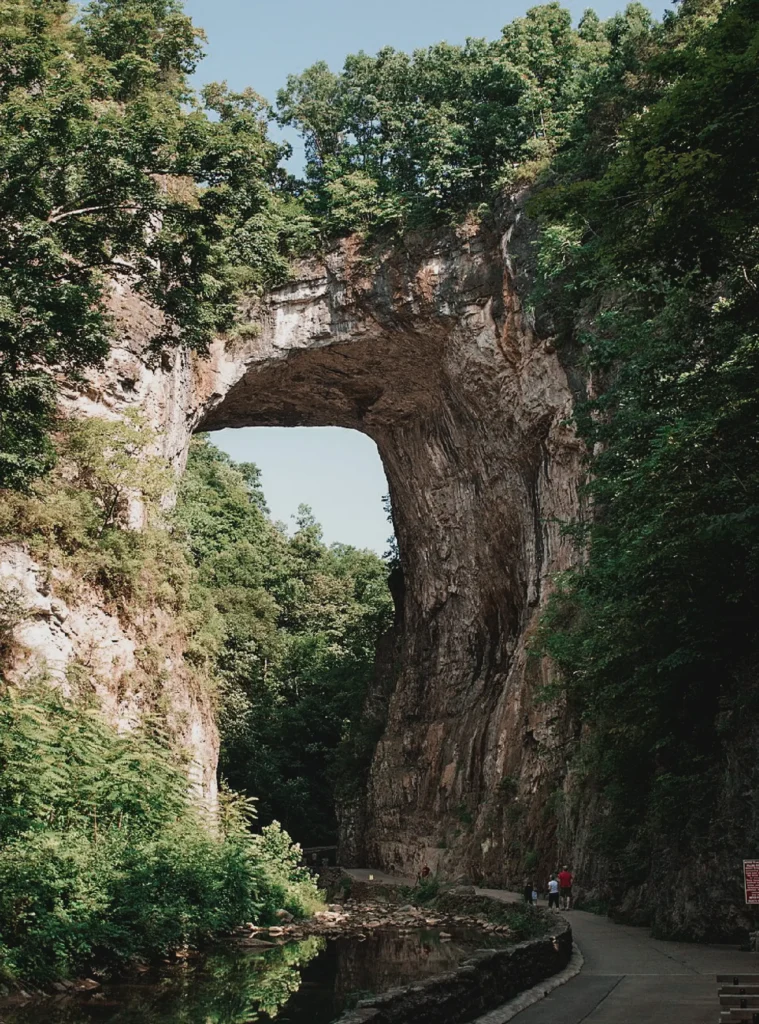
Nestled in the Shenandoah Valley, Natural Bridge is America’s largest limestone arch. Rising 215 feet above Cedar Creek, with a span of 90 feet, the arch was likely formed when a sinkhole diverted the creek underground. Monacan legend offers a more dramatic origin story: The bridge formed miraculously as an escape route for a band of Monacans fleeing raiders some 2,000 years ago—giving the feature its indigenous name, Mohomony, which translates to “Bridge of God.”
Natural Bridge also has rich connections to our nation’s history. Believed to have been first surveyed by a teenage George Washington, the initials “G.W.” can still be seen carved into the canyon wall beneath the bridge. Thomas Jefferson visited the formation in 1767, and it had a great effect on him. In his Notes on the State of Virginia, Jefferson described the bridge as “the most sublime of nature’s works,” continuing that “few men have resolution to walk to [the edge], and look over into the abyss.”
You involuntarily fall on your hands and feet, creep to the parapet, and peep over it. Looking down from this height about a minute, gave me a violent head-ache. If the view from the top be painful and intolerable, that from below is delightful in an equal extreme. It is impossible for the emotions, arising from the sublime, to be felt beyond what they are here: so beautiful an arch, so elevated, so light, and springing, as it were up to heaven, the rapture of the spectator is indescribable.
On July 5, 1774, Jefferson became the first owner of the bridge, purchasing it and the surrounding 157 acres from the Crown. Jefferson viewed the land as a financial asset, constructing a cabin for visitors and operating a saltpeter mine upstream of the bridge. But he also viewed Natural Bridge as something more.
Jefferson promoted the imposing arch as emblematic of America’s natural heritage. He featured the bridge in his Notes on the State of Virginia as part of his wider effort to defend America’s environment and political system to Europeans. Jefferson encouraged statesmen, explorers, and naturalists visiting his home at Monticello to make the hundred-mile trip to the bridge. The log book for his cabin recorded visits from Chief Justice John Marshall; Presidents James Monroe, Andrew Jackson, and Martin Van Buren; and Henry Clay, Sam Houston, and Daniel Boone.
Thanks to Jefferson’s promotion, Natural Bridge became a frequent subject of European and American art. The landmark would become so well known that when, in Moby Dick, Herman Melville needed to describe a whale breaching, he wrote that “for an instant [the whale’s] whole marbleized body formed a high arch, like Virginia’s Natural Bridge.”
Jefferson’s conservation of Natural Bridge was not always easy. At the end of his presidency, and in serious debt, he described it in a letter as “dead capital in my hands.” He contemplated selling the land, expressing hope that someone else could turn a profit by building facilities that would earn more income from visitors. Ultimately, Jefferson reduced his debt by selling his cherished book collection to the new Library of Congress. Later, he wrote that he had “no idea of selling the land,” explaining that he viewed it “in some degree as a public trust, and would on no consideration permit the bridge to be injured, defaced or masked from the public view.”
Jefferson owned the bridge until his death, and it remained under private ownership and stewardship for 249 years. In 2023, its private owners donated it to Virginia, which had managed the site as a state park since 2016.
A Liberal Model of Conservation
The late free-market environmentalist R.J. Smith has described Jefferson’s conservation of Natural Bridge as “of particular interest to proponents of private property rights and the pursuit of happiness.” Smith was not alone in connecting Jefferson’s conservation to his better known work drafting America’s mission statement. Writing in Environmental Ethics, Michaelle Browers has argued that Jefferson “offer[s] an environmental vision” that “represents Enlightenment [and] American ideas about nature.”
A key part of that vision was the recognition that properly motivated private landowners can be effective stewards of natural resources. In Enclosing the Commons, Mark Sturges recognized in Jefferson’s writing an understanding of what we now describe as the tragedy of the commons—the tendency for unowned, open-access resources to be overexploited to the detriment of all. After independence, Jefferson took great interest in the unclaimed western frontier and saw the transfer of those lands to private parties as essential to American democracy, the development of national character, and the land’s proper stewardship.
According to Sturges, Jefferson’s commitment to private property was based not only on his belief in natural rights but also the positive incentives it creates. In a 1787 letter to the Marquis de Lafayette, Jefferson argued that French lands were in poor health because of inadequate property rights. Limited to short-term leases from the aristocracy, working-class farmers had an incentive to extract as much as they could in the short term, without regard to the future. The English system, under which land was inheritable property, encouraged farmers to invest in their land, knowing that they or their sons would be able to reap the benefits.
Jefferson also saw a role for entrepreneurship. He noted that the ability to profit from visitor interest, through accommodations and other services, encourages the owner to make environmental resources “useful to the owner & the public.” Though he referenced Natural Bridge as “in some degree a public trust,” it’s clear that he meant something different from the modern public trust doctrine—which resists privatization of certain natural resources. He believed landowners should feel a personal duty to posterity—once describing the earth as belonging “in usufruct to the living”—but he cast no aspersions on private ownership or profit from environmental resources.
Indeed, Jefferson doubted the government’s ability to manage natural resources. “Were we directed from Washington when to sow, & when to reap,” he wrote, “we should soon want bread.” Jefferson recognized a role for politics, but one that was principally individualistic and localized. This view was not only motivated by concern about overweening federal power but also by his belief that each person’s direct participation in their community was essential to virtue.
By the same logic, Jefferson would see virtue in landowners’ active stewardship as well as community collaboration to advance conservation. He would be a critic of the idea that the best means for people to contribute to conservation is by voting in federal elections every two years. Channeling conservation through a remote national government inherently disconnects people from the day-to-day reality of conservation and its challenges—and dulls their capacity for creative problem solving.
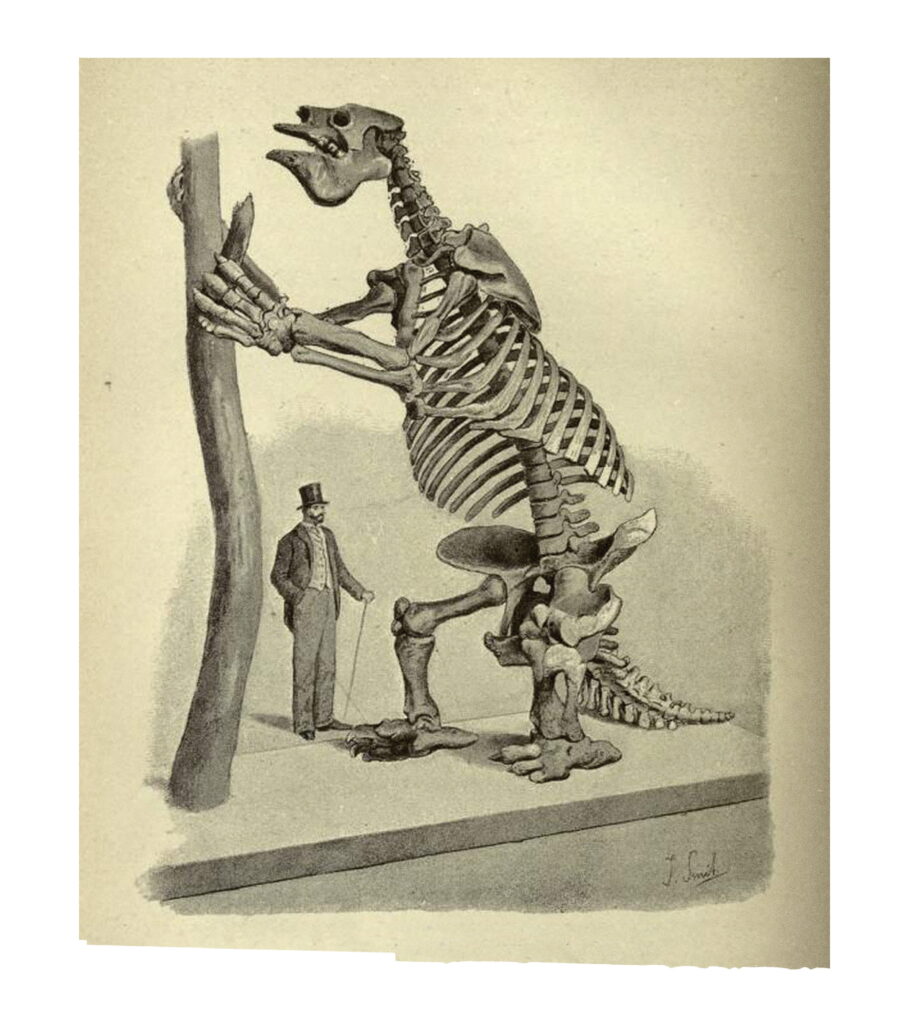
Like other Enlightenment figures, Jefferson was fascinated by nature. In 1791, he wrote that natural history “is my passion, [politics] my duty.” He put much effort into defending America’s environment against European disparagement. Considered to be the father of American paleontology, he collected an extensive array of fossils and bones, including the first fossil of a Pleistocene ground sloth that bears his name.
Considering Jefferson’s fascination with the natural environment, it is perhaps unsurprising that he did not think of natural resources purely in economic terms. He also articulated a land ethic. He believed that experience with a place connected one to it. According to Browers, Jefferson expressed “the common-sense view that … one bestow[s] more care upon what is one’s own, but also that direct experience with one’s property generates an ethic of care and responsibility.” In his Notes on the State of Virginia, Jefferson wrote that “land being an object of strong affection would soon acquire stability of property.”
Of course, Jefferson’s writings from the 1700s also reveal blind spots to modern conservation issues. Believing that property rights arose from mixing one’s labor with land, he was skeptical of leaving land idle. In a letter to James Madison in 1785, for instance, he criticized the existence of game lands in France: “Whenever there are in any country uncultivated lands and unemployed poor, it is clear that the laws of property have been so far extended as to violate natural right.” Similar thinking is why many western states long refused to recognize conservation of fish habitat as a beneficial use of water, why some object to the retirement of federal grazing lands for conservation, and why others bemoan the acquisition of large ranches by wealthy, conservation-minded owners.
Nonetheless, it’s useful to ponder questions like the one historian Patricia Nelson Limerick poses in her contribution to the volume Thomas Jefferson and the Changing West: From Conquest to Conservation: “What … would Mr. Jefferson make of the spotted owl?” Given his curiosity about nature, she speculates that he “would be very interested in and enthusiastic about the habits and workings of the spotted owl, and equally interested in, and much less enthusiastic about, the strange and unwieldy bureaucratic and judicial systems” that gave us the owl wars of the 1990s. Three decades into that conflict, with the species and the communities that live with it continuing to decline, perhaps there’s much in Jefferson that should inform conservation today.
The Liberal Model Edures
Jefferson’s conservation of Natural Bridge is more than a historical curiosity. Most conservation today is provided by the heirs to Jefferson’s example. Indeed, private landowners across the country provide three-quarters of the nation’s freshwater wetlands, maintain habitat for nearly 70 percent of endangered and threatened species, and steward nearly 60 percent of the nation’s forests—often voluntarily and without compensation.
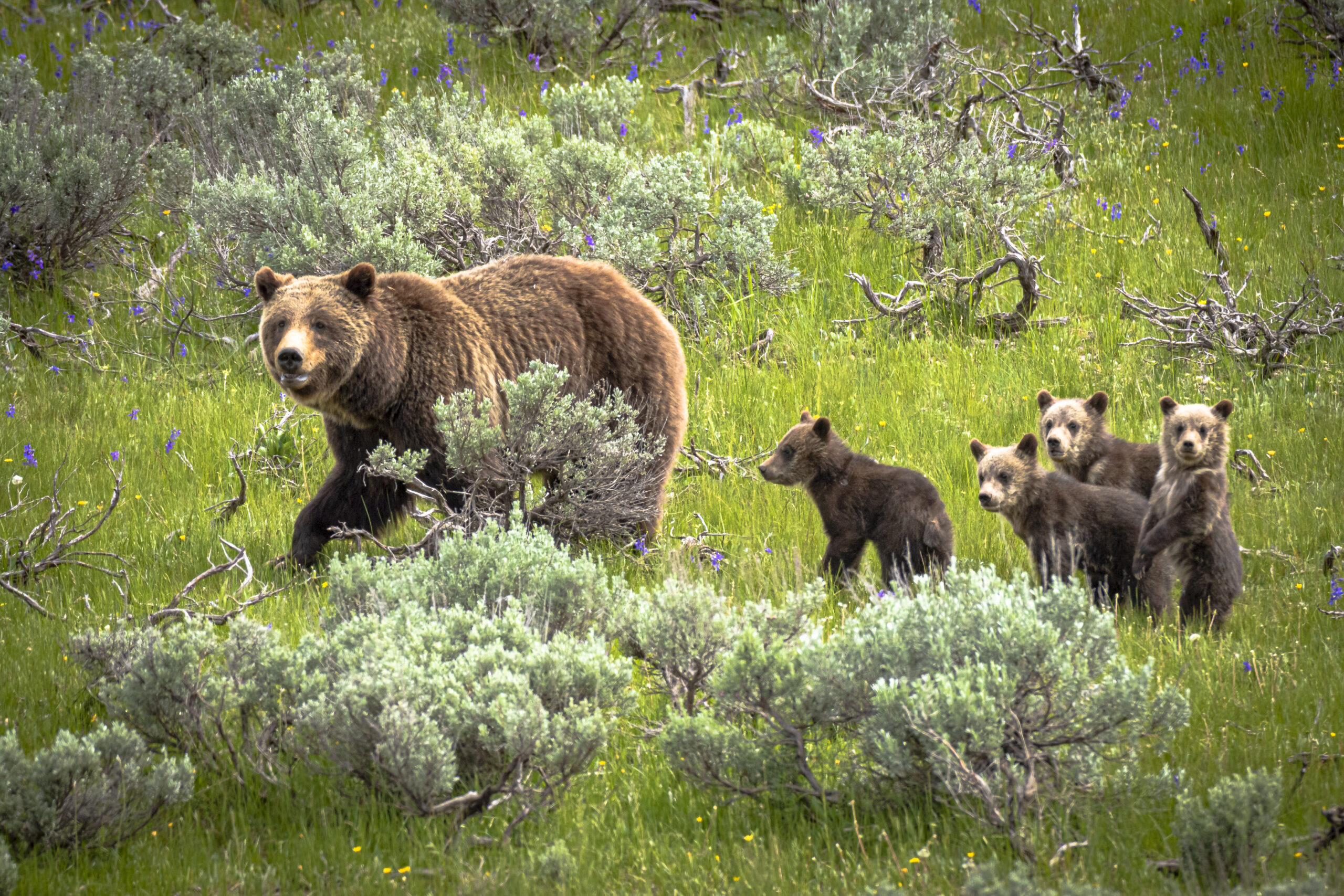
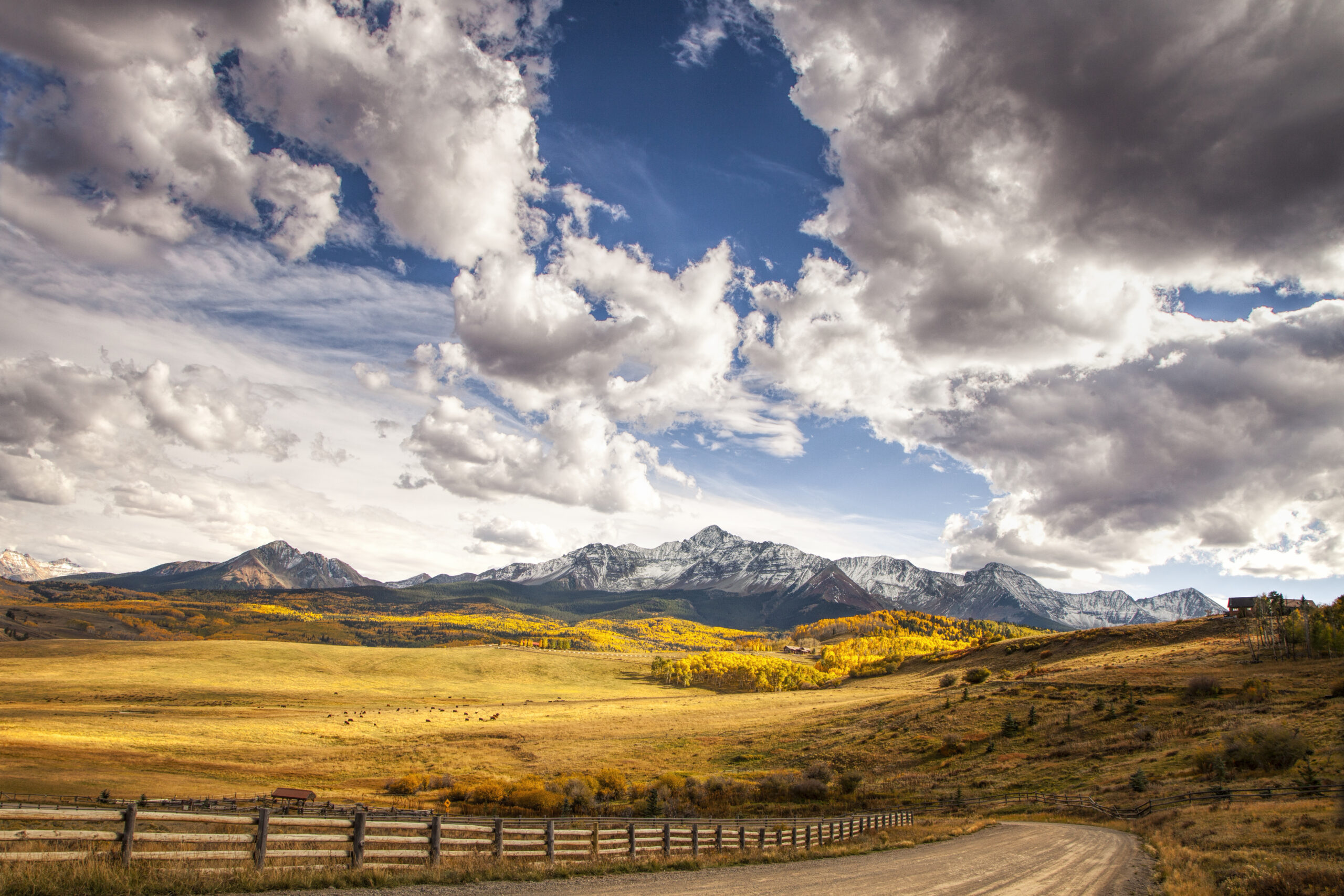
Consider Montana’s Paradise Valley: For decades, millions of visitors to the north entrance of Yellowstone National Park have been greeted by a 50-mile drive meandering along the banks of the Yellowstone River, where they take in the valley’s jagged peaks, open meadows, and abundant wildlife. Few of them will pause to consider the generations of ranching families who have provided this experience to them by conserving the open grasslands that make it possible.
The visitors are, in effect, free-riding on the public benefits those landowners have provided—whether because it was aligned with their economic interests or because of their love for the place they call home. It has been an impressive conservation feat deserving of our gratitude. But, as economic conditions change, the costs of providing environmental goods also change. And Paradise Valley is no exception. Over time, land values have soared, development pressures have increased, and the feasibility of conservation free-riding on agriculture has dissipated.
Too often, the response to such changes has been for the free riders to demand, through regulation or other means, that landowners continue to provide uncompensated environmental benefits forever. Under the Endangered Species Act, for instance, regulators have reacted to the gradual reduction of a species’ habitat by imposing costly and burdensome requirements on the landowners conserving the last remaining portions of it. As PERC and others have observed for decades, this recipe for perverse incentives disserves both landowners and species.
But if we recognize the landowner as the modern-day Jefferson—a conservationist involved in the private provision of a public good—this approach seems absurd. If a donor offered to cover part of the cost to build a lighthouse, a classic public good, who would criticize them for not providing more, especially among those contributing less? The landowner who provides open space, wildlife habitat, and wetlands until the cost grows too much for them is no different.
Understood this way, conservation problems demand entirely different tools than the progressive model’s top-down regulatory impositions. Creative entrepreneurs are needed to find novel ways to increase the private benefits that underwrite the provision of environmental goods. And, where revenue can’t be increased, locally led, collaborative solutions are needed to reduce the costs that fall on private landowners and close the financial gap. This is what Aldo Leopold meant when he said that conservation will “ultimately boil down to rewarding the private landowner who conserves the public interest.” Compared to the cost of public provision of public goods, supporting self-motivated private providers is a steal.
Moving Forward by Looking Back
Fortunately, conservationists may, without realizing it, be moving back in the direction of Jefferson. In Paradise Valley, for instance, conservation groups who were once at arms with ranchers are stepping up to support landowner-led stewardship and reduce ranchers’ costs to provide wildlife habitat and other benefits. After a long detour of conservation being viewed exclusively through the lens of politics and control, conservation’s lost founding father may yet be found.
Jonathan Wood is vice president of law and policy at PERC.